
Key Takeaways
Congratulating a new Haji, a Hajj Mubarak gift marks a once-in-a-lifetime duty.
Hajj 2027 runs mid-May. Eid al-Adha lands on 16 May, and welcome-home gifting peaks from late May into June.
Three moments most guides blur make up Hajj gifting: pre-departure, hadiya brought back, and welcome-home.
From a named keepsake to a dhikr piece worn back home, the best ideas honour Haji status.
Few moments in a Muslim family carry the weight of a loved one coming home from Hajj. You want to mark it well. This guide sorts the noise into something usable: what a hajj mubarak gift actually is, the three separate moments gifts are exchanged, what pilgrims bring back, how Hajj gifting differs from Umrah, when to give in 2027, and 20+ ideas to welcome a returning Haji. We’ve kept the doctrine neutral and the suggestions honest, so you can choose with confidence rather than guesswork.
What Is a Hajj Mubarak Gift? (Quick Answer)
A hajj mubarak gift congratulates someone who has completed the once-in-a-lifetime pilgrimage. Hajj is the fifth of Islam’s Five Pillars and is obligatory once for every able Muslim (Britannica). So the gift honours a person’s new Haji status, ranging from a personalised Hajj Mubarak frame to a daily-wear dhikr keepsake.
Why does this congratulation carry more weight than an Umrah greeting? Hajj sits among the Five Pillars (Shahada, Salat, Zakat, Sawm, Hajj) and is obligatory once in a lifetime for every Muslim who is physically and financially able. Umrah, the “lesser pilgrimage,” can be repeated. Hajj, for most people, happens once.
Greet a returning Haji and you’re not marking a routine devotion. You’re marking a milestone many save and pray toward for decades, often a lifetime of waiting compressed into a single trip. That one difference shapes everything that follows.
Thoughtful gifts treat the homecoming as the rare event it is. In our experience, the families who get this right stop asking “what’s a nice Islamic present?” They start asking a sharper question instead: “what honours this person, at this moment?” The rest of this guide answers that, starting with a truth most lists skip. Hajj gifting isn’t one moment. It’s three.
Note: This is a cultural and gifting guide, not a religious ruling, and what follows describes common custom and shared meaning rather than issuing any fatwa. Got a question of obligation or practice? Please consult a qualified scholar.
The Three Gifting Moments of Hajj (Most Guides Miss These)
Hajj Mubarak gifting spans three separate moments that most lists blur into one: functional gifts given before departure, the hadiya the pilgrim brings back from the Holy Land to share, and the welcome-home congratulation gift for the returning Haji. Knowing which moment you’re in decides what to give, and to whom.
Most roundups never draw the map below. We’ve set it out plainly so the giver, the receiver, and the timing are never confused.
Moment | Who gives | Who receives | Typical gift |
|---|---|---|---|
1. Pre-departure | Family and friends | The departing pilgrim | Functional travel kit: ihram, unscented toiletries, a foldable prayer mat, a money belt |
2. Hadiya (homecoming) | The returning pilgrim | Family, relatives, neighbours | Zamzam water, Ajwa dates, a misbaha, attar, a kufi cap |
3. Welcome-home | Family and friends | The returning Haji | A congratulation keepsake honouring new Haji status |
Our finding: Most gift guides collapse all three into a single “hajj gift ideas” list, which is why shoppers end up giving a pilgrim a travel item after they’ve already returned. Separating the moments fixes the most common mismatch we see.
Moment 1: Functional gifts before departure
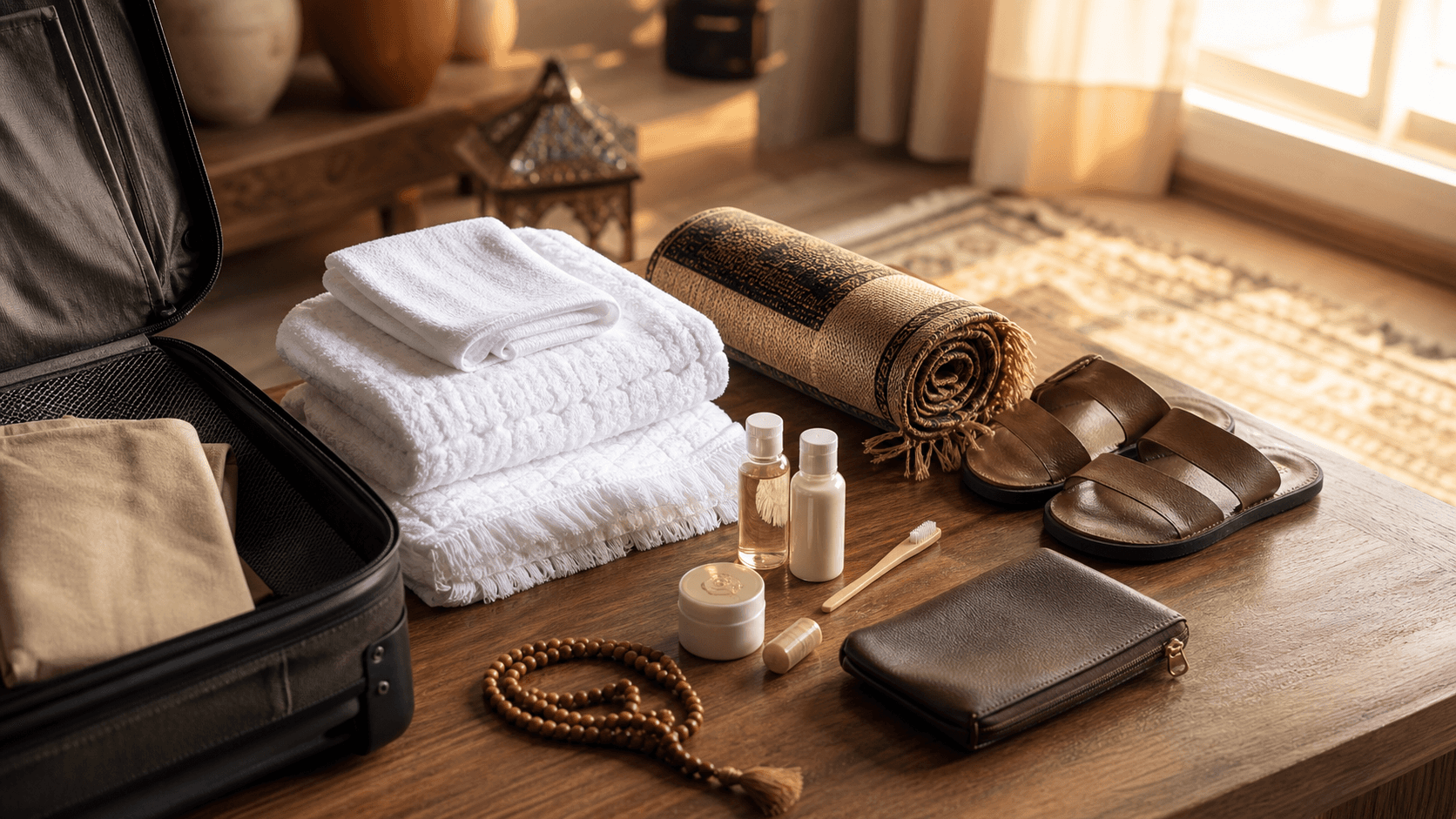
Before a pilgrim leaves, the kind gift is a practical one. Think ihram garments, alcohol-free toiletries, a compact prayer mat, comfortable sandals, a neck pouch for documents. These say “we are with you on the journey.” Family or friends give here, and the receiver is the person setting off. Timing matters in 2026: Hajj packages are expected to depart in clusters around 21-23 May 2026, per the Hyphen 2026 dates explainer, so pre-departure gifts should land in the days before.
Moment 2: The hadiya the pilgrim brings back
This moment flips the direction. Now the returning pilgrim is the giver, sharing small gifts from the Holy Land with family, relatives and neighbours. We cover these items in full in the next section, because they belong to the pilgrim’s hands, not yours. Reading this to welcome someone home? Then this isn’t your moment to shop. It’s theirs to share.
Moment 3: The welcome-home congratulation gift
Most people mean this moment when they search for a hajj mubarak gift. The pilgrim is now a Haji. Family and friends give a lasting gift that honours that new status. Return flights for the Hajj corridor run through late May into June 2027⁵⁶, so the welcome-home window stretches from late May into June. This is also where a daily-wear keepsake fits naturally, something they carry into ordinary life back home, not a one-day decoration.
Gifts a Returning Haji Brings Back (Hadiya From the Holy Land)
When a Haji returns, they traditionally bring back hadiya, small gifts from the Holy Land to share with family and friends. According to UNA-OIC’s 2025 feature on pilgrims’ gifts, the most treasured are Zamzam water, Ajwa dates from Madinah, a misbaha and alcohol-free attar; a kufi cap is another common keepsake. It’s a beloved social custom, not a religious obligation.
Knowing what this custom is, and what it isn’t, helps. Per the Union of OIC News Agencies (UNA-OIC), bringing back hadiya expresses joy, love and strengthened social ties, and isn’t a duty. So receive these gifts as tokens of affection, not obligations discharged. What follows is what a returning Haji often carries home, and why each item is meaningful.
Zamzam water. The most longed-for of all. Zamzam comes from the well inside Masjid al-Haram in Makkah, near the Kaaba, and its story traces to Hajar and her infant son Ismail in the desert valley. In Sahih Muslim 2473a, the Prophet Muhammad described Zamzam, in the Abu Dharr narration, as “blessed (water)” that “also serves as food.” Families treat a bottle of it as a small mercy carried back, not a remedy.
Ajwa dates from Madinah. This classic hadiya has deep roots in the Sunnah. In Sahih al-Bukhari 5445⁸, Sa’d narrates that the Prophet said one who eats seven Ajwa dates every morning “will not be affected by poison or magic on the day he eats them.” We share this as the traditional virtue that makes Ajwa meaningful to give, following the Sunnah, not as a medical or magical guarantee. Boxed and brought from Madinah, it carries barakah and remembrance.
A Madinah-printed Qur’an. A mushaf printed in the holy city is among the most cherished things to carry home, joining daily recitation to the memory of the journey. Handle it with the care the brand reference urges: the Qur’an is honoured, never treated as a casual souvenir.
A misbaha (prayer beads). Prayer beads from Makkah or Madinah let the recipient keep dhikr with a keepsake of the pilgrimage in hand. They’re light to carry and warmly received, which is why UNA-OIC lists them among the most common hadiya.
Miswak. The natural tooth-stick of the Sunnah. Small, inexpensive and easy to share widely, miswak is a practical token that ties an everyday act to the practice of the Prophet.
Alcohol-free attar. Perfume oils, incense and musk are a long-loved category of hadiya. UNA-OIC names perfumes among the customary gifts. Oud or rose attar, in a small vial, carries the scent of the journey into the recipient’s daily routine.
A kufi cap. Brought back from the Holy Land, a prayer cap is a simple, wearable memory of the trip. It’s a quiet favourite for fathers, grandfathers and young sons alike.
Hajj Mubarak vs Umrah Mubarak Gifts: What’s Different
A Hajj Mubarak gift marks a once-in-a-lifetime obligatory pilgrimage; an Umrah Mubarak gift marks a voluntary visit that can be repeated. Hajj is the fifth Pillar and obligatory once for those able (Britannica), while Umrah is the lesser pilgrimage performed any time of year. Both greetings are congratulation and dua. The weight, and the gift, differ.
Both “Hajj Mubarak” and “Umrah Mubarak” work the same way as phrases: each pairs a congratulation with a quiet prayer that the pilgrimage be accepted. Neither is a fixed formula from the Qur’an or Sunnah. Both are warm cultural greetings, much like “Eid Mubarak.” We mention this only so you choose your words, and your gift, with an easy heart rather than worry over the “correct” phrase.
Frequency is the difference that matters for gifting. Hajj falls in the fixed days of Dhul-Hijjah and overlaps with Eid al-Adha, and for most people it happens once in a lifetime after years of saving. So a Hajj welcome-home gift leans lasting and personal: a named keepsake, a premium piece, something kept for life. Umrah can be performed repeatedly, so an Umrah greeting gift can be lighter and given more often, matching an occasion that recurs.
Shopping for the lesser pilgrimage rather than Hajj? Start here instead: See all umrah mubarak gifts. And if you want the broader category of thoughtful pieces suited to a returning Umrah pilgrim, our edit of umrah gifts covers the everyday and milestone options side by side. For a Haji, though, read on. The next sections are built for the once-in-a-lifetime moment.
When to Give a Hajj Mubarak Gift (2027 Timing)
Give a Hajj welcome-home gift when the pilgrim returns, across late May and June 2027 for most families. Hajj rites are expected around 11–16 May 2027², with the Day of Arafah on 15 May and Eid al-Adha on 16 May. Return flights then run through late May into June 2027⁵⁶. The homecoming gathering, in other words, is your window.
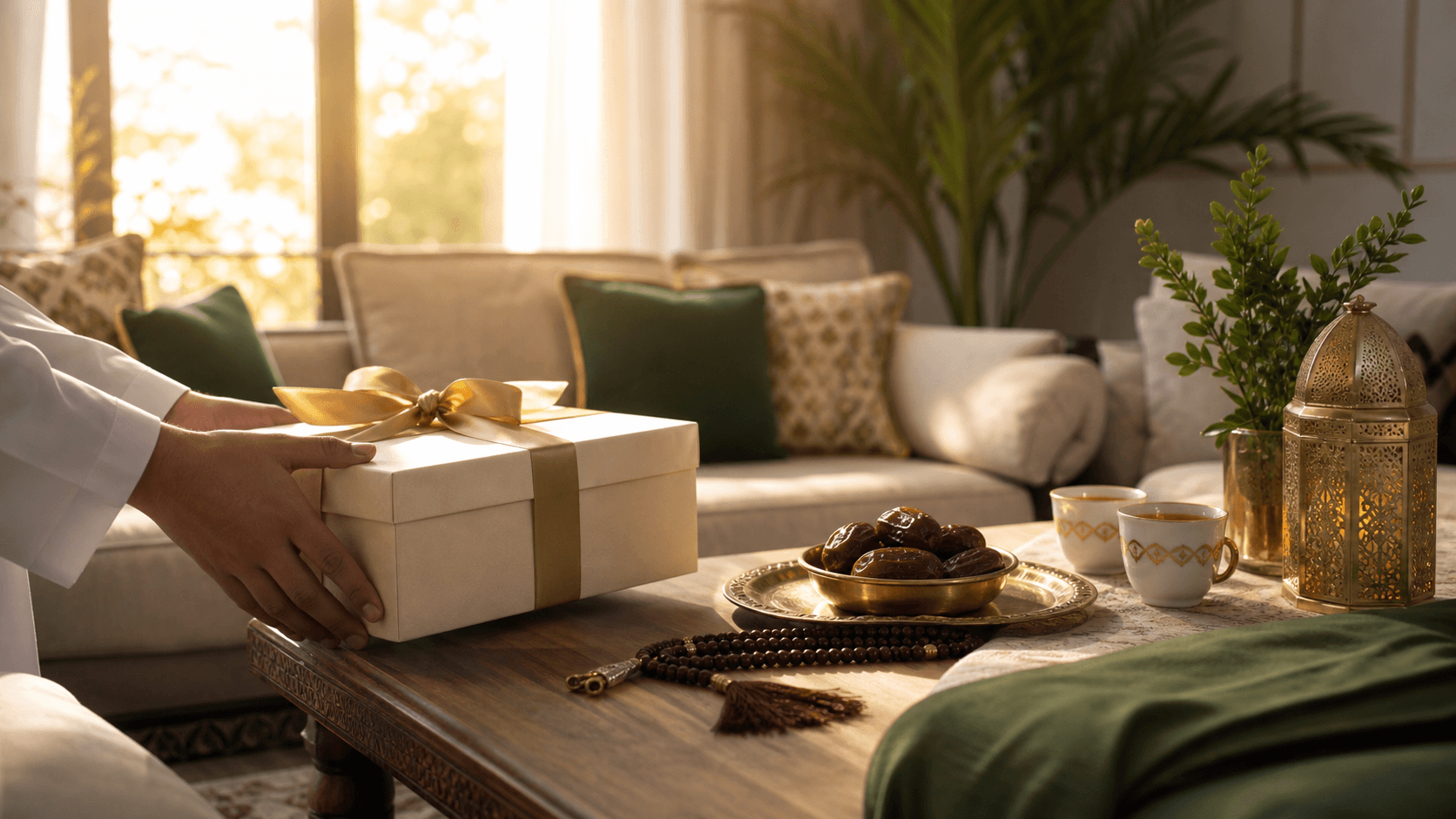
Set against each gifting moment, the 2027 calendar below keeps the timing from being a guess.
What | When (2027) | Source |
|---|---|---|
Hajj departures | ~21-23 May | Hyphen 2026 dates explainer |
Day of Arafah | Tue 26 May | Wego Travel Blog |
Eid al-Adha (10 Dhul-Hijjah) | Wed 27 May | Wego Travel Blog |
Days of Tashreeq | Thu 28-Sat 30 May | Hyphen 2026 dates explainer |
Hajj return flights | ~30 May-30 Jun | Wego Travel Blog |
For the pre-departure gift, aim for the days before 21 May, when bags are still being packed. Hold the welcome-home gift for the homecoming gathering, the first time family greets the new Haji, rather than posting it weeks later. Can’t attend in person? Send something that arrives boxed and ready to open, and the moment stays intact. Eid al-Adha on 27 May also makes a natural double occasion: a returning Haji often lands into the festival itself, so one thoughtful gift can honour both the homecoming and the Eid.
20+ Hajj Mubarak Gift Ideas to Give a Returning Pilgrim
Here are 20+ Hajj Mubarak gift ideas to welcome a returning Haji, grouped by category: personalised keepsakes, prayer essentials, fragrance, Islamic books, faith jewellery, and charity given in their name. Each honours their new Haji status rather than treating Hajj like a generic occasion. Pick one category that fits your relationship, then choose within it.
We’ve kept the familiar favourites every roundup lists, because they’re genuinely good gifts. But we’ve also added the one option Hajj lists almost always miss: a modern, daily-wear dhikr piece a Haji can keep using long after the welcome banner comes down. Most guides stop at items for the prayer mat. A new Haji also lives an ordinary life again, and that’s where a wearable faith piece earns its place. We give that category its own section after this one.
Personalised keepsakes (named for the Haji)
A personalised “Hajj Mubarak” frame, engraved with their name and the year 2027, made to sit on a wall for good.
Hand-lettered Qur’anic calligraphy paired with the pilgrim’s name, framed for the wall.
A custom name plaque or door piece marking their Haji status.
An engraved keepsake box, sized to hold their Zamzam and dates.
These work because they fix the moment in time. Picture a frame that reads the person’s name and “Hajj 1448 AH / 2027.” Such a piece becomes a family heirloom, not a forgotten trinket.
Prayer essentials
A premium prayer mat set, padded, with a matching travel pouch that tucks it away neatly for the next trip.
Quality tasbih or misbaha, boxed for presentation.
A digital qibla compass, or an elegant azan clock that calls the household to prayer from its place on the shelf.
Prayer attire: a fine thobe, abaya or hijab set.
Few gifts are as safe as a premium prayer mat: it honours the practice the journey deepened, and gets used every single day.
Fragrance: oud and bakhoor
Premium oud, or an alcohol-free attar in a presentation bottle that looks the part on a dressing table.
Bakhoor (incense) with a decorative burner.
Layered fragrance gift sets, arranged in a keepsake box.
Scent brings memory back fast. Fine oud lets a Haji carry a note of the Holy Land into their home for months.
Islamic books
A curated Islamic book collection that walks through the meaning, history and inner lessons of Hajj.
Beautifully bound mushaf with a clear translation.
Dua and dhikr handbook for daily use.
Coffee-table photography of Makkah and Madinah, the kind a guest picks up and lingers over.
Books deepen the experience the pilgrimage began. Pick well, and a collection meets a Haji’s reflective mood in the quiet weeks after returning home.
Faith jewellery
A wearable faith piece in gold or silver, engraved with a short dua the wearer can keep close all day.
Pendant engraved with the name of Allah, or a verse close to the wearer’s heart.
A daily-wear dhikr keepsake (see below).
Worn every day, a faith piece keeps the spirit of the journey close in a way a shelf item cannot. For the modern, wearable option built around this idea, see the dedicated section below.
Charity in their name (sadaqah)
A sadaqah donation made in the Haji’s name to a cause they love, quietly, with no fuss.
Sponsored water well, or orphan support sent with a certificate in their honour.
A Qur’an endowment (waqf) in their name.
For many returning pilgrims, a gift of giving means most of all, carrying the spirit of Hajj outward, into other lives and other hands, and asking nothing of the recipient but a smile.
A Gift That Carries the Habit Home: Modern Dhikr Keepsakes
The gift most Hajj lists overlook is the one best suited to a Haji’s daily life back home: a wearable faith piece. WESLAMIC makes Smart Dhikr Jewelry for exactly this. These are wearable faith pieces, designed so a moment of remembrance is always within reach. Think of it as jewelry first, a keepsake you wear, one that quietly carries the habit of dhikr from the Holy Land into ordinary days.
Among gift-givers welcoming a Haji home, the most common regret we hear is buying something for “the prayer mat moment” that gets put away by July. A daily-wear dhikr piece sidesteps that. It travels back into ordinary life and stays present, which is why we keep it on this list when others don’t.
Every Haji comes home changed. Then the ordinary days resume, with all their familiar rhythm: the commute, the office, the school run. Worn into those days, a faith piece meets the journey where it actually continues. Below are the WESLAMIC pieces best suited to that homecoming.
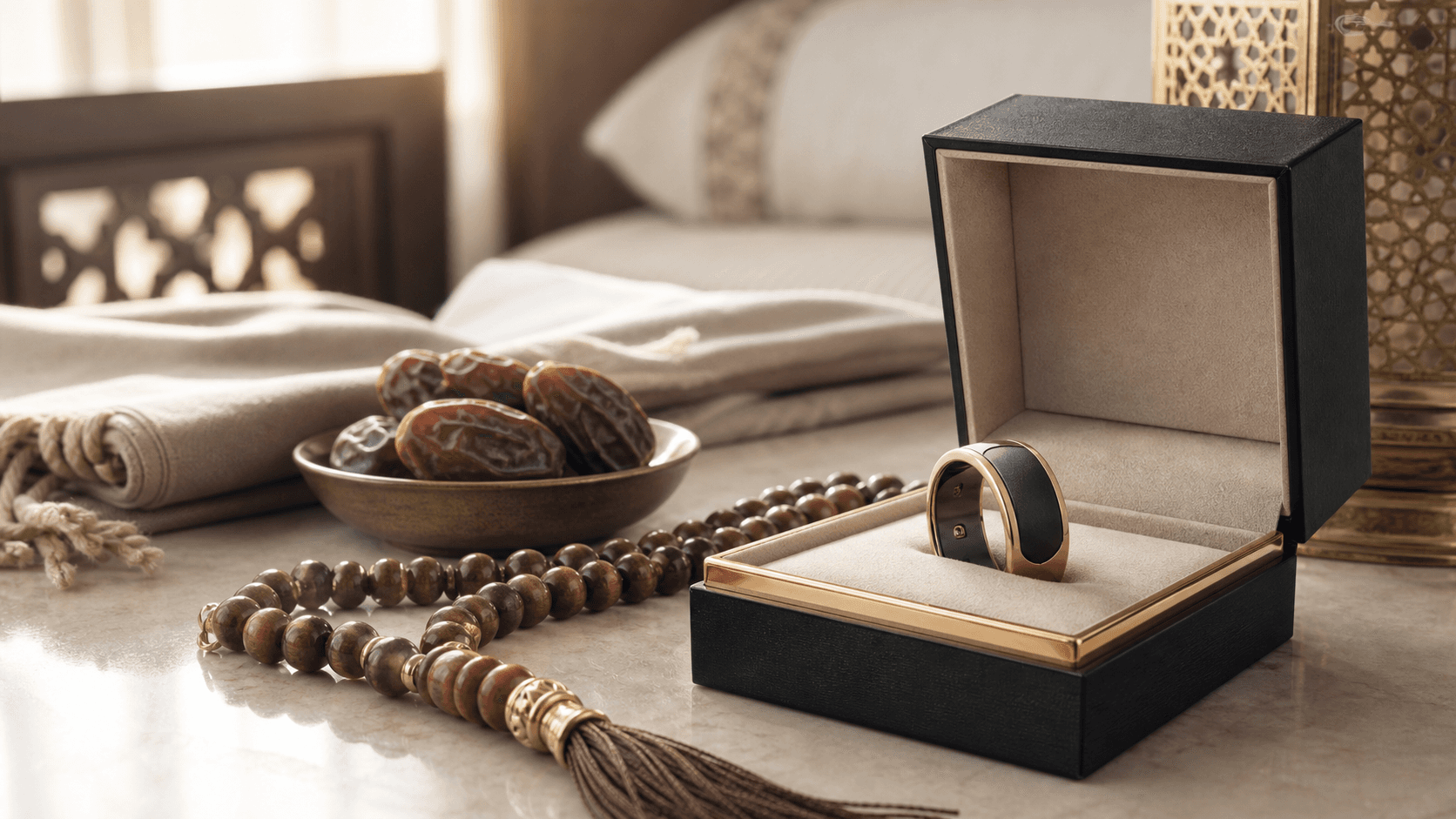
The iTasbih Faith series. This is the core Smart Dhikr Jewelry line, the brand’s everyday flagship, designed to read as jewelry first, not something you operate. It suits daily wear that lets a Haji keep dhikr quietly through commuting, the office and social moments: unseen, unobtrusive, uninterrupted. It also makes a meaningful self-gift for a returning pilgrim.
The iTasbih Salam series. Calm and everyday, this faith piece pairs wearing comfort with blind-touch feedback, so a moment of stillness is always within reach. It turns a private practice into a natural part of a modern lifestyle, the kind of presence a Haji is happy to be seen wearing.
The iTasbih Relation series. This one is made to be given. It carries meaning between two people rather than serving one, which is exactly the spirit of a welcome-home gift for a spouse, parent or close friend at a Hajj milestone, or at Ramadan, Eid or a wedding.
The iTasbih Gift Set (boxed edition). When the homecoming calls for presentation, the ceremony-ready gift set arrives ready to give, pairing a faith piece with considered packaging for the welcome gathering. It’s the natural choice when you want the moment of opening to feel like an occasion.
Etiquette: Choosing a Gift That Honours the Hajj
The etiquette of a Hajj gift is simple: honour the milestone, never the spectacle. Per UNA-OIC’s 2025 feature, exchanging hadiya is about expressing love and strengthening social ties, not discharging a duty. Let a welcome-home gift follow the same spirit: warm, sincere, and matched to the person rather than to the size of the gesture.
Keep a few quiet principles in mind:
Match the gift to the moment, not just the budget. A named frame or a piece worn every day often means more than something costly that sits unused.
Keep the framing about the person. You’re honouring a new Haji, not performing piety, so let the gift say “we’re glad you’re home,” not “look how generous we are.”
Mind the Qur’an’s place. A mushaf is a beautiful gift, but it’s honoured, never treated as decoration. Give it with the care the moment deserves.
There’s no obligatory gift, and no fixed phrase. Congratulating a pilgrim is a kindness, not a ruling. Give what fits your relationship, say “Hajj Mubarak” sincerely, and that is enough.
When in doubt, choose the gift that will still mean something in a year. Keepsakes carrying the person’s name, or pieces they wear into ordinary life, tend to outlast the homecoming week. That, usually, is the whole point.
Hajj Mubarak Gifts FAQ
What is the best Hajj Mubarak gift for parents?
For parents, lasting and personal wins. A named “Hajj Mubarak” frame with their year (2027) or a premium prayer mat set tops most lists. Hajj is obligatory just once for those able⁹, so a keepsake honouring that milestone suits parents better than anything disposable.
When should I give a Hajj welcome-home gift in 2027?
Give it when they return. Hajj return flights run through late May into June 2027, so the welcome-home window falls across that period. Aim for the homecoming gathering, when family first greets the new Haji, rather than weeks later.
Is a Hajj gift the same as an Umrah gift?
Not quite. A Hajj gift marks a once-in-a-lifetime, obligatory pilgrimage, while an Umrah gift marks a voluntary visit that recurs. Hajj 2027 overlaps with Eid al-Adha on 16 May. Hajj gifts therefore lean more lasting and personal; Umrah gifts can be lighter.
What do pilgrims usually bring back from Hajj?
Returning pilgrims share hadiya: Zamzam water, Ajwa dates, a misbaha and attar are most common, per UNA-OIC’s 2025 feature, with a kufi cap another popular keepsake. It’s a beloved social custom, not a religious duty, so receive these as tokens of love rather than obligations.
Can I give a dhikr ring as a Hajj gift?
Yes, and it fills a gap most lists miss. A Smart Dhikr Jewelry piece, like the iTasbih Faith or Relation series, is a wearable faith expression a new Haji carries into daily life back home. Unlike one-day decorations, it stays present long after the homecoming.
---
Reviewed by the WESLAMIC Editorial team. This guide describes cultural custom and gifting practice; it is not a religious ruling and does not issue fatwa. For questions of obligation, please consult a qualified scholar.
Sources
Encyclopaedia Britannica, “hajj,” The Editors of Encyclopaedia Britannica
Hyphen, “When is Hajj 2026? UK & Europe key dates guide explainer,” dated 1 April 2026
Sahih Muslim 2473a (Abu Dharr narration on Zamzam); wording and narrator shown on sunnah.com
WESLAMIC brand reference, “Islamic Culture & Smart Dhikr Product Foundations” (Five Pillars; Hajj as the fifth pillar), internal brand document, undated.