
In Islam, a gift was never just a social nicety. Over 1,400 years ago, the Prophet Muhammad (peace be upon him) tied gift-giving directly to love between people, and Muslims have treated it as an act of devotion ever since. So why does most “gifts islam” content stop at shopping lists?
The gap is this. Plenty of pages tell you what to buy. Far fewer tell you what actually matters: is this gift halal or haram, what do you do when you receive something awkward, can you give to a non-Muslim colleague, and where do Christmas and birthday gifts sit. Those are the questions people get stuck on.
This guide stitches three layers into one practical map: the doctrinal standing (why giving is worth doing), the hands-on adab (how to give and receive well), and the cross-faith grey areas (Christmas, birthdays, giving to non-Muslims). It includes a 5-point halal check you can run on the gift in your hand. Read it and you can decide for yourself, instead of copying another list.
Key Takeaways
In Islam, exchanging gifts is an encouraged sunnah that builds love between people: the hadith “Give gifts and you will love one another” (Al-Adab al-Mufrad 594) frames the whole practice.
A gift is acceptable when it is halal and given sincerely: avoid alcohol, pork-derived items (including gelatin), interest-based money, and idolatrous imagery, from a lawful source.
The value sits in intention (niyyah), not price: “Actions are but by intentions” (Sahih al-Bukhari 1).
Muslims may give to and receive from non-Muslims: scholars differ on participating in a festival’s religious meaning, so a safe default is to accept kindness graciously.
What Does Islam Say About Giving Gifts?
In Islam, exchanging gifts is encouraged and counted among the practices of the Prophet, a sunnah meant to soften hearts and grow affection between people. The narration “Give gifts and you will love one another” (تَهَادُوا تَحَابُّوا), recorded by Imam al-Bukhari in Al-Adab al-Mufrad 594 and classed hasan in standard gradings, sets the tone. A gift is a small act of love, not a transaction.
This single hadith does a lot of work. It reframes the whole act. You are not buying someone’s favour; you are watering a relationship. That narration, classed hasan in the standard gradings (narrated from Abu Hurayrah, recorded by al-Bukhari in Al-Adab al-Mufrad and also reported via Abu Ya’la and al-Bayhaqi), remains a common starting point whenever scholars discuss the standing of gifts. (A note on sourcing: this is Al-Adab al-Mufrad, a separate work by al-Bukhari, not Sahih al-Bukhari, so the two should not be confused.)
What does that mean in practice? A gift in Islam is given to please, not to obligate. There is no expectation of return, no quiet ledger of who owes whom. The point is the bond, and the small joy on the other person’s face.
Our finding: Across the explainer pages we reviewed while building this guide, almost all open with “buy this” energy. Hardly any open where the sources actually start, which is with love between people.
One practical thing worth saying early: this page is about the act of giving, not about what to buy. If you want the broader concept laid out, see islam present. And if you are browsing for actual items, you can See all islamic gifts. On this page, we are staying with the question of how to give well.
Is Gift-Giving a Sunnah? The Meaning Behind It
Yes, gift-giving is a sunnah, an encouraged practice modelled by the Prophet, and its weight sits in sincere intention rather than price tag. The classical narration “Give gifts and you will love one another” (Al-Adab al-Mufrad 594) establishes the encouragement. The deeper principle is that a heartfelt small gift outranks a grand one given for show.
In Islamic jurisprudence (fiqh), a gift has a precise name: Hiba (هبة). Classical definitions, from the Hedaya to Ameer Ali, describe Hiba as a voluntary, immediate and unconditional transfer of ownership, from a living giver to a receiver, with no consideration expected in return. That last part is what separates a gift from a sale. You give, and you let go, fully.
Why does that matter for ordinary people? Because it strips out the bargaining instinct. A true gift carries no strings, no “I’ll remember this,” no expected payback. It is given and gone.
And the value? That is where intention (niyyah) takes over. “Actions are but by intentions” (إنما الأعمال بالنيات), narrated by Umar ibn al-Khattab, is the very first hadith in Sahih al-Bukhari (Sahih al-Bukhari 1; also Sahih Muslim 1907). Al-Shafi’i held it to encompass a third of Islamic knowledge, and Imam Ahmad counted it among the three hadith on which Islam is founded. Applied to gifts, it means a modest, sincerely given present can carry more weight than an expensive one given to impress.
So if you have ever worried your gift is “not enough,” here is the reframe. Sincerity is the currency. Price is just the wrapping. For the concept of a “present” in Islam explored at the definitional level, the islam present page covers that side.
What Makes a Gift Halal or Haram?
A gift is halal when its contents and source are lawful, and it tips toward haram when it carries something forbidden: alcohol, pork-derived items, interest-based money, idolatrous imagery, or goods obtained unlawfully. Many scholars hold that pork-derived gelatin alone makes a food gift impermissible, and it hides in more products than people expect. The cleanest way to judge is to run a short check.
Run this 5-point halal check on the gift in your hand. Tick each one before you give or accept.
No alcohol. This covers obvious bottles, but also perfumes, chocolates, or hampers built around alcohol. If alcohol is the centre of the gift, leave it.
No pork-derived items (including gelatin). Pork is forbidden in all its parts and by-products. Watch sweets, marshmallows, capsules and some cosmetics: pig skin is a major source of commercial gelatin, and unlabelled gelatin is treated with caution. Plant-based (agar, pectin) and fish gelatin are widely held halal; beef gelatin is halal only from properly slaughtered animals.
No interest-based money (riba). The Quran is explicit: “Allah has permitted trade and forbidden interest” (al-Baqarah 2:275), reinforced in 2:278-279 and 3:130. A financial gift built on interest conflicts with this, so keep gifted money clean of riba.
No idolatrous or improper imagery. Avoid items that depict objects of worship or carry indecent figures. Scholars discuss nuance around images of living beings, but the safe path is to skip anything idolatrous or immodest.
Lawful source. A gift bought with unlawful money, or stolen, or gained by deceit, does not become clean by being wrapped. The origin matters as much as the object.
Does the gift pass all five? Then by these contents it is fine to give. Fail one, and it is worth swapping. This is the same logic scholars apply case by case. We have simply collapsed the scattered rulings into one checklist.
The Etiquette (Adab) of Giving and Receiving Gifts
The adab of gifts runs both ways: you give without showing off and without strings, and you receive graciously, never belittling a small gift. The Prophet, in the very narration that frames gift-giving as a sunnah (Al-Adab al-Mufrad 594), tied the act to love, which only holds if both giver and receiver carry the right manners. Most pages teach the giving half and skip the receiving half. This section covers both.

When You Give
Keep it quiet and clean. A few small rules carry most of the weight.
Don’t show off. Boasting about the cost, or the brand, hollows out the gift. The sincerity is the point.
No strings attached. A gift given to obligate someone, or to buy influence, drifts toward something else. Give and release.
Intention over price. A modest gift given warmly beats a lavish one given coldly. If money is tight, give what you can without apology.
Match the person, not your ego. Think about what they would love, not what makes you look generous.
When You Receive
This is the half nobody writes about, and it matters just as much.
Respond sincerely. Show genuine warmth. A flat “thanks” can sting more than no thanks at all.
Never belittle a small gift. Have you ever seen someone’s face fall when their small present is brushed off? The sunnah is to honour the gesture, whatever its size.
Reciprocate with grace, when you can. Returning kindness is encouraged, but it should feel natural, not like settling a debt.
Don’t compare gifts in public. Holding one person’s gift up against another’s, out loud, wounds quietly. Keep comparisons to yourself.
For the concept of giving as an expression of care, the definitional islam present page sits alongside this.
Occasions for Giving Gifts in Islam
Common occasions for gifts in Islam include Eid, the birth of a baby (aqiqah), weddings (walimah), departing for and returning from Hajj or Umrah, visiting the sick, and moving home. Each carries its own light etiquette rather than a fixed shopping list. The thread running through all of them, from the foundational sunnah of giving (Al-Adab al-Mufrad 594), is the same: mark the moment, strengthen the bond.
A quick tour of the main ones, with the spirit of each:
Eid. The natural high point of the gifting calendar, for children and adults alike. Generosity after a month of fasting feels especially fitting. For ideas in this lane, see eid gifts.
Ramadan. Through the month, small gifts, an iftar invitation, dates, a thoughtful token, keep warmth flowing toward family and neighbours. The seasonal lane is covered in ramadan gifts.
A new baby (aqiqah). Welcoming a newborn is a joyful occasion for gifts to the family, marking gratitude for new life.
Weddings (walimah). Marriage is celebrated openly in Islam, and a gift to the couple shares in that joy. Modesty and usefulness tend to be valued over extravagance.
Hajj and Umrah. Both the departure and the return are warm gifting moments. Pilgrims often bring small tokens home, and well-wishers send them off with care.
Visiting the sick. A small, thoughtful gift when visiting someone unwell follows the sunnah of compassion and lifts the spirit.
Moving home. A housewarming token welcomes someone into a new chapter.
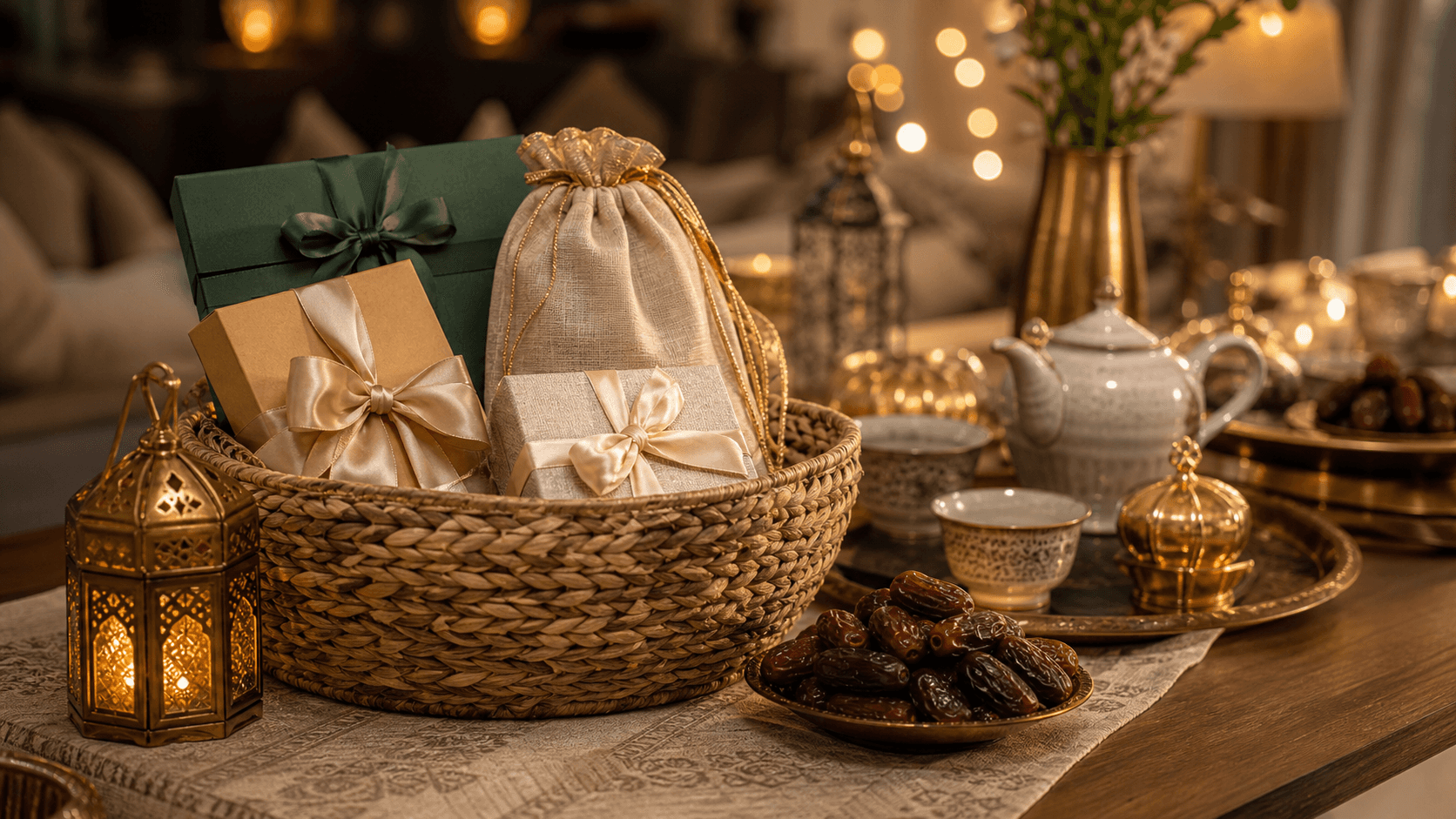
There are more: gifts for an Islamic wedding, tokens tied to Umrah, presents for women in the family. We are pointing at the occasions here rather than building lists for each. If you want curated items, the lanes above and islamic gifts for women go deeper than this overview can.
Can Muslims Give or Accept Christmas & Birthday Gifts?
Yes, with a distinction that does most of the work: accepting a kind gift from a colleague or neighbour is widely permitted, while participating in a festival’s religious meaning is where scholars genuinely differ. The everyday courtesy of taking someone’s thoughtful present, with intention front and centre (Sahih al-Bukhari 1), is treated very differently from celebrating the religious observance itself.
Think of it as a spectrum rather than a single verdict.
One end: some scholars hold that Muslims should not exchange gifts tied to the religious occasion of another faith, to avoid endorsing its meaning. Sensitive point, and we are reporting positions, not ruling on them.
The middle (a safe default): accept a non-Muslim’s kind gift graciously, with good intention, without taking part in the religious side of the festival. You honour the relationship without endorsing the observance.
The other end: others see exchanging a friendly, non-religious gift around such occasions as ordinary kindness, permitted on the basis of good character and neighbourly relations.
So what do you actually do when a coworker hands you a wrapped present in December, or a friend remembers your birthday? The widely-followed path is simple. Receive the kindness warmly, say thank you sincerely, and let the gift be about the person, not the festival’s theology. That separates two things people often blur, the human gesture and the religious meaning.
This is a sensitive area, and the right answer can vary by school of thought and by what a gift signals in your context. For the deeper definitional and ruling-level discussion, the islam present page is the place to go next.
Can You Give Gifts to Non-Muslims?
Yes, Muslims may give gifts to non-Muslims, and good relations, kindness and good character form the basis for it. The Prophet’s own conduct with neighbours and non-Muslims models generosity across faith lines, and the value still rests on sincere intention (Sahih al-Bukhari 1) rather than on who receives the gift. Giving to a non-Muslim friend, colleague or neighbour is, in itself, an act of good character.
The everyday cases are straightforward. A gift to a non-Muslim coworker for a work milestone, a token to a neighbour who has been kind, a present to a non-Muslim relative: all sit comfortably within Islamic manners, as long as the gift itself is halal. The same 5-point check from earlier applies. Don’t gift alcohol or pork-derived items just because the recipient does not share your faith; the contents still matter for you, the giver.
Is there any line? The main caution scholars raise is the same as the festival one: keep the gift about the relationship and good character, not about endorsing a religious observance. Beyond that, generosity toward non-Muslims is encouraged, not discouraged.
A Practical Giving Decision Path
The fastest way to decide on any gift in Islam is to ask three questions in order: is the intention sincere, do the contents pass the halal check, and does the etiquette fit the occasion. This collapses everything above, the sunnah of giving (Al-Adab al-Mufrad 594), the niyyah principle (Sahih al-Bukhari 1) and the 5-point check, into one flow you can run in under a minute.
The path runs in three steps:
Intention. Am I giving this to please and to strengthen the bond, with no strings attached? If the honest answer is “to obligate them” or “to look good,” reset the intention first.
Contents. Run the 5-point halal check: no alcohol, no pork-derived items, no interest-based money, no idolatrous imagery, lawful source. Fail one, swap the gift.
Etiquette. Does this fit the person and the occasion modestly? Give quietly, receive graciously, and don’t make it a contest.
That is the whole decision in three moves. Notice what it is not: it is not “how much should I spend.” Price never enters the path, because the sources never put it there.
If you would rather start from curated, faith-aligned items than from scratch, See all islamic gifts collects them, and islamic gifts for women narrows it for the women in your life.
Thoughtful, Halal Gift Ideas (Where to Go Next)
Once the rulings and adab are clear, the practical question becomes simple: what is a gift that is halal, beautiful, and clearly says you understand the person. Faith-aligned gifts that double as everyday wear, what we’d call Smart Dhikr Jewelry, sit naturally inside the intention-first principle (Sahih al-Bukhari 1), because they carry meaning long after the moment of giving.
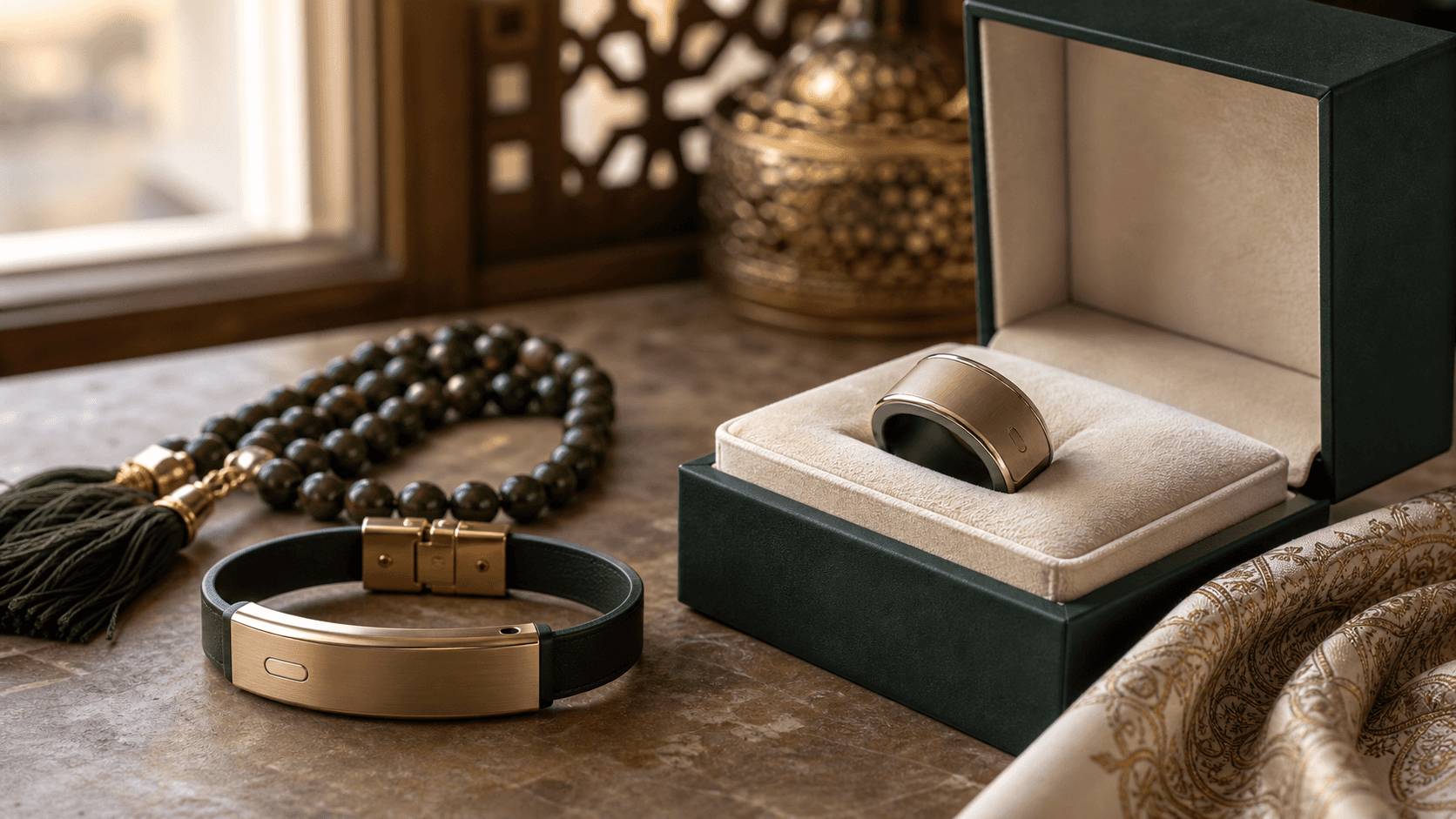
For the person who wants their faith expression to feel effortless and quietly beautiful, the iTasbih Faith Series is the high-end women’s piece of Dhikr Jewelry: low-key enough for the commute, the office or a gathering, while keeping a small act of devotion close. It is faith as a modern way of life, not a statement.
If the gift is for daily, constant companionship, the iTasbih Salam Series is built to let small moments of devotion happen naturally through the day, comfortable to wear, easy to use by feel, so Dhikr stops being something you have to remember and becomes something that simply happens.
And when the occasion calls for ceremony, Ramadan, Eid, the return from Hajj, a wedding, the iTasbih Relation Series is made to be given: a meaningful, ceremony-ready gift, with gift-box presentation, that says “I understand you” to the people you love. It is the relationship gift this whole guide has been building toward.
All three live in the same belief that quietly runs under this page: every small act of devotion deserves to be seen, kept and cherished. A good gift, given the right way, does exactly that.
To browse the full range rather than start from a single piece, See all islamic gifts, or narrow it with islamic gifts for women.
Frequently Asked Questions About Gifts in Islam
Is gift-giving really a sunnah in Islam?
Yes. Gift-giving is an encouraged sunnah, modelled by the Prophet and tied directly to love between people in the narration “Give gifts and you will love one another” (Al-Adab al-Mufrad 594, classed hasan in standard gradings). The encouragement is well-established; the emphasis falls on sincerity, not the size of the gift.
What makes a gift haram in Islam?
A gift tips toward haram when it contains something forbidden: alcohol, pork-derived items (including most unlabelled gelatin, since pig skin is a major commercial source), interest-based money (riba, forbidden in Quran 2:275), idolatrous imagery, or goods from an unlawful source. Run the 5-point halal check and swap any gift that fails a point.
Can Muslims accept Christmas or birthday gifts?
Scholars differ. Accepting a kind gift from a non-Muslim colleague or neighbour is widely permitted, with good intention leading (Sahih al-Bukhari 1). Where opinions diverge is participating in the festival’s religious meaning. A safe, widely-followed default: receive the kindness graciously without taking part in the religious observance itself.
Does the price of a gift matter in Islam?
No, price is not the measure. “Actions are but by intentions” (Sahih al-Bukhari 1) anchors a gift’s worth in sincerity, not cost. A modest gift given warmly can carry more weight than an expensive one given to impress. The adab even warns against belittling a small gift, on either side of the exchange.
Can Muslims give gifts to non-Muslims?
Yes. Giving to non-Muslim friends, neighbours, colleagues or relatives is an act of good character, encouraged rather than discouraged, with the value resting on sincere intention rather than the recipient’s faith. The gift’s contents must still pass the halal check; the relationship, not religious endorsement, is the basis for giving.
Conclusion
Strip away the noise and gifts in Islam come down to something small and human: a sincere act, with lawful contents, given with good manners. The doctrine encourages it, the adab shapes it, and the cross-faith questions resolve once you separate kindness from religious observance.
You do not need a longer shopping list. You need the three-move path: check the intention, check the contents against the 5-point halal list, fit the etiquette to the moment. Run that, and any gift you give carries the thing the very first hadith on this subject pointed to, love between people.
---
Sources
Sunnah.com, Al-Adab Al-Mufrad 594 (Imam al-Bukhari), Chapter “Accepting Gifts”
Sunnah.com, Sahih al-Bukhari 1: “Actions are but by intentions” (also Sahih Muslim 1907)
AIMS (Academy for International Modern Studies), What is Hiba in Muslim Law: Rules, Types, Examples
Reviewed by the WESLAMIC Editorial team. This guide reports scholarly positions on sensitive matters and does not issue fatwa; for personal rulings, consult a qualified scholar. Questions or corrections: see our About & Contact page.