
Search “islam present” and every result is a shop. A collection here, a marketplace there, a “Muslim Gifts” grid somewhere else. Not one of them stops to answer the quieter question underneath: what actually makes a single gift an Islamic one? That gap is odd. Faith-and-lifestyle buying is now huge. In 2024, the global Islamic economy reached US$2.60 trillion across six consumer sectors, on its way to US$3.56 trillion by 2029, per DinarStandard’s State of the Global Islamic Economy 2025/26 report (via Salaam Gateway). Yet nobody pauses to define the thing.
So this page does. It isn’t a store. Our parent guide already carries the buy-before halal checklist and the recipient-by-occasion map; you can See all islamic gifts there. This page owns one job: what an Islamic present actually is. First we define it clearly enough to quote, then we gently point you to where you can buy one. Answer first, sell soft, in that order.
Key Takeaways
In Islam, a present is a hadiyah: a freely given, halal gift meant to build love, nothing expected back.
Giving gifts is a recommended Sunnah, not a duty³.
A gift turns “Islamic” through three things: it is halal, sincere, and honours the recipient’s faith.
The faith economy is vast (US$2.60tn, 2024, SGIE 2025/26), yet almost every result is a shop.
What Is a Present in Islam? (Quick Answer)
In Islam, a present (hadiyah) is a freely given gift meant to build love and goodwill between people. Giving gifts is a recommended Sunnah of the Prophet Muhammad, not an obligation. An Islamic present is simply a halal, meaningful gift, given sincerely, with nothing expected in return. It sits inside a large faith economy worth US$2.60 trillion in 2024¹².
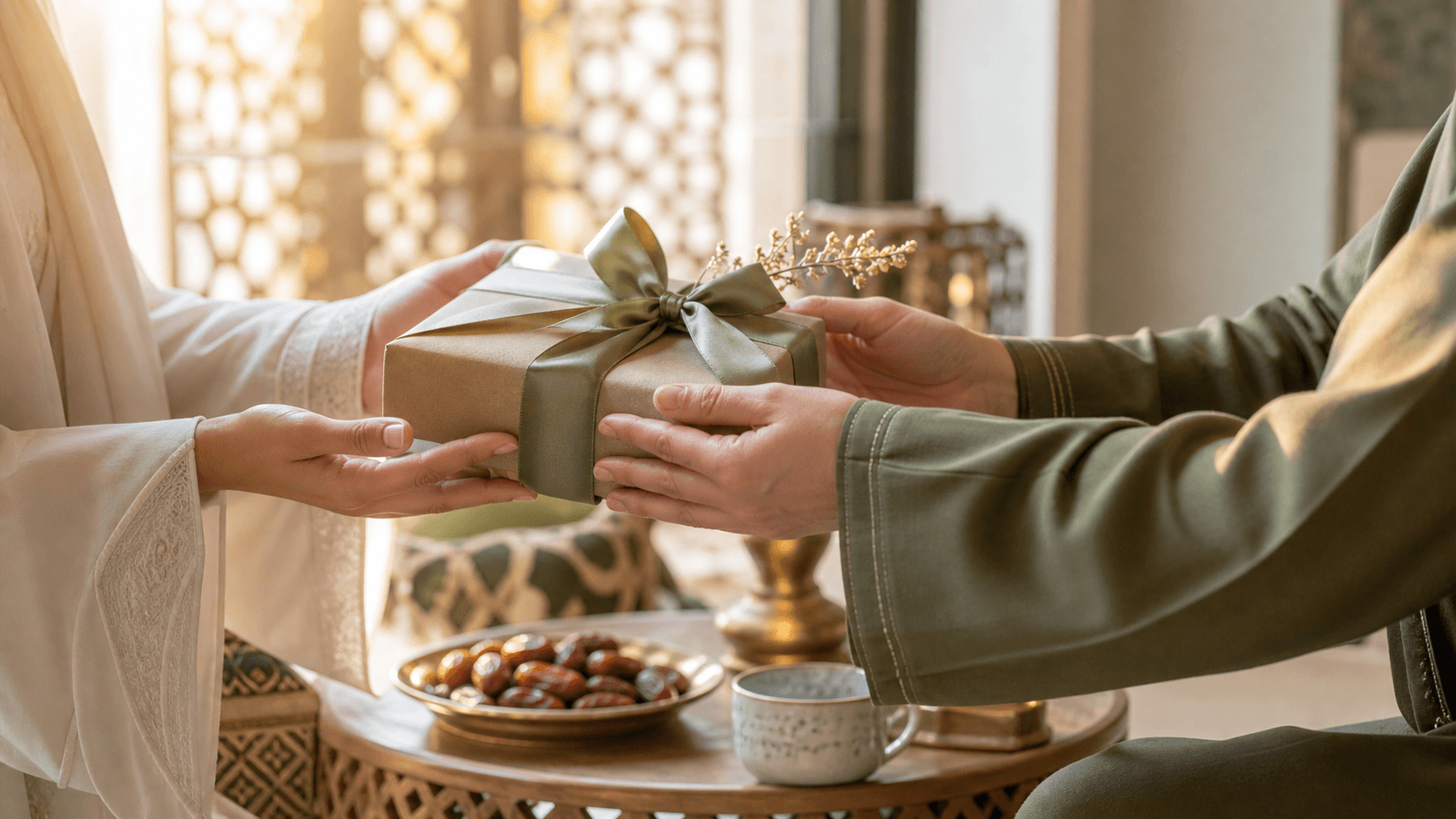
The Arabic word is hadiyah (هدية). In Islamic terminology it means a gift offered to honour someone, and anyone may receive it, with no restriction. It’s the everyday word for a birthday gift, a thank-you gift, a gift between friends.
We looked, and this is what we found. Across the top-10 results for “islam present”, every single page is a store or a collection: a Muslim Gifts marketplace grid, a shop’s gift category, a roundup that links straight to checkout. Not one defines the word first. That missing definition is the negative space this page fills.
A hadiyah isn’t charity. Sadaqah is voluntary giving to those in need; zakat is the obligatory annual alms, a pillar of the faith. A hadiyah asks for neither need nor obligation. It’s just a warm, voluntary present between people who care about each other. The three sit side by side like this:
Term | What it is | Who receives it | Obligation level |
|---|---|---|---|
Hadiyah (gift) | A freely given present to build love | Anyone you care about | Recommended (Sunnah), never required |
Sadaqah (charity) | Voluntary giving for the sake of God | Those in need | Voluntary, no fixed amount |
Zakat (alms) | A fixed annual share of wealth | The poor and other set categories | Obligatory, a pillar of Islam |
In Islam, a present is called a hadiyah: a freely given, halal gift offered to build love and goodwill, with nothing expected in return. It differs from sadaqah (charity to the needy) and zakat (obligatory alms). Giving one is a Sunnah, not a duty. The wider faith economy reached US$2.60 trillion in 2024, per DinarStandard’s SGIE 2025/26 report (via Salaam Gateway), yet almost no page defines the gift itself.
Why Giving Presents Matters in Islam (It’s a Sunnah)
Giving presents is a recommended Sunnah, not an obligation. The Prophet Muhammad encouraged it as a way to grow love between people. The clearest narration is short: “Give gifts and you will love one another” (tahaadu tahaabbu), reported by Abu Hurayrah in Imam al-Bukhari’s Al-Adab al-Mufrad 594 and graded Hasan (good) by Shaykh al-Albani. A gift, in other words, is an act of love made visible.
Scholars place gift-giving within adab, the etiquette of Islam, rather than strict legal duty. It’s treated as a manifestation of mawaddah (affection) and generosity, warmly recommended, never forced. So there’s no guilt here, and no streak to keep. Give when your heart moves you to.
The manners around giving and accepting run deeper than one page can hold, so for the fuller etiquette, see our companion guide to gifts islam.
Giving presents in Islam is a Sunnah, a recommended practice rather than an obligation. The Prophet said “give gifts and you will love one another”³. Scholars frame it within adab, the etiquette of affection, so a gift is encouraged warmly and never demanded, which is exactly why it carries no pressure.
What Makes a Gift ‘Islamic’? (And How It Differs From an Ordinary Gift)
A gift becomes “Islamic” through three things, not its look on a shelf. First, it’s halal: no alcohol, no pork-derived items, no figurative idols of living beings. Second, it carries sincere goodwill, given for the person and not for show. Third, it honours rather than ignores the recipient’s faith. This is the gap the shopping lists never open, yet it’s what you actually wanted to know.
Notice that none of the three is about the product category. An ordinary gift and an Islamic present can be the very same object. A leather notebook, a box of dates, a scented attar: each is “Islamic” not because of a special label, but because of the care and the screen behind the choice.
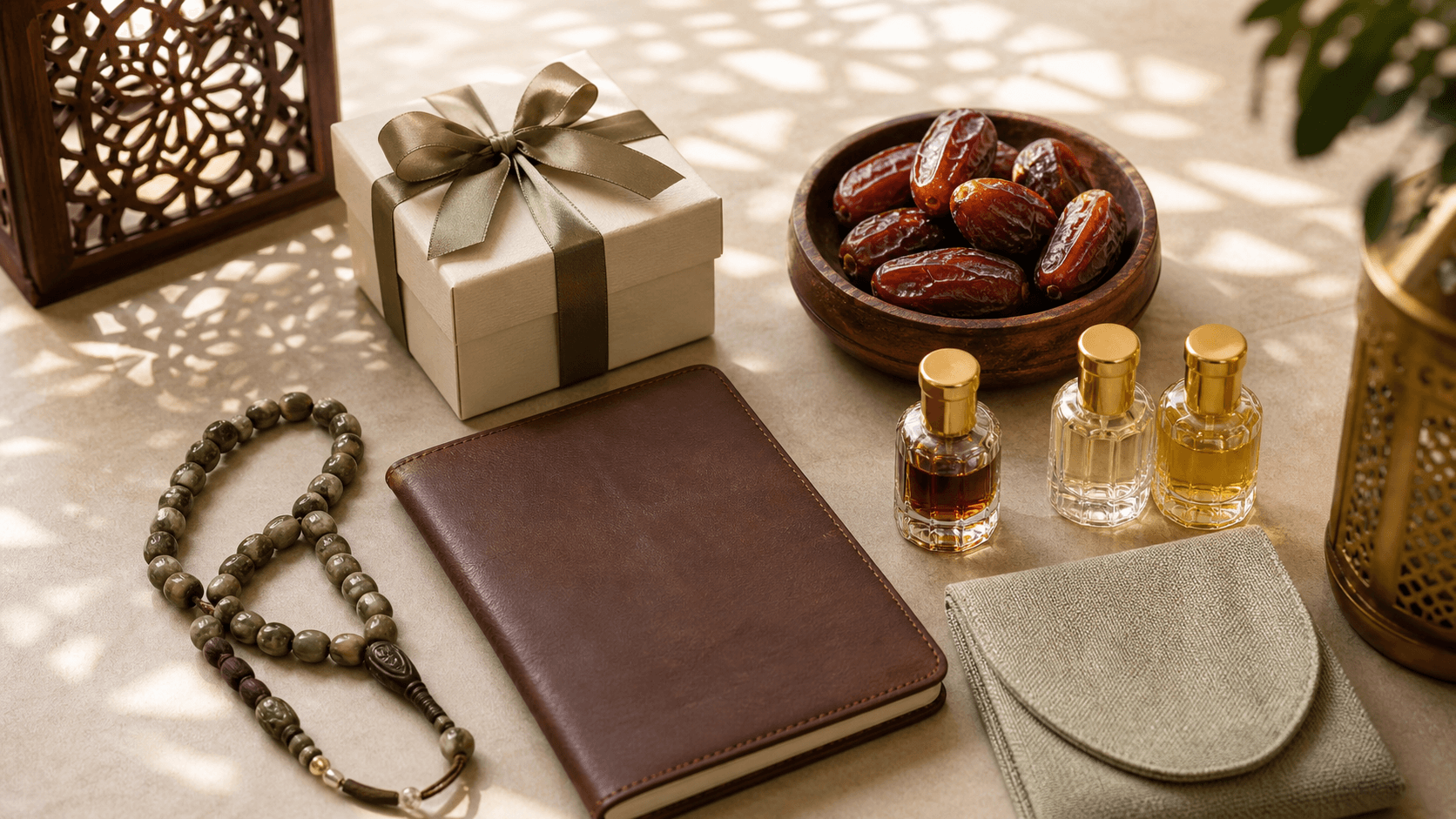
So the real difference isn’t on the price tag. It’s in three quiet checks: the gift clears the halal line, it’s given with honest warmth, and it sits comfortably within the person’s beliefs. Pass all three and the object barely matters. Many scholars anchor the figurative-idol point to the hadith that angels do not enter a house containing a dog or an image of a living being⁵. Calligraphy, geometric art and scenery sidestep it neatly.
In practice, avoid the obvious traps: liquor-filled chocolates, alcohol-forward perfume, gummy sweets set with pork gelatine, detailed statues of people or animals. Everything else is wide open. The care is the content, not the catalogue.
A gift is “Islamic” when it clears three lines: it is halal (no alcohol, pork-derived items, or figurative idols of living beings), it carries sincere goodwill, and it honours the recipient’s faith. The figurative-idol point rests on the hadith that angels do not enter a house with an image of a living being⁵. It is the care behind the choice, not a special shelf, that makes a present Islamic.
How to Choose the Right Islamic Present (3 Quick Checks)
Choosing a fitting Islamic present takes three quick checks, nothing more. Is it halal? Will the person actually use or wear it? Does it say what you mean? Run a gift through those three and you won’t go far wrong, whatever your budget. The thoughtful gift beats the expensive one nearly every time, and Prophetic guidance favours the modest over the showy.
Check one is the halal screen. Glance at the label for tasteable alcohol, pork-derived gelatine, or a figurative statue, then move on. In our experience, this single pass removes almost every worry a giver carries to the till.
Check two is usefulness. A present used daily quietly outlasts one that sits in a drawer, so think of what fits the person’s ordinary day: their commute, their prayers, their quiet moments. Everyday wear is where a gift earns its keep.
Check three is meaning. Does the gift carry a little of your warmth, a name, a date, a colour they love? A small, personal piece signals “I understand you” far more loudly than a long feature list ever could.
To choose an Islamic present well, run three checks: is it halal, will it be used or worn, and does it carry sincere meaning? Prophetic guidance favours thoughtful gifts over costly ones, so budget pressure stays low. The wider faith economy is large, US$2.60 trillion in 2024¹², yet the best present is judged by fit and care, not price.
Islamic Present Ideas by Person and Occasion (Where to Go Next)
The most fitting Islamic present depends on who receives it and when. We keep the ideas on dedicated pages rather than piling a long list here, since this page is the definition, not the catalogue. A boxed gift set, for instance, raises a wedding moment, while a small everyday piece suits a quiet Ramadan. Match person to occasion first, then follow the link that fits.
Buying for a woman in your life? Start with islamic gifts for women, where the choice narrows around her taste and her faith together. For the joy at the close of the fasting month, head to eid gifts. For the month itself, with its gentler rhythm, see ramadan gifts. And to welcome someone home from pilgrimage, see umrah & hajj mubarak gifts.
For relationship moments, a wedding, a Hajj send-off, a parent’s milestone, a piece like the iTasbih Relation Series Smart Dhikr Ring turns devotion into something shared and wearable between two people. And when the occasion deserves real ceremony, the iTasbih Smart Dhikr Ring Gift Set arrives in packaging built to lift the moment, a high-ceremony option for Ramadan, Eid or a wedding.
The right Islamic present depends on the person and the occasion, so match those two first, then choose. This page defines the gift; the buying happens on pages built for each moment: women, Eid, or Ramadan. A relationship piece suits a wedding or a Hajj send-off, while a boxed gift set raises a high-ceremony occasion, which is why we route rather than list.
Can a Non-Muslim Give a Muslim a Present?
Yes. Islam welcomes a sincere present from a non-Muslim, and accepting such a gift is itself permitted, provided the gift is halal and avoids alcohol, pork-derived items, or anything religiously offensive. The giver’s own faith isn’t the test here. The contents and the sincerity are. A colleague, a neighbour, or a new in-law can give just as freely as anyone else.
So what travels safely across that line? A neutral, beautiful object is the calm choice: calligraphy art, a quality attar set, a hamper, or a piece of faith jewelry. Each clears the halal screen on its own and assumes no religious knowledge you may not have.
A non-Muslim can give a Muslim a present, and accepting it is permitted in Islam, as long as the gift is halal and free of alcohol, pork-derived items, or anything religiously offensive. The giver’s faith is not the test; the contents and the sincerity are. Neutral, well-chosen pieces like calligraphy, attar or faith jewelry travel safely across that line.
The Safest Islamic Present When You’re Unsure
When you are unsure, the safest Islamic present is something halal, usable every day, and quietly meaningful. It can’t break a rule, and it actually gets used. A neutral piece like calligraphy art or an alcohol-free attar works beautifully. So does a modern option: a wearable piece of faith jewelry, such as a Smart Dhikr Ring, that keeps a small act of devotion within easy reach.
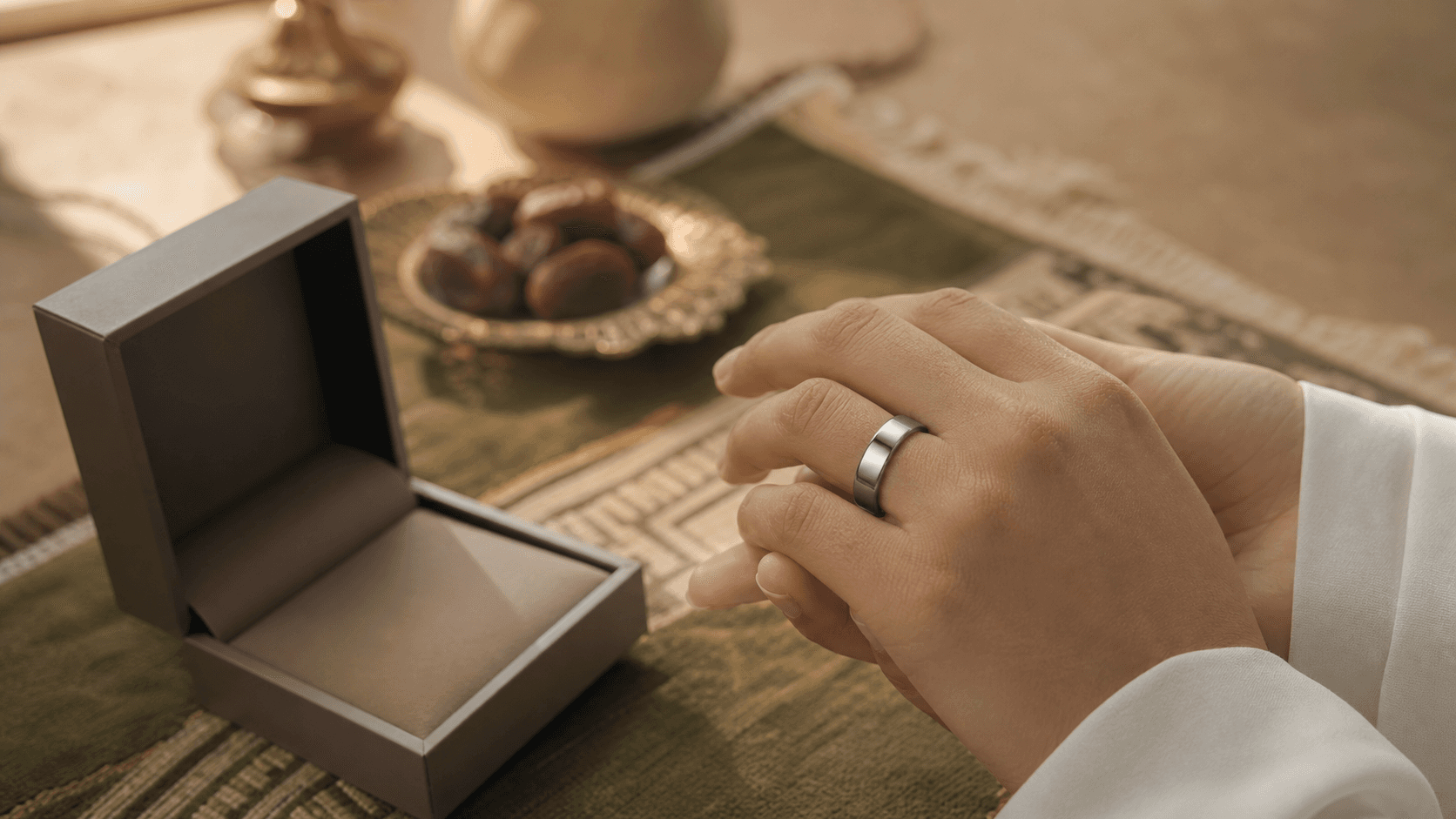
From the brand we make: most gift guides assume a present is used once and then forgotten. We build for the opposite. A piece of Smart Dhikr Jewelry is given with meaning on the day, then worn quietly every day after. (Disclosure: WESLAMIC makes Smart Dhikr Jewelry, so treat this as one honest illustration, not the only answer.)
A few of our own pieces show the range. The iTasbih Faith Series Smart Dhikr Ring is the premium, everyday keepsake, the ring she reaches for on the commute or at work to stay connected to her faith, without anyone noticing. The iTasbih Salam Series Smart Dhikr Ring is calmer and peace-themed, a gentle way to say “I wish you peace” at Ramadan or Eid. Neither is a counter to keep score. Each is a wearable expression of faith, meant to be seen, kept and cherished.
That’s the upgrade hiding in plain sight: not a one-off consumable, but a present that keeps giving. Once you’ve settled on the meaning and want the wider buying options, head back to See all islamic gifts.
The safest Islamic present, when you are unsure, is something halal, usable daily, and quietly meaningful, because it cannot break a rule and it actually gets used. Calligraphy art or attar works well; a modern option is a wearable Smart Dhikr Ring, given with meaning on the day and worn every day after. Fit and care, not spec, decide the gift.
Islam Present FAQ
Short answers to the questions people ask most about an Islamic present, gathered in one place. Each one is self-contained, so you can lift just the answer you need. Where a question touches doctrine, you’ll find the deeper detail in our companion guide to gifts islam.
What is a present called in Islam?
A present in Islam is called a hadiyah: a freely given gift offered to build love and goodwill, with no expectation of return. Giving one follows the Sunnah of the Prophet Muhammad³. It differs from sadaqah (charity to those in need) and zakat (obligatory alms). A hadiyah is simply a warm, voluntary gift.
Is giving gifts a Sunnah in Islam?
Yes. Giving gifts is a recommended Sunnah, not an obligation. The Prophet Muhammad encouraged it to increase mutual love: “give gifts and you will love one another,” narrated by Abu Hurayrah in Al-Adab al-Mufrad 594 and graded Hasan by Shaykh al-Albani. It is warmly recommended within Islamic etiquette, so there is no duty and no pressure attached.
What makes a gift halal or Islamic?
A gift is Islamic when it clears three lines. It is halal (no alcohol, pork-derived items, or figurative idols of living beings), it carries sincere goodwill, and it honours rather than ignores the recipient’s faith. The figurative-idol point rests on the hadith about images⁵. It is the care behind the choice, not a special shelf, that makes a present Islamic.
Can a non-Muslim give a present to a Muslim?
Yes. Islam welcomes sincere presents from non-Muslims, and accepting such a gift is itself permitted, provided the gift is halal and avoids alcohol, pork-derived items, or anything religiously offensive. The giver’s own faith is not the test; the contents and the sincerity are. Neutral pieces like calligraphy, attar or a quality hamper are reliably safe choices.
What is the best present to give a Muslim if you’re unsure?
When unsure, the safest present is something halal, usable every day, and quietly meaningful: it cannot break a rule and it actually gets used. A neutral piece like calligraphy art or attar works well. A modern option is a wearable piece of faith jewelry, such as a Smart Dhikr Ring, that keeps a small act of devotion within easy reach.
Is money an acceptable present in Islam?
Yes. Both cash and physical presents are acceptable in Islam, and money is a common, welcome gift at weddings and Eid across many Muslim cultures. A thoughtful physical piece simply lasts longer and signals more personal care. For a giver unsure of the recipient’s taste, cash or a quality hamper is a reliably safe choice.
Sources
DinarStandard, State of the Global Islamic Economy (report author and publisher)
Sibtayn International, “Hadiya (Gift)” (definition of hadiyah in Islamic terminology)
Written by the WESLAMIC Editorial Team, covering Islamic gifting etiquette and modest-lifestyle buying across Eid, Ramadan, weddings and Hajj. Reviewed in-house against the scholarly sources cited; see our editorial policy and about page. This guide is editorial; it reflects scholarly views as cited and is not a religious ruling. (Disclosure: WESLAMIC makes Smart Dhikr Jewelry.)