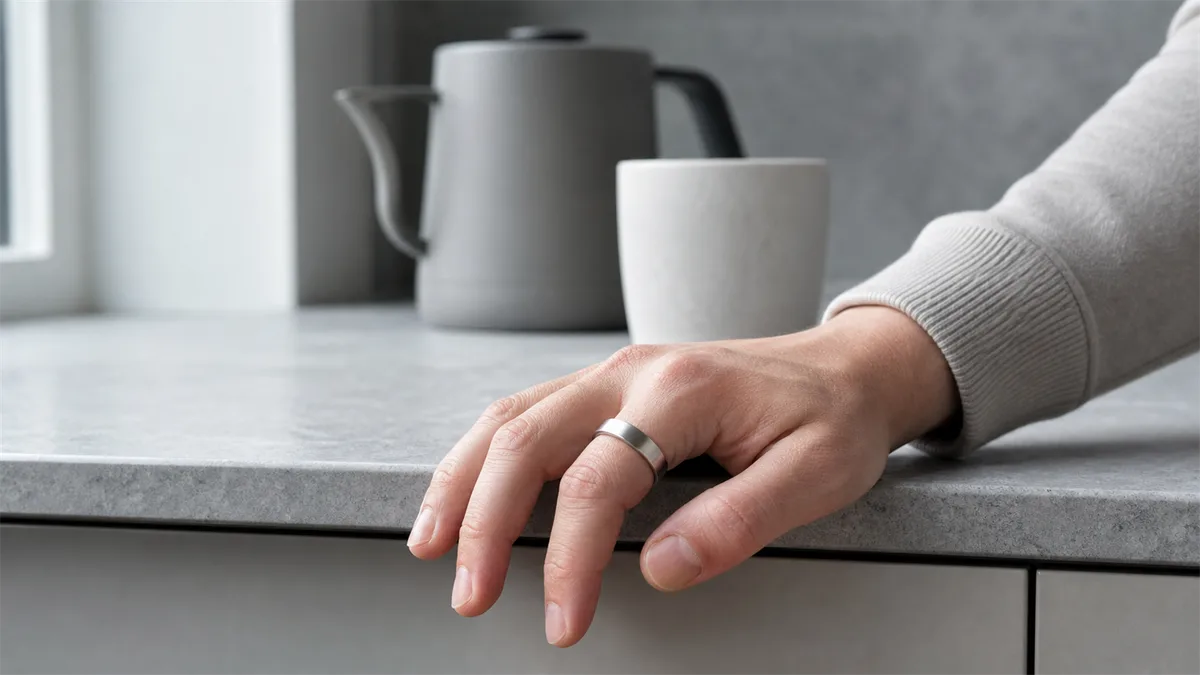
A touch-sensing tasbih ring never feels your thumb press down. What it notices is an electrical change, because your fingertip is mostly water, and water shifts the field around a sensing surface. That single piece of physics runs under everything below on touch-based models. It explains why a deliberate tap counts so dependably, and why a damp hand after wudu can add a count you never made.
Key Takeaways
One thumb tap, one count on the ring, then a Bluetooth sync to the app.
Deliberate taps register reliably; rapid flurries and accidental brushes are where counts slip.
Silicon Labs’ AN0829 explains the trade-off: faster sensing draws more current.
Our July 2026 records list on-ring vibration for four of the five models; the health-focused FIT is the exception.
Does a Zikr Ring Actually Work? (Straight Answer)
Yes, a zikr ring works. It registers each thumb tap on a built-in touch sensor and advances a running total held on the ring itself. Where the model has a screen, that total shows on a small OLED display. Bluetooth then carries it across to a companion app. Counting is reliable for deliberate taps, less so for rapid or accidental ones.
People typing “does zikr ring work” into a search bar usually mean something blunter. Is this legit, or a gimmick in a nice box? That doubt is earned, honestly, given how much of this category gets sold on a photograph and a promise.
Two questions settle it. Does the ring count what you meant to count, and does dhikr happen more easily because it’s already on your finger? We take the first apart in order, sensor to count to sync to buzz to battery, and we’re just as plain about where it slips. The second question closes the page.
Readers who arrived from the category question itself can begin at See all what is zikr ring, which sets out what these rings are before this page opens them up.
How a Zikr Ring Counts Your Dhikr
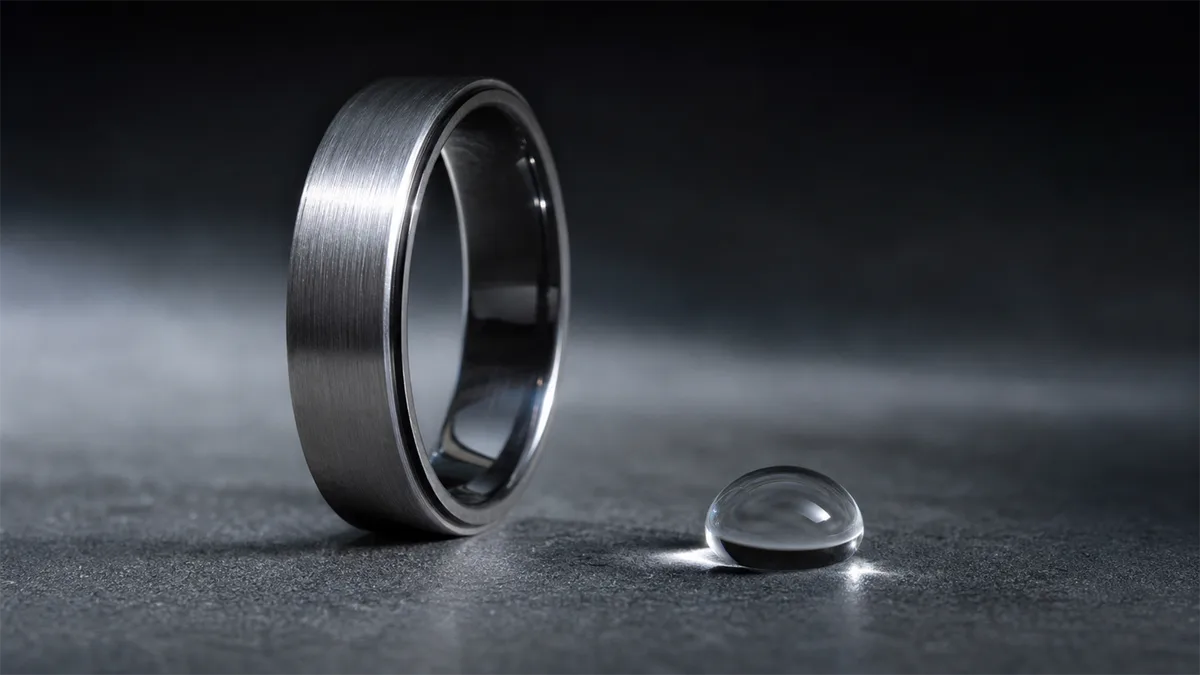
Because the count lives on your finger, a zikr ring lets you keep tasbih eyes-free: no beads to hold, no screen to check. It counts by sensing your thumb tap on a touch-sensitive bezel or button and adding one to the running total, shown on a small screen where the model has one, so the tally builds in the background while your attention stays on the dhikr.
Registering a tap takes a moment of genuine contact. Your thumb has to settle on the sensing surface long enough to read as intentional, rather than skim across it. A brush that never resolves into contact simply doesn’t become a number.
Read in July 2026, Microchip Technology’s application note AN2098, mTouch Sensing Technology Water Resistance, states the underlying principle without any marketing gloss: “Humans are made of water, and water has a very high dielectric; so, the coupling between the sensor and the system’s ground reference will increase as the user approaches.”¹ That is the entire sense link, in one sentence from a semiconductor engineer rather than a seller.
Your running total is held by the ring, not by the phone in your pocket. Bluetooth moves a copy across to the app whenever the two are back in range, so an errand without your phone, or a phone that died at noon, leaves the tally untouched.
Scan the category and the gap shows up quickly. Listing after listing asserts accurate smart counting, then goes quiet about what is actually being sensed. A skeptic is left with nothing to weigh. Walking the chain link by link, the way this page does, is the part almost nobody publishes.
Does It Vibrate, Sync to an App, and Survive Wudu?
Yes on the buzz for four of our five models, and yes on app sync across the line. On water, only one model carries a published rating. Our zikr ring records, re-pulled on July 30, 2026, list Bluetooth 5.1 in the Faith spec field and on-ring vibration across the Faith, Salam, Relation and Peace 1 records; the health-focused FIT carries no vibration hardware, and the Salam’s IP67 is the only water rating published in that set.
So on-ring vibration is a per-model fact, not a price-tier fact. Read closely, our records name prayer-time vibration for the Faith, Relation and Peace 1, while the Salam’s listed vibration is tied to counting milestones rather than to prayer times. Where on-ring hardware is absent, prayer reminders and Fajr tracking still run; they simply arrive through the app on your phone rather than as a nudge on your hand. Anyone choosing a ring mainly for that silent tap at Maghrib should check which side of the line their model sits on.
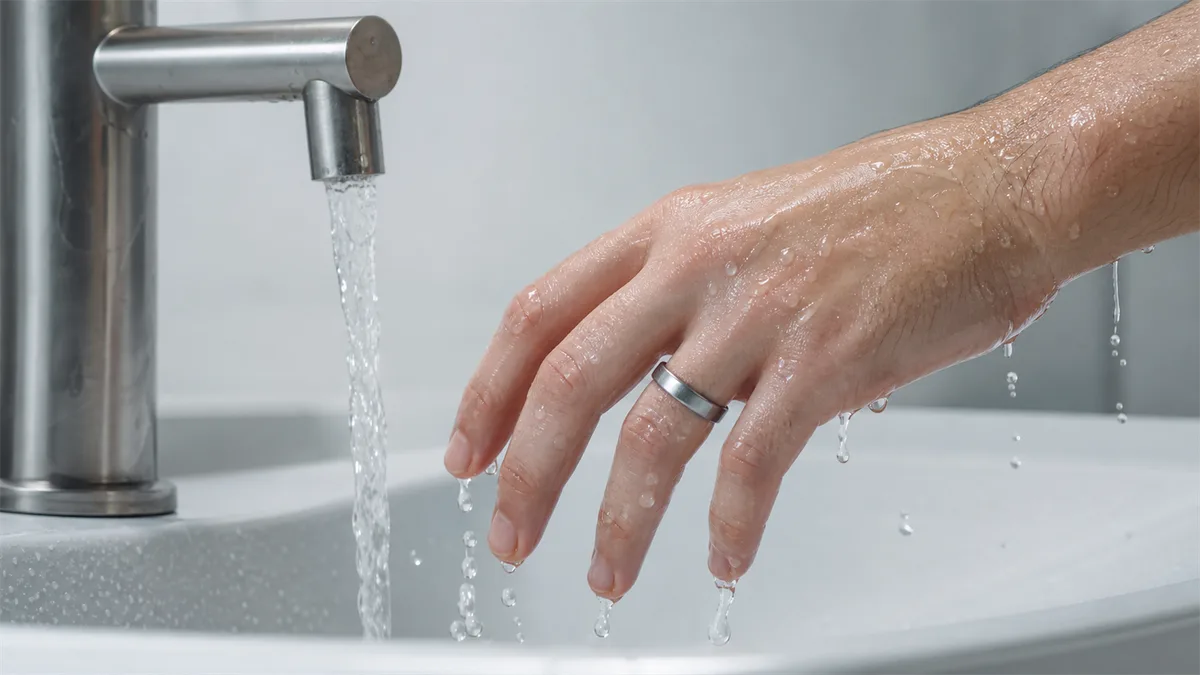
Water is the question people ask before they ask about anything else. The Salam’s IP67 is described in its own spec block as worry-free wudu, which covers ablution and everyday splashes rather than swimming or a hot shower. For the other four, no IP figure is published; ratings model by model are set out in is a zikr ring waterproof.
How Long Does the Battery Last?
Weeks, not hours, for a ring whose main work is counting. As of July 2026, our Salam listing publishes 10 to 20 days of use at around 500 counts a day. Silicon Labs’ AN0829, a capacitive sensing configuration guide, explains why that stretch is even possible: sampling more often buys quicker response and costs more current².
That trade-off is the whole story of runtime. A ring that spends its day waiting for the next thumb tap draws very little. Add always-on health sensing, a brighter screen, or frequent buzzing, and the same battery empties sooner. Nothing mysterious is happening; the ring is simply paying for what it senses.
Charging habits follow from that. A magnetic charger gives the Salam a short top-up, while the Relation’s charging case stretches the gap between plug-ins for people who travel.
Is It Accurate? Where Zikr Rings Miscount (Honest Limits)
Mostly accurate, not flawless. Microchip’s AN2098 notes that with a capacitive sensor, “the coupling will also increase when drops of water or some other high dielectric material is placed on the system.”¹ Read in July 2026, that line names the honest limit exactly: damp hands after wudu can look, electrically, a lot like a fingertip.
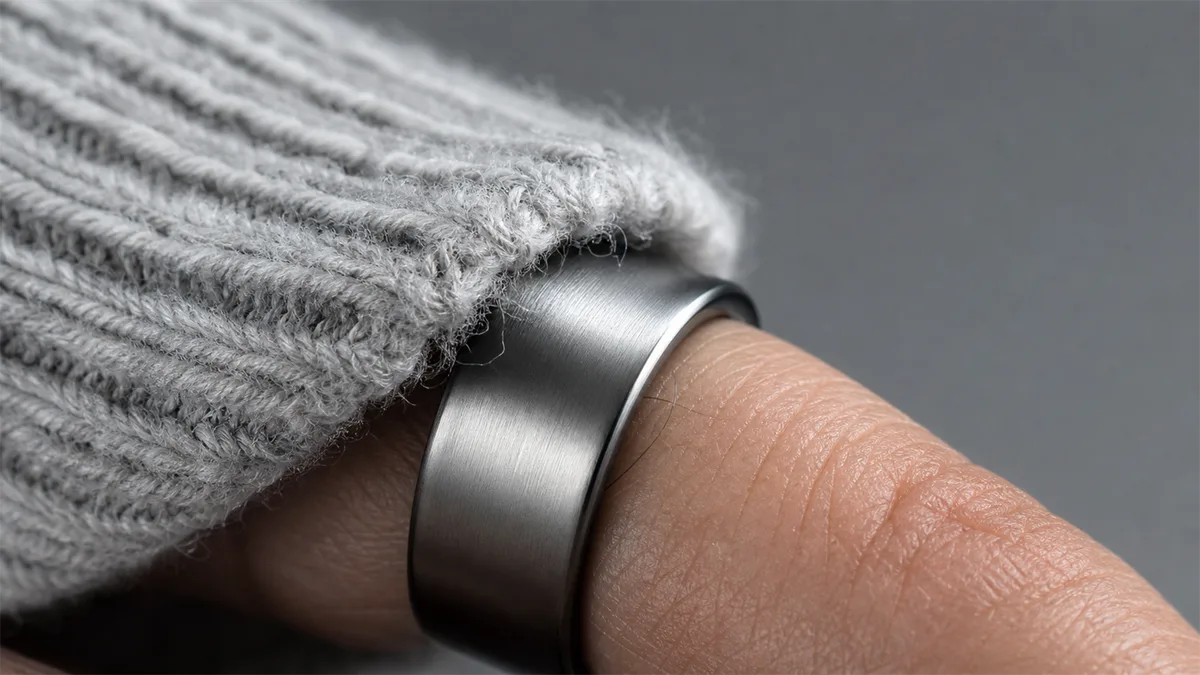
Phantom counts come from that resemblance. The same note lists the interferers as water, cleaners, ketchup, mud, blood, and any other high-dielectric contaminant¹. A sleeve dragging across the bezel, or a bead of water sitting on it, can register as contact you never intended. For a piece of jewelry worn straight through ablution, this is worth saying out loud.
Missed counts come from the opposite direction. Silicon Labs’ AN0829 describes a debounce setting that determines “how many successive samples determine sensor state,”² meaning a tap has to persist across several readings before it’s accepted. That is exactly why paced, deliberate taps count so well, and why a fast flurry during a long wird can outrun the ring.
There’s a learning curve too, usually a day or two. In our experience, wearers settle into a steadier rhythm once they stop watching the number climb. We have not measured or published a deviation figure for our rings, so you won’t find a percentage here, and we’d rather leave the blank honest than fill it.
Want the mechanism types compared and a self-check you can run at home? That belongs with smart tasbih ring accurate. If instead you want the error modes sorted by cause, wet hands, loose fit, restless movement, that sorting sits with digital tasbih ring accuracy.
What ‘Working’ Really Means: Presence Over Counting
Judged only by arithmetic, every counting aid disappoints eventually, including fingers and beads. Judged by whether remembrance keeps happening, the question changes shape. That is the standard we keep returning to: not a flawless tally, but a morning where dhikr slipped in during a commute because nothing had to be fetched, unlocked or held.
A count is a record, not a score. If a session ends at 32 instead of 33, that is a fact about a sensor, not a verdict on your worship, and no ring is in a position to grade what you brought to it. Whether an exact tally is required at all belongs to scholars rather than to a product page; that side of the question sits with are zikr rings halal. Every dhikr matters, including the ones no sensor caught.
That’s also why we design these to look like jewelry first and to behave quietly second. The quieter it is, the more often it gets used, which is the only performance figure that has ever mattered here.
Which Zikr Ring Works Best for You?
As of July 2026, our zikr ring collection carries five iTasbih models, and the right one depends on which part of working matters most to you.
Model | On-ring buzz | Published water rating | Published runtime | What it’s built for |
|---|---|---|---|---|
iTasbih Salam | Yes | IP67 | 10 to 20 days at around 500 counts a day | The plainest set, and the usual first ring or family gift |
iTasbih Faith | Yes | Not published | Up to 15 days’ use, up to 30 days’ standby (around 500 counts a day) | The everyday all-rounder: Bluetooth 5.1, prayer-time reminders, a full size run |
iTasbih Relation | Yes | Not published | Not published; a charging case stretches the gap between plug-ins | A gift-grade metal finish |
iTasbih Peace 1 | Yes | Not published; the listing describes it as ready for everyday water | Not published | A full ring with no visible screen |
iTasbih FIT | No | Not published | Not published | Faith habits beside heart rate, blood oxygen, sleep and steps |
Blanks in that table are blanks on purpose. Where we have never published a figure, it says so rather than borrowing a number from the model next to it.
Two of those rows carry extra weight for this page. Because the Salam is the model our records publish most fully, its runtime and water figures are the ones anchoring the examples above. At the other end sits the FIT, which is the single model that gives up on-ring vibration in exchange for heart rate, blood oxygen, sleep and step tracking.
Comparing finishes at your own pace is easier than choosing from a description, and the whole zikr ring collection is laid out for exactly that.
Frequently Asked Questions
Do I need my phone nearby for the ring to count?
No. The tap is registered by the ring itself, and the app receives a copy only once the two are back in range over Bluetooth. A phone left at home, switched off, or sitting in airplane mode costs you nothing but a later sync, and nothing about the counting depends on the phone being awake.
Will an off-by-one count spoil my dhikr?
Mechanically, the two documented slip points are rapid taps and stray brushes, both traceable to how capacitive sensing works in Microchip’s AN2098¹. Whether an exact tally is required for your dhikr is a question of ruling rather than of hardware, and one to put to a scholar you trust. For the error modes sorted by cause, digital tasbih ring accuracy does that sorting.
Does the ring know which dhikr I’m saying?
No. What the sensor reads is contact, not language: the same physics Microchip’s AN2098 describes, a fingertip shifting the field on the sensing surface¹. So one tap means whatever you decided it would mean before you began. The ring keeps the number, you keep the meaning, and you choose where a session ends.
Is a zikr ring worth it if I only count after salah?
Often, yes. Short sessions after each prayer are exactly the pattern these rings suit, since nothing needs unwrapping or unlocking in between. Our July 2026 records list five iTasbih models, and the plainest of them covers a post-salah tasbih habit; the other four differ mainly in what they add beyond counting.
How do I know a tap registered without looking?
On a screenless model like the Peace 1 you never see the number climb, and most wearers stop needing to. Rhythm takes a day or two: a settled press rather than a skim. Afterwards the app’s total gives you a second look, and smart tasbih ring accurate sets out a two-minute check you can run yourself.
Reviewed by the WESLAMIC Editorial team. This article explains how these rings work and does not issue religious rulings; for questions about your own practice, please ask a scholar you trust.
Sources
² Silicon Labs, “AN0829: Capacitive Sensing Library Configuration Guide”, retrieved 2026-07-30
WESLAMIC, Zikr Ring collection product specifications (Shopify product data, brand first-hand), retrieved 2026-07-30