By WESLAMIC Editorial, reviewed by the WESLAMIC Editorial team. Last updated July 2, 2026.
You’re at the sink for the fourth time today. The water’s running, you’re about to make wudu, and your hand hovers over the zikr ring on your finger. Slip it off again, or leave it on? If you’ve ever searched “is zikr ring waterproof” and still felt unsure, this guide is for you. The short version: keep it on for wudu, take it off for the hot shower.
Key Takeaways
IP67 means dust-tight, plus 30 minutes in one meter of fresh water (IEC 60529).
Our iTasbih Salam is IP67-rated. The iTasbih Faith resists everyday splashes.
Keep it on for wudu, handwashing, rain, sweat and splashes.
Take it off for hot showers, baths, swimming and saltwater.
For valid wudu, loosen a tight ring so water reaches your skin.
Is a Zikr Ring Waterproof? The Short Answer
Yes. A zikr ring can be waterproof enough for daily worship. Our iTasbih Salam carries an IP67 rating, so it’s dust-tight and brushes off brief fresh-water contact. In plain terms: wudu, handwashing, rain and splashes are all fine. Hot showers, baths and swimming are not.
Here’s the honest nuance most listings skip. A lot of pages just stamp “waterproof” on the box and leave you guessing. The IP67 on our Salam isn’t a marketing word we picked; it’s the manufacturer’s stated IP67 rating, an IEC 60529 classification, which is why we can put a real number on it (30 minutes at one meter) instead of a vague “waterproof.” Not every ring wears the same badge, so we spell out which of ours do in the comparison below. The Salam is our friendly, App-connected way into Smart Tasbih, gift-boxed for Ramadan or for a new brother or sister; the Faith adds a gentle prayer-time nudge and five sizes. Both are part of our faith jewelry you keep on, not tuck away, and you can See all smart tasbih ring styles in one place.
What Does IP67 Actually Mean? (IP67 vs IP68)
IP67 is a rating from IEC 60529, the international standard for water and dust resistance. The first digit, 6, means fully dust-tight. The second digit, 7, means the ring handles thirty minutes in up to one meter of still fresh water. IP68 only allows deeper or longer immersion.
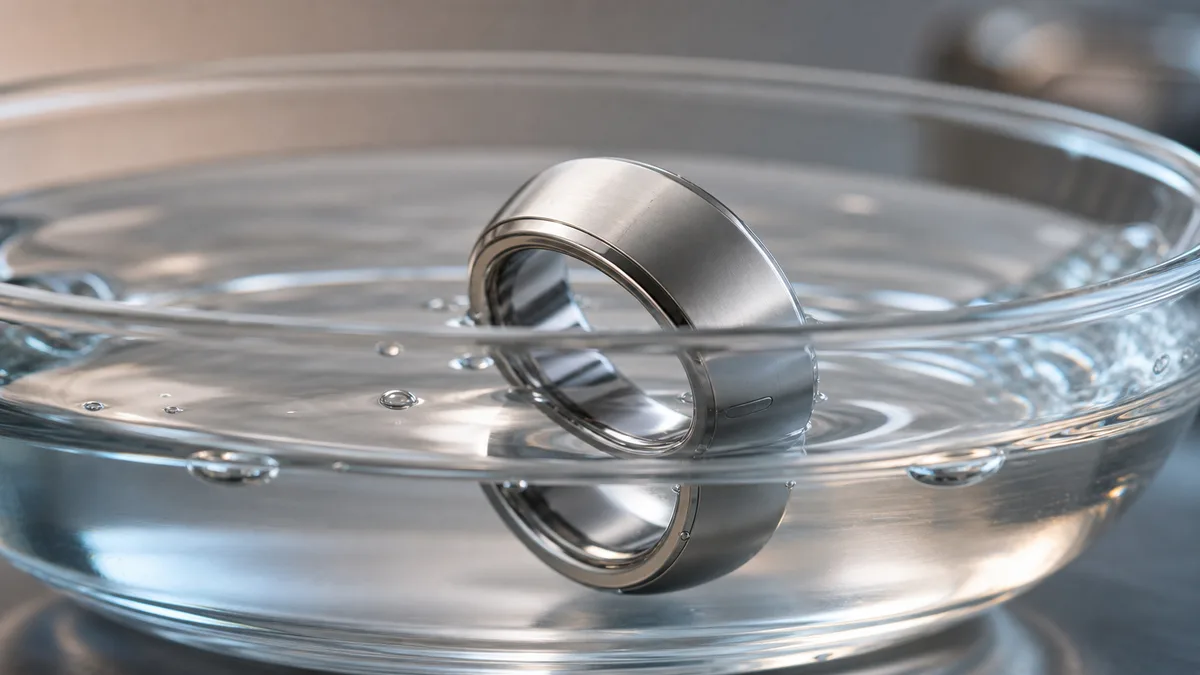
IEC 60529 is the primary standard here, and Wikipedia’s IP code entry offers an accessible summary of it¹. The two numbers are independent, not cumulative. A 6 is about dust. A 7 is about brief immersion. Read together, they tell you what a rating does and doesn’t promise.
IP68 changes just two things: water depth and time. It covers continuous immersion under conditions the maker sets, and that usually means well past one meter. Still, it says nothing about hot water, steam, soap, chlorine or saltwater. A higher second digit is no license to shower or swim.
One detail matters for everything below. These ratings get tested in fresh, still water at roughly room temperature, nothing more. The standard even asks the ring to sit within about 5°C of the water first. Salt, soap, heat and pressure? Never part of that test.
Can You Wear a Zikr Ring During Wudu?
Yes, you can wear a zikr ring during wudu, and an IP67 ring won’t be harmed by it. Rinsing your hands, arms and face is brief, low-pressure fresh water, well inside the rating. So there’s no need to remove it five times a day. Really, none. One nuance: for wudu to be valid, water must reach your skin.
The fiqh point is about water reaching the skin, not the ring itself. Scholars at IslamQA, in answer 163829 (“Is it essential to move one’s ring when doing wudu and ghusl?”), address exactly this². If a ring is loose, moving it during wudu is recommended, not required. If it’s tight enough to block water underneath, then it should be moved so water reaches the skin. The same rule applies to ghusl.
Does that mean fussing with it at every sink? Not really. If your ring spins freely, water already flows under it. If it feels snug, give it a small twist as you rinse. A well-fitting ring makes this effortless, which is why the iTasbih Faith comes in a range of sizes.
Counting aids clear the basic permissibility question for most contemporary scholars, and we go deeper in are zikr rings halal. If you’re a man weighing whether to wear a ring at all, that’s its own topic in can men wear rings in Islam. None of this is a fatwa, so for your own case, ask a scholar you trust.
Can You Shower or Swim With a Zikr Ring?
Better not. As the section above explained, IP67 is certified only in still, cool fresh water. A hot shower stacks heat, steam, soap and spray pressure that wear seals down over time. Pools and the sea add chlorine, salt and depth beyond the rating. So the rule is simple: when water turns hot, deep or salty, the ring comes off first.
A warm shower breaks the rules because heat and steam expand and soften seals. Soap lowers water’s surface tension, so it creeps into tiny gaps. Spray adds pressure the still-water test never applied.
Pools and the sea are harder still. Chlorine and salt corrode over time, and swimming pushes the ring past one meter and past thirty minutes. Saunas and steam rooms combine heat and moisture in the exact way IP67 doesn’t cover.
What about rings that claim higher ratings? Even IP69K, the toughest washdown rating, is tested at about 80°C under high-pressure jets, and it sits in a different standard (ISO 20653), not IEC 60529. So no rating on a ring means “shower-safe.” Our own guidance is honest: a zikr ring resists a small amount of water splash in daily life, but we don’t recommend wearing it while swimming or bathing.
Wudu, Sweat, Rain & Handwashing: What Daily Water Is Safe
Most everyday water is fine. Wudu, handwashing, sweat, rain and accidental splashes all sit inside an IP67 ring’s comfort zone. As noted above, the ring is built to shrug off a quick splash rather than a soak; the only water to avoid is hot, deep, salty or pressurized.
The quick decision table below sorts what’s safe from what’s not.
Keep it on | Take it off |
|---|---|
Wudu (five times a day) | Hot showers |
Handwashing | Baths |
Rain and drizzle | Swimming pools |
Sweat and workouts | Saltwater and the sea |
Accidental splashes | Saunas and steam rooms |
A quick rinse at the sink | Hot tubs |
The pattern is easy to remember. Brief, cool, fresh, low-pressure water is safe. Hot, deep, salty or pressurized water isn’t. The mechanism behind the “avoid” side sits in the section just above, so we won’t repeat it here.
Sweat is fine, so a zikr ring rides along through workouts and warm days. Rain, drizzle and a dash across the parking lot won’t hurt it. Washing dishes is fine for a quick rinse. Just don’t leave your hand soaking in hot, soapy water.
If you want a ring you barely notice from Fajr to Isha, the iTasbih-Peace1 full-ring is shaped like a ring you’d wear anyway and made for all-day, everyday wear. Once it’s on, how to use zikr ring walks you through counting your dhikr.
Which WESLAMIC Zikr Rings Are Water-Resistant?
The three rings covered here all shrug off everyday water, but only one publishes a formal IP number: the Salam’s IP67 certifies 30 minutes in one meter of fresh water (IEC 60529). Here’s how the Salam, Faith and full-ring Peace1 compare, so you can match the ring to how you pray and live.
Ring | Water resistance | Best for |
|---|---|---|
iTasbih Salam | IP67 (dust-tight, 30 min in 1 m fresh water) | An affordable, App-connected start to Smart Tasbih, boxed for a Ramadan or Eid gift |
iTasbih Faith | Splash-resistant, no published IP number; five sizes | Everyday wear with a gentle prayer-time nudge, sized to fit almost anyone |
iTasbih-Peace1 (full-ring) | Water-resistant for all-day wear | A modern ring shape you keep on from Fajr to Isha, day and night |
The Salam is the one to reach for if you want the rating spelled out: its spec lists IP67, so wudu, rain and handwashing are covered without a second thought, and it makes a warm first gift for a new brother or sister. The Faith trades the published number for a snug five-size fit, which matters more than it sounds during wudu, since a ring that seats properly lets water reach the skin. The full-ring Peace1 is the lightest to forget you’re wearing, a quiet everyday companion shaped like a ring you’d choose anyway. Whichever you pick, the same keep-on/take-off ceiling applies to all three (see the decision table above).
Care Tips: Charging Contacts, Drying & Keeping the Seal Healthy
A little care keeps an IP67 ring’s water resistance where it should be. None of these steps takes more than a few seconds, and together they protect both the seal that blocks water and the charging contacts that keep your ring ready.
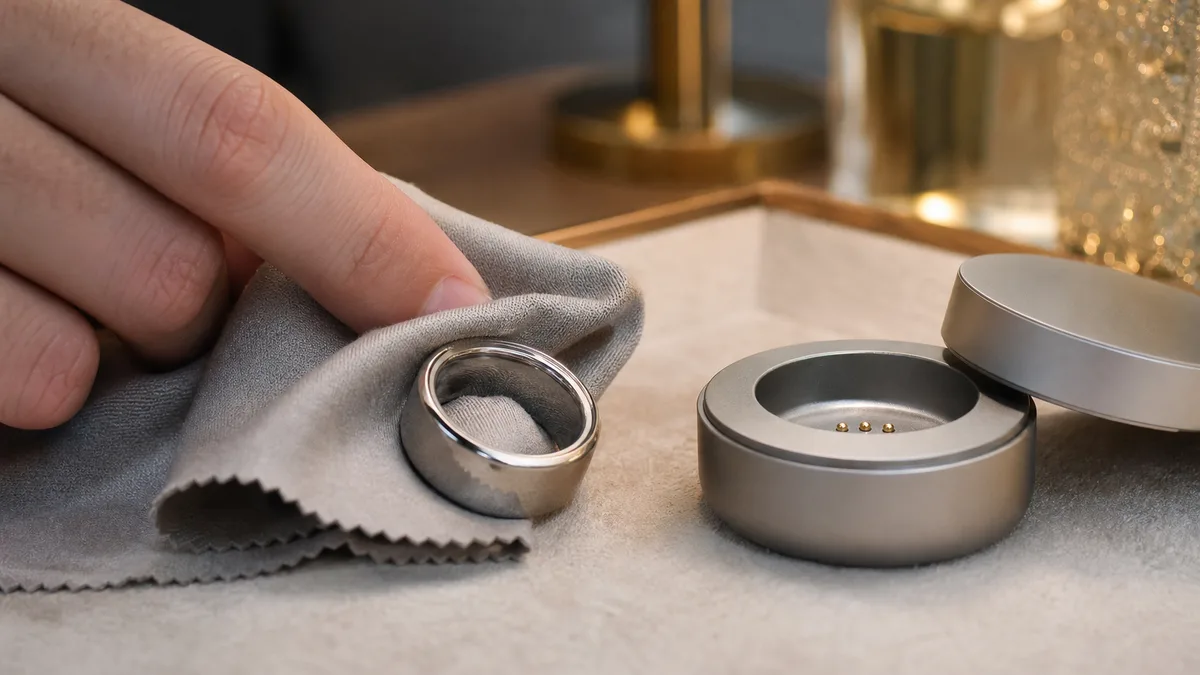
Pat it dry after wudu. A quick wipe on a towel clears standing water from the band and the tiny gap where the ring meets your finger. Water resistance handles the splash; drying handles what’s left.
Dry the charging contacts before you charge. The metal contacts should be dry to the touch before the ring goes back in its case, so moisture never sits against them.
Rinse off soap and lotion buildup. Soap, hand cream and perfume can film over the band and creep into seams over time. A rinse under cool tap water and a soft dry cloth keeps things clean.
Give the seal an occasional look. Every few weeks, check that the ring still feels solid with no grit lodged in the seams. If it ever takes a hard knock, treat its water resistance as reduced until you’re sure it’s fine.
Do this and the ring keeps doing its quiet job, ready on your hand for the next wudu and the next round of dhikr.
Frequently Asked Questions
Will daily wudu wear my zikr ring out over time?
No. Wudu is brief, room-temperature fresh water at low pressure, exactly the conditions an IP67 ring is built for. Seals wear from heat, steam and pressure, none of which wudu involves. Repeated through the day, everyday rinsing stays gentle. See the wudu section above for the fit nuance.
I forgot and wore my zikr ring in the shower once. Is it ruined?
Likely fine from one slip, but don’t repeat it. IP67 is certified for still fresh water, not a shower’s heat and soap. Even IP69K gear, tested at about 80°C under pressure, is a separate standard from the IP67 on a zikr ring. Dry it and skip the shower next time.
Does the iTasbih Faith have the same IP67 rating as the Salam?
Not exactly. Our iTasbih Salam spec lists IP67, while the iTasbih Faith is built to resist everyday splashes without a published IP number. Both handle wudu, rain and handwashing. Faith comes in five sizes for a snug fit, so water reaches the skin easily during wudu.
Is the full-ring iTasbih-Peace1 more waterproof for all-day wear?
It’s built for 24-hour, everyday wear, so it’s water-resistant against sweat, wudu and splashes like our other rings. Even so, the same keep-on/take-off limits apply (see the decision table above): a full-ring shape you can keep on around the clock still isn’t a swimming ring.
A Gentle Note
Every dhikr matters, and your ring is meant to stay with you through the day, not sit in a drawer. This guide shares general information, not a fatwa. For your own situation, ask a qualified scholar you trust.
Sources
¹ Wikipedia, “IP code” (accessible summary of IEC 60529), retrieved 2026-07-02
IEC 60529, Degrees of protection provided by enclosures (IP Code), International Electrotechnical Commission, the primary standard defining IP ratings such as IP67 (30 minutes at one meter)
ISO 20653, Road vehicles: Degrees of protection (IP code), the standard covering IP69K, referenced for high-pressure, high-temperature washdown ratings
WESLAMIC product specifications, iTasbih Salam, iTasbih Faith and iTasbih-Peace1 (first-party), with the Salam’s IP67 rating as stated in the manufacturer’s product specifications, retrieved 2026-07-02