
A hundred repetitions of dhikr follow every obligatory prayer, and not one of them happens inside it. That single fact settles most of what people are really asking. The object was never the difficulty. The moment is.
No, you shouldn’t operate a digital tasbih during the salah itself. Keeping one on your hand while you pray is not what the rulings weigh; working the count is. The prayer has its own prescribed movements, and scholars discourage adding extra, repeated actions on top of them. Yes, you can use it for the dhikr after salah and through your day, where it is widely treated as a permissible counting aid. For a binding ruling, ask a scholar you trust.
Key Takeaways
Inside the formal salah, don’t work a count. The ruling turns on the added, repeated action rather than on the object in your hand (Egypt’s Dar al-Ifta, fatwa 6312).
After the taslim, the hundred-repetition adhkar is where an aid earns its place.
No school-level position we documented forbids counting aids; scholars differ on manner.
A ring changes what you reach for, never the ruling.
Can You Use a Digital Tasbih During Prayer? Short Answer
There are two answers here, because the question holds two moments. Seven of the rulings we read for this page in July 2026 speak directly to counting aids, from Egypt’s Dar al-Ifta and Jordan’s General Iftaa’ Department¹ to Islamweb and Islam Q&A. Not one of them forbids the aid, and not one permits working it inside the formal salah.
One of the authentic patterns for the adhkar after each obligatory prayer runs to thirty-three SubhanAllah, thirty-three Alhamdulillah, and thirty-four Allahu Akbar, a hundred in all². That count, and the wird you carry through the rest of your day, is the ground a counting aid was made for.
Why the aid is permitted at all is a wider question, and most contemporary scholars settle it the same way: a means toward worship takes the ruling of the worship it serves. This page reports where scholars generally land. It is not a ruling on your own case, so put that to a scholar who knows you.
During Salah vs. After Salah: The Distinction That Decides the Answer
English hides the split. “Prayer” can mean the salah you stand in, the adhkar you say straight after it, or the dhikr you carry all day. The authentic reports preserve more than one shape for those adhkar, too: Sahih al-Bukhari 843 gives thirty-three of each glorification after every obligatory prayer³, while Sahih Muslim 596 completes the hundred with a thirty-fourth takbir². Either way, the counting lands after the prayer, never in it.
So the phrase people type, can you use digital tasbih during prayer, arrives already blurred. Whoever answers it picks one of those three moments, answers that one, and moves on. Readers leave with half a ruling and a doubt nobody named.
The cost of the blur is real. Some people put the aid away entirely, worried that owning one implies using it mid-prayer. Others press through their tasbih while standing in salah, having read a permissible verdict that was never about that moment. One ruling, read as one answer, sends both groups slightly wrong.
Which moment does the ruling actually address? Inside the salah, you move through a fixed sequence: takbir, recitation, ruku, sujud, and the words that belong to each. Nothing there asks you to reach a number. Whatever small tally you keep sits on your fingers or in your heart, and it never needs an object.
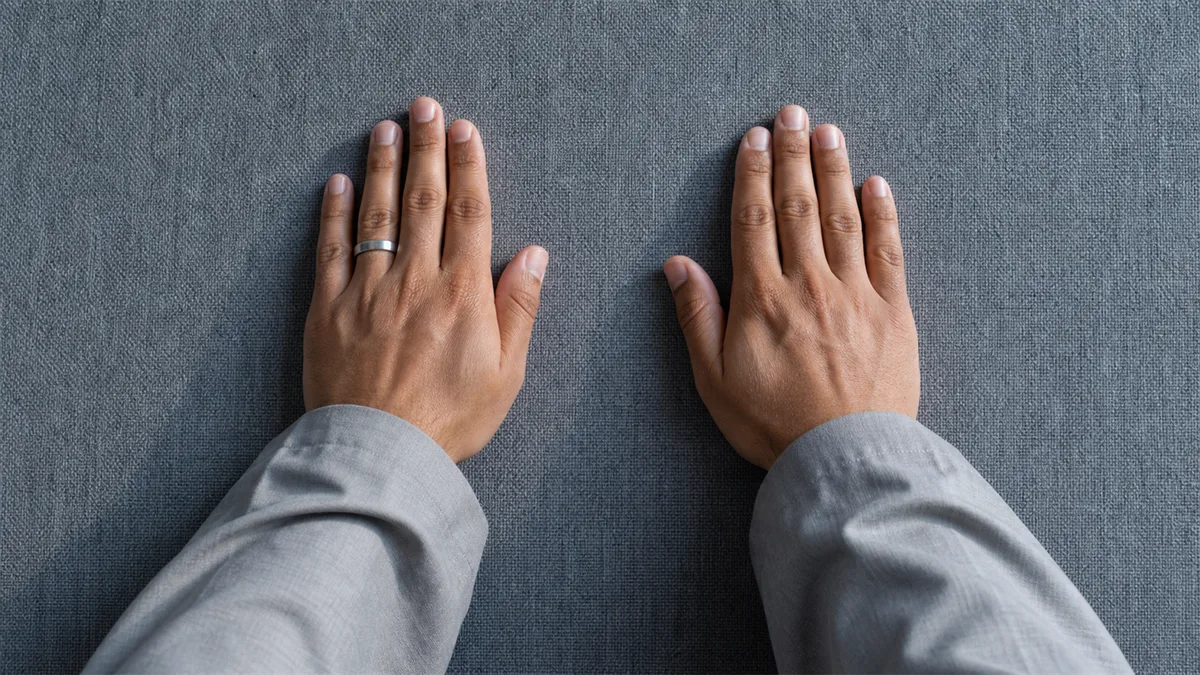
After the taslim, everything about the moment changes. You are sitting still, your hands are free, and now there is a number to hold. Dar al-Ifta reads the classical texts this way in fatwa 6312: the jurists understood them as showing “the permissibility of invoking with either the hands or with prayer beads outside of the prayer.”⁴
The same fatwa records the Hanafi jurists Abu Yusuf and Muhammad ruling “that there was nothing wrong with using prayer beads after canonical or supererogatory prayers.”⁴ Different centuries, different objects, the same line drawn in the same place: not during, after.
The moment | What you count with | Why | Where your tasbih sits |
|---|---|---|---|
Inside the salah | Your fingers, or nothing at all | The prayer’s actions are fixed, and laying a repeated one over them is reprehensible (Dar al-Ifta, fatwa 6312) | Still on your finger, untouched |
After the taslim | The digital tasbih, if you want one | You are seated, your hands are free, and a hundred repetitions need holding (Sahih Muslim 596) | In use, and this is its home |
Through the day | Whichever keeps you present | No fixed number is prescribed, so the count follows the habit instead of setting it | On your hand, ready between things |
That stretch after the taslim, before the room fills with conversation, is where a wearable Smart Tasbih naturally sits.
Why a Counter Doesn’t Belong Inside the Formal Prayer
The salah is built from prescribed standings, bows, and prostrations, and scholars caution against laying extra, repeated actions over it. Dar al-Ifta states it plainly in fatwa 6312: using prayer beads during the prayer “is considered a reprehensible act as it is not from the actions of the prayer.”⁴
Notice what that reasoning is not about. It says nothing about batteries, sensors, or how modern the object happens to be. Beads drew the same verdict long before anything digital existed, so a digital tasbih simply inherits a ruling that was already sitting there.
That inheritance is not merely our inference. Islam Q&A took the electronic form by name in answer 128914 and reasoned straight from the older ruling: “if it is said that the masbahah is permissible, then by the same token this program may also be permissible.”⁵ What that answer settles is the aid itself. Which moment you may work it in is a separate question, and the fatwas above are the ones that answer it.
Then what do you count with, if you need to count at all? Your hand. The Prophet counted the glorification of Allah on his fingers, as narrated in Sunan Abi Dawud 1502 and graded sahih by al-Albani⁶. Fingers bring no object to handle and no motion to explain.
Read the wording closely and you’ll see the fatwa aims at the act, not at the thing on your hand. Dar al-Ifta calls the counting reprehensible, which is not the same word as invalid, and where your own prayer stands is a question for a scholar who knows the details.
In practice this asks almost nothing of you. The aid stays where it is, your hands stay where the prayer puts them, and the tally waits until you have finished. Fard or voluntary, the reasoning holds, because it rests on what a prayer is made of rather than on which prayer you happen to be in.
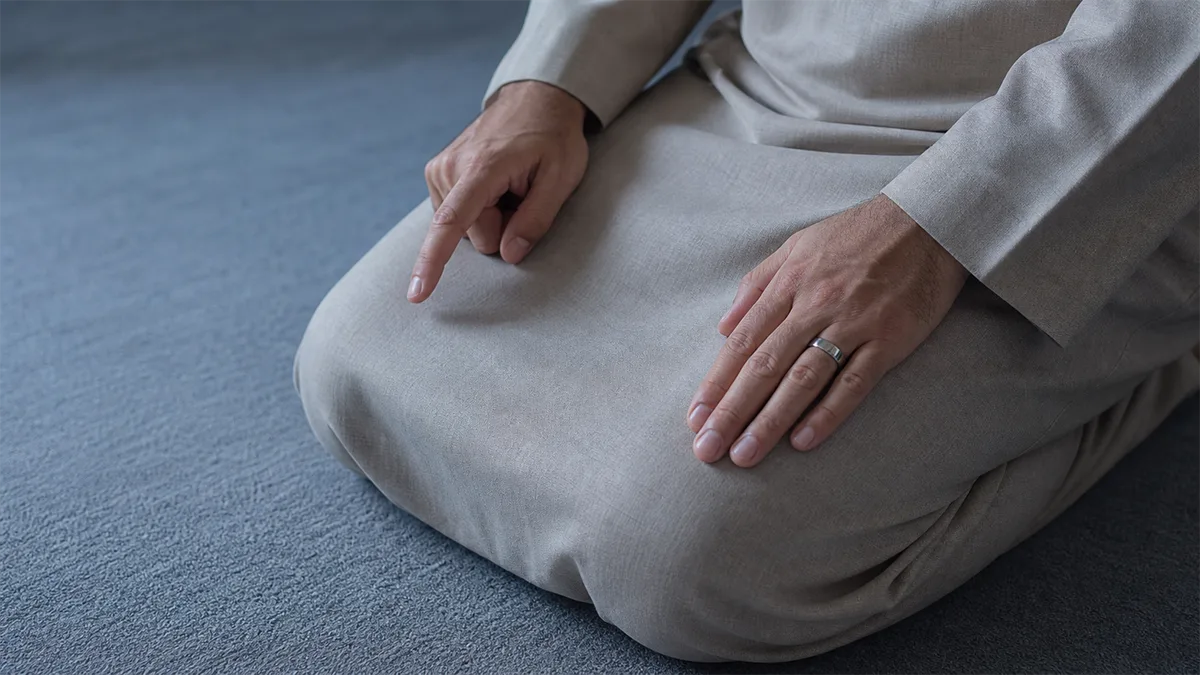
A finer question sits underneath this one: whether a single light touch crosses into the excessive movement jurists warn about, and how the schools handle counting inside the prayer at all. Both belong to the ring-shaped version of the question, and can you use a zikr ring in salah holds that ground.
What Islamic Schools of Thought Say About Counting Devices
Across the four Sunni schools, counting voluntary dhikr with an aid is treated as permitted, and in the rulings we documented no school-level position puts it out of bounds. Islamweb sets out the engine of that permission in fatwa 182109: beads are “just a means that is not intended as an end in itself to worship Allaah with,”⁷ so the ruling follows the worship they serve.
Agreement is strong rather than unanimous, and flattening that would be dishonest: Islamweb’s answer on prayer beads, fatwa 84295, calls the permissible verdict the preponderant one⁸, while Islam Q&A carries both wings in answer 3009⁹. What the dissent actually runs on, though, is manner rather than permission: counting for show, or letting the number take the place of the words. None of those positions reopens the prayer itself; every one of them is talking about the remembrance around it.
Where each school lands, and on what basis, is laid side by side in ruling on tasbih ring. If the innovation charge is the part that unsettles you, is digital tasbih allowed in Islam stays with that single question.
Does a Ring Change the Ruling? Form Factor and Fiqh
A ring changes the practical picture, not the ruling. Wearing one is not the issue; working the count inside the salah still is, and that answer stays where the last two sections left it. Islam Q&A took the ring form by name in answer 198080, ruling that there is nothing wrong with counting dhikr “by any permissible means.”¹⁰
Most of the fatwa literature was written with beads in one hand or a phone in the other. The ring arrived later than the question, which is why people assume it must need a ruling of its own. It doesn’t.
What a worn form changes is the reach. After the taslim there is nothing to pick up and nothing to set down, because the tally already rests where your hand is. That is convenience, and convenience has never moved a ruling.
Do the smart parts change anything? App sync, a soft prayer-time buzz, a running total you can look at later: none of it alters what is being counted or when the counting happens. That feature-by-feature mapping is drawn out in ruling on using tasbeeh ring.
One honest limit is worth naming. A ring sits on the hand you pray with, so an accidental brush is likelier than it would be with beads left on a shelf. The FAQ below takes that case directly.
A pattern shows up in what readers write to us, and it isn’t the one you’d expect. Hardly anyone is asking permission to count mid-prayer. They’re asking whether the ring makes them careless, whether wearing faith on the hand slides into display. That is a question about the heart, and it has its own section below.
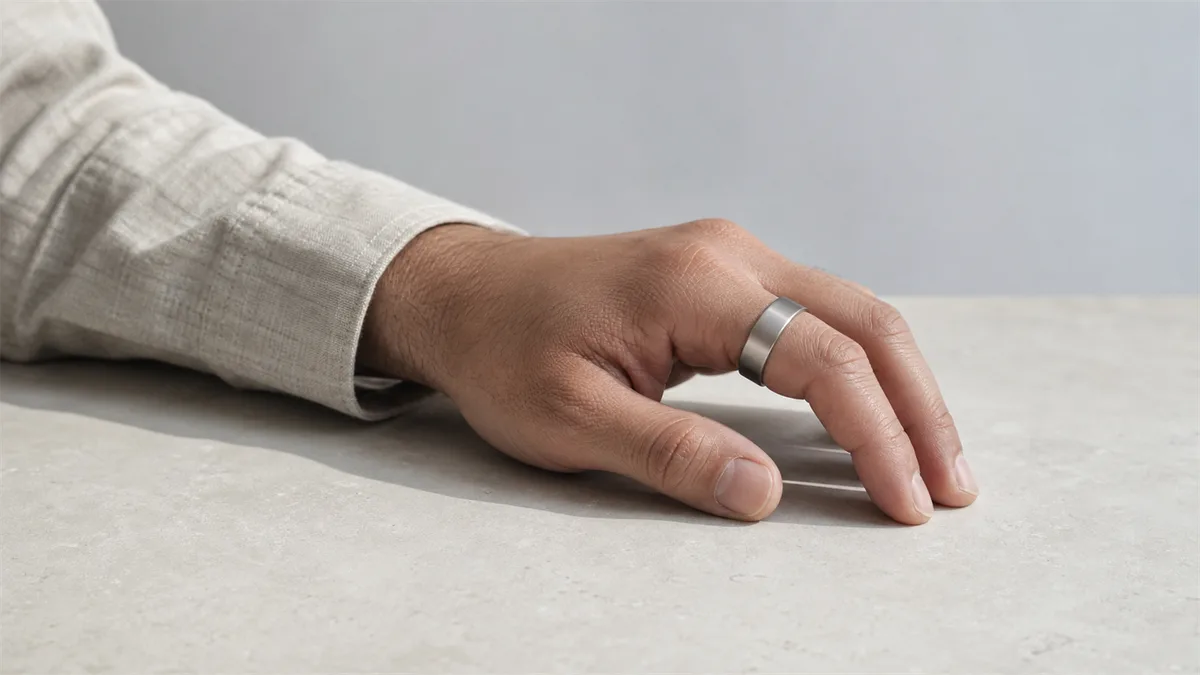
The form does matter for whether the habit survives an ordinary week. Our iTasbih-Peace1 keeps its whole shape as a ring, so what your hands meet during salah is jewelry and nothing more, and the count waits until afterwards. If you’re only trying the habit on, the iTasbih-Salam asks the least of you to begin with.
Salat al-Tasbih: Counting Within a Voluntary Prayer
Salat al-Tasbih is the one prayer where counting sits inside the prayer itself. Dar al-Ifta describes it in fatwa 7878 as a voluntary prayer of four units, “as each rak’a contains 75 Tasbihs,”¹¹ three hundred repetitions in all. Even here, the tally traditionally stays on the fingers.
Before going further, one thing should be said plainly: scholars differ over the prayer itself. Islam Q&A records in answer 145112 that “The scholars (may Allah have mercy on them) differed as to whether Salat al-Tasbih is prescribed in Islam,”¹² with prominent scholars grading its hadith weak.
Dar al-Ifta reaches the other conclusion in fatwa 7878, calling the prayer “a recommended sunnah” and attributing that position to the Shafi’i scholars and Imam al-Nawawi¹¹. Both readings are on the table, and neither one is fringe.
Read either description closely and something is missing. Neither text says what to count with. Both describe words, postures, and numbers, and both simply assume the worshipper keeps the tally personally, with nothing to operate and nothing to check.
That silence forbids nothing on its own. The reason is the one the fatwa already gave: what gets discouraged is the extra, repeated action, whichever prayer you happen to be standing in. So even in the one prayer built around counting, the tally stays where the worshipper’s own hands are.
Presence Over Counting: Protecting Khushu in Your Prayer
The reason not to work a count inside salah is the reason an aid earns its place outside it: attention. Dar al-Ifta rates the aid above the fingers in one case only, in fatwa 6312, when someone “is safer from making mistakes this way allowing the heart to concentrate.”⁴
That condition is the whole point, and it’s old. The same fatwa lists treatises written in defense of the subha, among them Imam Jalal al-Din al-Suyuti’s “al-Munha fi al-Subha.”⁴ Whether an aid protects presence or steals it was argued centuries before any of this ran on a battery.
Our own position, as a brand that makes these rings, is short: if you are managing the number, the number has taken something. Khushu isn’t measured in repetitions. An aid is doing its job when you stop noticing it, and doing the opposite when it becomes one more thing to check.
So the aid belongs to the hours around the prayer: the wird on the way to work, the adhkar after Maghrib, the last quiet minutes before sleep, where the count sits in the background and your presence isn’t competing with arithmetic.
All five of ours live in the zikr ring collection, and they mostly differ in how much they ask of you. The iTasbih-Peace1 stays on from morning until night without announcing itself, while the iTasbih-Faith carries a gentle prayer-time buzz for anyone who’d rather not watch a clock.
Gifts pull in a slightly different direction. The iTasbih-Relation reads as a keepsake and tends to be chosen for someone else, and the iTasbih-FIT suits people who keep their sleep, their steps, and their wird in the same place.
If the wider question is whether wearing one is halal at all, See all are zikr rings halal holds that ground.
Frequently Asked Questions
The questions that reach us are rarely about the ruling in the abstract. They’re about the small, ordinary moments inside it.
My thumb brushed the ring while I was praying. Did I ruin my salah?
Almost certainly not. Scholars generally hold that brief, unintentional movement does not invalidate a prayer; what scholars ask you to avoid is deliberately working a count through it. Dar al-Ifta’s wording in fatwa 6312 is reprehensible, not invalid⁴. If the doubt keeps returning, put your own case to a scholar rather than to a search box.
Is a phone tasbih app any different from a ring during the prayer?
Not in principle. The rulings behind this page address the act of counting rather than the object doing it, so a phone, a string of beads, and a ring land in the same place inside salah. In practice a phone asks far more of your attention, which speaks to the concern about concentration those fatwas raise.
Does any school of thought call a digital tasbih haram?
None that we found. Across the institutional answers behind this page, the positions run from permitted to preferred to better-left-alone, and none of them treats a counting aid as forbidden. Where scholars do object, they object to display or to counting inside the prayer, as the sections above set out.
Isn’t a digital tasbih an innovation, since the Prophet never used one?
That charge has been raised and answered for centuries. Islamweb, in fatwa 182109, treats beads as a means rather than an act of worship, records Shaykh al-Albani’s dissenting view honestly, and concludes they are not an innovation⁷. The digital form inherits the same reasoning, which the section on the schools sets out above.
Should I still count on my fingers even though I own a digital tasbih?
Many scholars would say yes, at least some of the time. Islamweb notes that counting on the fingers is more appropriate, and Islam Q&A quotes Shaykh Ibn ‘Uthaymin preferring the fingers while ruling the masbahah neither forbidden nor an innovation⁹. Fingers inside salah; either one outside it.
My family says using anything but fingers is showing off. How should I answer that?
Take the concern seriously, because the scholars did. The caution in these fatwas lands on display: an aid held up so that people notice your dhikr. A ring worn quietly through an ordinary day sits close to the opposite of that, though the intention behind it stays yours to answer for.
Reviewed by the WESLAMIC Editorial team. This guide gathers published scholarly positions for general understanding and does not issue a fatwa. For your own circumstances, please ask a qualified scholar.
Sources
⁷ Islamweb, “Using beads for remembering Allaah” (fatwa 182109), retrieved 2026-07-30
⁸ Islamweb, “Using Prayer Beads” (fatwa 84295), retrieved 2026-07-30
⁹ Islam Q&A, “Are Prayer Beads Allowed in Islam?” (answer 3009), retrieved 2026-07-30
¹⁰ Islam Q&A, “Ruling on using a tasbeeh ring” (answer 198080), retrieved 2026-07-30
¹² Islam Q&A, “Is Salatul Tasbih Legislated?” (answer 145112), retrieved 2026-07-30
WESLAMIC in-house editorial review across the current iTasbih line (brand input), 2026