
Is a tasbih ring permissible, or is it an innovation dressed up as worship? That question, or something close to it, reaches us more than any other in Ramadan. Here’s the calm version of the answer, with the scholarship it rests on, so you can stop searching and get back to the remembrance itself.
Yes. A tasbih ring is permissible as an aid for counting voluntary dhikr, and in the documented positions we located, none places a counting aid in the forbidden tier. What shifted across the centuries was never the worship, only what the hand holds. Intention carries the weight. Inside the prescribed prayer, count on your fingers, and take anything specific to your own situation to a scholar who knows it.
Key Takeaways
Across the Sunni positions we documented in 2026, none forbids a counting aid, and Egypt’s Dar al-Ifta calls the subha recommended in fatwa 7783. The schools that fatwa names are the Shafi’i and the Hanafi.
Where scholars do object, the objection lands on manner: counting for show, or counting with an aid inside the prescribed prayer, which Dar al-Ifta rules out in fatwa 6312. Neither objection touches the aid itself.
For men the live question is the metal, not the counting. Gold is forbidden by scholarly consensus (Islamweb fatwa 90906), while the Prophet’s own ring was silver.
What Is the Ruling on a Tasbih Ring? The Short Answer
Permissible, with one boundary worth naming. The ruling runs to voluntary dhikr and stops at the prescribed prayer. IslamQA, in answer 198080, finds “nothing wrong” with dhikr counted “by any permissible means,”¹ and that phrase, rather than anything about rings, is where the permission actually lives.
What does voluntary take in? Your wird, your adhkar, the remembrance you carry through an ordinary day. What it leaves out is salah itself, where the question changes shape enough to need its own section below.
Where does the ring’s permission come from, then? Not from anything special about rings. Counting aids as a category are treated as a permitted means toward worship that was already prescribed, and See all are zikr rings halal sets out that reasoning at length.
One thing to be clear about before the detail. What follows maps where scholarship stands, not a verdict on your circumstances. Our question was narrower than any single fatwa page’s conclusion: does a school-level position exist anywhere that puts the aid out of bounds? Reading the four schools’ documented positions in 2026 alongside current iftaa rulings, we did not find one.
Why a Tasbih Ring Is Not Considered Bid’ah
No. Bid’ah means inventing an act of worship and attaching it to the religion. Inventing a way to keep count is not that, which is why Darul Iftaa Trinidad states the ruling for the counting aid directly: using a tasbih for zikr “will not be Bid’ah, but permissible (Mubaah).”²
Which definition should we use? The strictest one, since it draws the sharpest boundary. IslamQA, in answer 864, defines bid’ah as “any invented way in religion that is aimed at worshipping or drawing closer to Allah,” then marks the limit itself: that definition “does not include worldly inventions.”³ A new way to keep a tally is a worldly invention.
So the test was never age. It’s category. Ask what is being counted, and who prescribed it. If the answer is dhikr, established in the Qur’an and the Sunnah, then the aid takes its ruling from what it serves, and the form it happens to take belongs to convenience rather than to religion.
Is the case unanimous? At the level of individual scholars, no, and pretending otherwise would be sloppy. IslamQA’s answer 3009 records both sides: al-Albani held that the subha itself was an innovation unknown in the Prophet’s time, while Ibn Uthaymeen replied that it is better not to use one, “but it is not [Bid’ah], because there is a basis for it.”⁴ No school-level position forbids it.
Take that question one step further into the digital form and is digital tasbih allowed in Islam works through the fatwa answers one form at a time.
What the Four Sunni Schools Say (Hanafi, Maliki, Shafi’i, Hanbali)
None of the four rules a tasbih ring haram. Dar al-Ifta’s fatwa 7783 collects Shafi’i and Hanafi evidence in one place⁵, though for the rows below we went to a named jurist in each school: the Shafi’i position through Jordan’s fatwa 337⁶, the Hanbali and Maliki material through IslamQA answers 198080¹ and 128914⁷. The table below gives each school a row, a named source, and the tier its position lands in. The range runs from permitted to preferred.

School | Where it lands | What it rests on | Named source |
|---|---|---|---|
Hanafi | Permitted, with nothing objectionable in it | Threading the pebbles the Sunnah already allows adds nothing that would block the act | Ibn ‘Abidin, with Abu Yusuf and Muhammad al-Shaybani, as cited in Dar al-Ifta fatwa 7783 |
Maliki | No aid-level ruling located; the documented voice censures manner of use | Holding beads visibly while chatting, so that the counting is void, is called showing off and an innovation, and the censure attaches to that manner | Ibn al-Hajj al-‘Abdari, al-Madkhal, as cited in IslamQA answer 128914 |
Shafi’i | Permitted, and better than the fingers when you are unsure of your count | Asked whether the subha has a basis in the Sunnah, Ibn Hajar al-Haytami answered that it does | Ibn Hajar al-Haytami, al-Fatawa al-Fiqhiyya al-Kubra 1/152, as cited in Jordan’s General Iftaa’ Department fatwa 337 (2009) |
Hanbali | Permitted when the intention is sound, disliked only as needless display | Counting on date stones and pebbles is fine, and some of the Companions did exactly that | Ibn Taymiyah, Majmu’ al-Fatawa 22/506, as cited in IslamQA answer 198080 |
Read the second column from top to bottom and one thing stands out. Not a single entry sits in the forbidden tier, so the distance between these rows is the distance between permitted, better, and best.
The Maliki row needs the plainest wording, because it’s the thinnest. Several popular summaries report that the Maliki school calls counting aids recommended and pin that claim on Dar al-Ifta. The fatwa does call the subha recommended, but the schools it quotes by name are the Shafi’i and the Hanafi. It never names the Maliki school at all. What we could verify is a Maliki jurist, Ibn al-Hajj, objecting to a manner of use rather than to the aid itself.
The Hanbali line deserves reading in full, since it often gets flattened into a single word. Ibn Taymiyah permits the beads and holds that “if the intention behind it is good, then it is good and is not makrooh.”¹ His censure lands on wearing them for show. Islamweb, in fatwa 82285 published in 2000, renders that same position in institutional English.⁸ As of July 2026, nothing in the newer rulings we have read moves the line.
In the messages that reach us, permission is rarely the sticking point. Most people have read that much already. What they want is the tier, and whether their own way of using the ring drifts toward the disliked end of it.
Does adding an app, a milestone buzz, or a health reading change any of this? Not at the level of the ruling, because none of it touches what is being counted. For a mapping feature by feature, ruling on using tasbeeh ring does that work.
Can You Use a Tasbih Ring During Salah?
Inside the prescribed prayer, count on your fingers as the Sunnah teaches, and keep the ring for the dhikr that follows the taslim. The Prophet counted the glorification of Allah on his fingers, in a report graded sahih by al-Albani⁹. Using a counting aid inside salah is discouraged rather than forbidden.
Dar al-Ifta puts the reason in one line in fatwa 6312: during the prayer, use of the subha “is considered a reprehensible act as it is not from the actions of the prayer.”¹⁰ And where does that leave the ring? With the rest of your day, in the remembrance you carry between prayers rather than inside them.
Both halves of that question have a page of their own. On the ring specifically, can you use a zikr ring in salah sets out what scholars allow and what they prefer. For counting aids in digital form, read can you use digital tasbih during prayer.
Fingers, Pebbles, Beads, Digital: A 1,400-Year Chain
Across fourteen centuries the aid kept changing while the remembrance did not, which is why no jurist ever needed to write a ruling for a ring: it simply inherits the one that counting aids already had. Al-Suyuti, quoted at length in fatwa 7783, puts the same point from the other side, reporting that it “has not been reported that any one from the pious ancestors or later scholars prohibited the use of the subha for counting the number of tasbih made.”⁵
Concentration was always the purpose and the number only ever the bookkeeping, which is worth holding onto the next time a tally starts to feel like something to chase. For the full lineage, and for the bid’ah analysis that rests on it, see electronic dhikr counter bid’ah.
Rulings for Men: Silver, Metal, and Wearing Rings
For men, the counting is not the live question. The metal is. Islamweb, in fatwa 90906, records that “it is forbidden for a man to wear a golden ring according to the consensus of the scholars,”¹¹ citing al-Nawawi, while silver carries the Prophet’s own precedent, since his ring was silver¹². Which layer does that sit on? Jewelry, not counting. So the answer for men has little to do with the fact that the ring keeps a tally.
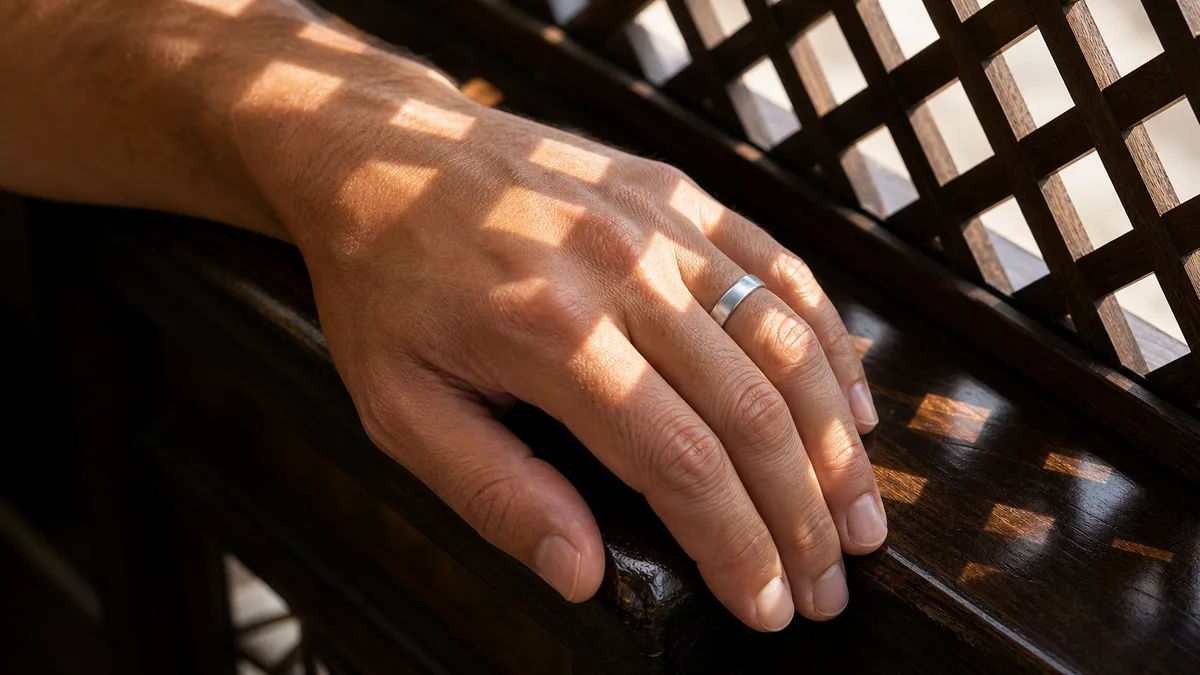
Where the verified answers part company is on whether a zikr ring is ornamental at all. Darul Iftaa New York reasons that it isn’t a true ornamental ring, so the limits on decorative rings don’t reach it¹³. Darul Ifta Ibn Mas’ood in South Africa, answering on smart zikr rings in March 2023, begins from the opposite premise, that “males are permitted to wear rings of silver only, whilst females are permitted to wear rings of gold and silver,” and therefore prefers a man hold the ring in his hand to count rather than wear it¹⁴. Same Hanafi lineage, opposite starting premises, and which of the two you follow is a question for a mufti you already trust rather than for a product page.
Material is the other half of it, and it has a page of its own: tasbih ring for men halal works through metal by metal, with the silver question specifically in tasbih ring silver men islamqa.
From Ruling to Practice: Intention, Conditions, and Choosing a Ring
The ruling on tasbih ring use stays positive as long as four things hold together. The ring serves as a counting aid, not a stand-in for the prayer. The intention is remembrance rather than display. Your khushu’ survives it, and the material is permissible. In our experience, none of that asks much of you.
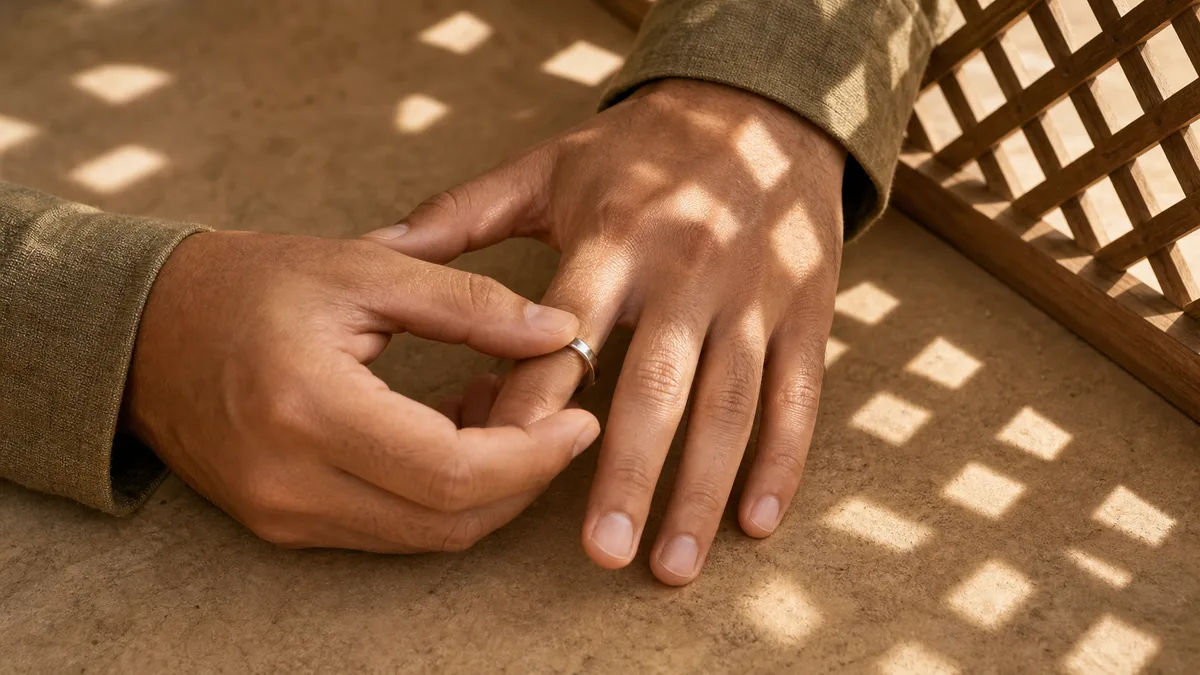
What does each condition look like when you are actually choosing? Counting aid only means you don’t want anything offering to say the words for you. Sincere intention means the choice is about the practice, not about what looks expensive on a hand. Khushu’ means you shouldn’t have to stare at a number to know where you are. Permissible material means gold is off the list, which the consensus above already settles¹¹; whether silver is then the only option left is exactly where the two verified answers differ.
If a ring ever becomes something worn to be seen, that is the edge scholars warn about, and it’s a question about you rather than about the ring.
Our iTasbih family was made for the ordinary middle of the day, for the moments between prayers when you want to remember without keeping score. For someone just beginning, or opening a first Ramadan gift, the iTasbih-Salam asks very little of them, which is usually the kindest thing a first ring can do.
The iTasbih-Faith sits at the center of the range, and it tends to be the one people keep wearing once the newness has worn off. When the giving carries more weight than the getting, at a wedding or an Eid, the iTasbih-Relation holds that occasion more gracefully.
Whichever piece fits, the ruling was never really about the object. It was about the heart behind the remembrance. Where your own circumstances complicate any of the four conditions, that is the moment to sit with a scholar in your own community rather than settle it from a search result.
Frequently Asked Questions
Which school of thought rules a tasbih ring haram?
None of the four. Reading their documented positions on counting aids, the range runs from permitted to preferred when you might otherwise miscount, with the disliked label attaching to display rather than to the aid itself. For the Maliki school we located no ruling addressed to counting aids as such, only a critique of ostentatious use.
Is using a tasbih ring sunnah, or only permitted?
Only permitted, and that distinction matters. Counting on the fingers is the Sunnah⁹. Jordan’s General Iftaa’ Department, in fatwa 337, adds the practical nuance: fingertips are better if you’re certain of your count, beads better if you aren’t⁶.
My family says a counting ring is an innovation. What can I tell them?
That the objection was answered centuries ago, not invented recently. Darul Iftaa Trinidad ruled that using a tasbih for zikr is permissible (Mubaah) and not bid’ah². The line that usually settles it at the table: bid’ah means adding an act of worship, and nobody here is adding one. The dhikr was already prescribed, and only the tally moved.
Is a tasbih ring permissible for women?
Yes, and the metal question that constrains men doesn’t apply. The gold and silk restriction covered above is addressed to men specifically, and both are permitted to women. Nothing in the counting-aid ruling itself turns on gender, so the four conditions in the practice section are the whole of it.
Should I give a tasbih ring to someone who has not settled the ruling for themselves?
That’s a kindness question more than a fiqh one. The ruling carries no age or experience condition, and nothing in it turns on how much the recipient has read. Even so, a gift lands better with a sentence about why you chose it than with a fatwa attached.
Reviewed by the WESLAMIC Editorial team. This guide explains widely held scholarly positions for general understanding; it does not issue a fatwa. For a ruling on your exact situation, please consult a qualified scholar you trust.
Sources
¹ IslamQA, “Ruling on using a tasbeeh ring” (answer 198080), retrieved 2026-07-30
³ IslamQA, “The meaning of bid’ah (innovation)” (answer 864), retrieved 2026-07-30
⁴ IslamQA, “Are Prayer Beads Allowed in Islam?” (answer 3009), retrieved 2026-07-30
⁶ The General Iftaa’ Department of Jordan, “Ruling on using Beads” (fatwa 337), retrieved 2026-07-30
⁸ Islamweb, “Using Beads to Mention Allah” (fatwa 82285), retrieved 2026-07-30
⁹ Sunan Abi Dawud 1502, graded sahih by al-Albani, retrieved 2026-07-24
¹¹ Islamweb, “Wearing a Ring Made of Gold and Silver for Men” (fatwa 90906), retrieved 2026-07-30
¹² Sahih al-Bukhari 5870 (the Prophet’s silver ring), retrieved 2026-07-18
¹³ Darul Iftaa New York (Mufti Muajul I. Chowdhury), “Zikr Ring”, retrieved 2026-07-24
WESLAMIC in-house editorial review across the current iTasbih line (brand input), 2026