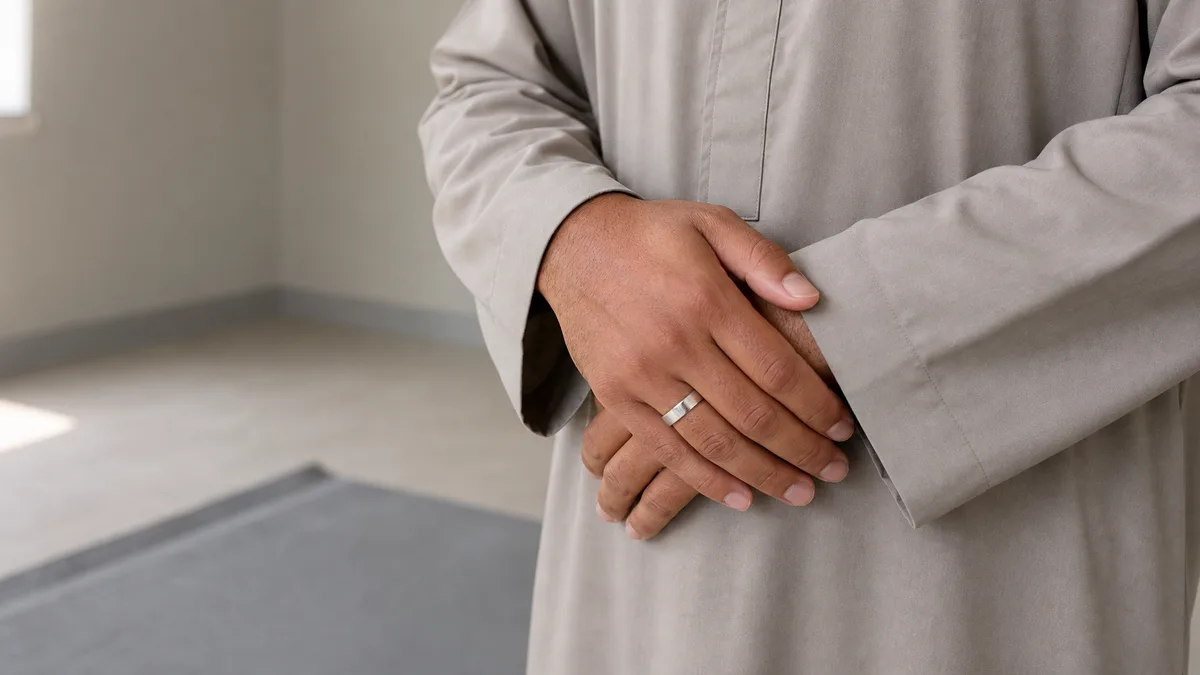
You’re standing in salah, a ring resting on your finger, when a small doubt taps at you. Is it even okay to wear this here? And if you press it to count your tasbih, does that pull at the prayer? Fair questions, and common ones. The good news is that the answer is calmer than the worry.
Yes, you can wear a zikr ring during salah, and it doesn’t affect your prayer. It works best for the dhikr after the prayer, the post-salah adhkar. During the prayer itself, most scholars encourage counting tasbih on the fingers, as the Sunnah teaches, and keeping extra movement light. Put simply: wear it while you pray, and count with it once you finish.
Key Takeaways
Wearing a zikr ring during salah is uncontroversial; it doesn’t affect your prayer’s validity.
The only real question is whether you actively count on it during the prayer, not whether you wear it.
Inside salah, the Sunnah is to count tasbih on the fingers, as recorded in Sunan Abi Dawud 1502.
A zikr ring shines for the post-salah adhkar, set at 33, 33, and 34, a hundred in all.
Wearing vs. Counting: What the Question Really Asks
Wearing a zikr ring during salah is uncontroversial. Like any ring, it just sits on your finger and leaves the prayer untouched; the Prophet himself wore a silver ring². So the real question was never whether you may wear one. It’s only whether you may actively tap or turn it to count tasbih while you pray.
That fork, wearing versus counting, is the one this whole guide turns on, and three branches follow from it. What the Sunnah says about counting during the prayer, we take up next. Whether a small tap counts as excessive movement comes a little later. And the ring’s real home, the dhikr after salah, gets its own section too.
On the wider ruling, most contemporary scholars treat a counting aid as a permissible means, not worship in itself; See all are zikr rings halal covers that in full. This page explains where scholars generally land; it isn’t a fatwa for your case, so put your own situation to a scholar you trust. And since a zikr ring’s whole job is to keep a quiet tally of your dhikr, the object matters less than the moment. Our full-ring iTasbih-Peace1, for one, looks and rests like an ordinary piece of faith jewelry, so wearing it through salah asks nothing of your prayer.
Counting Dhikr During the Prayer: The Sunnah of the Fingers
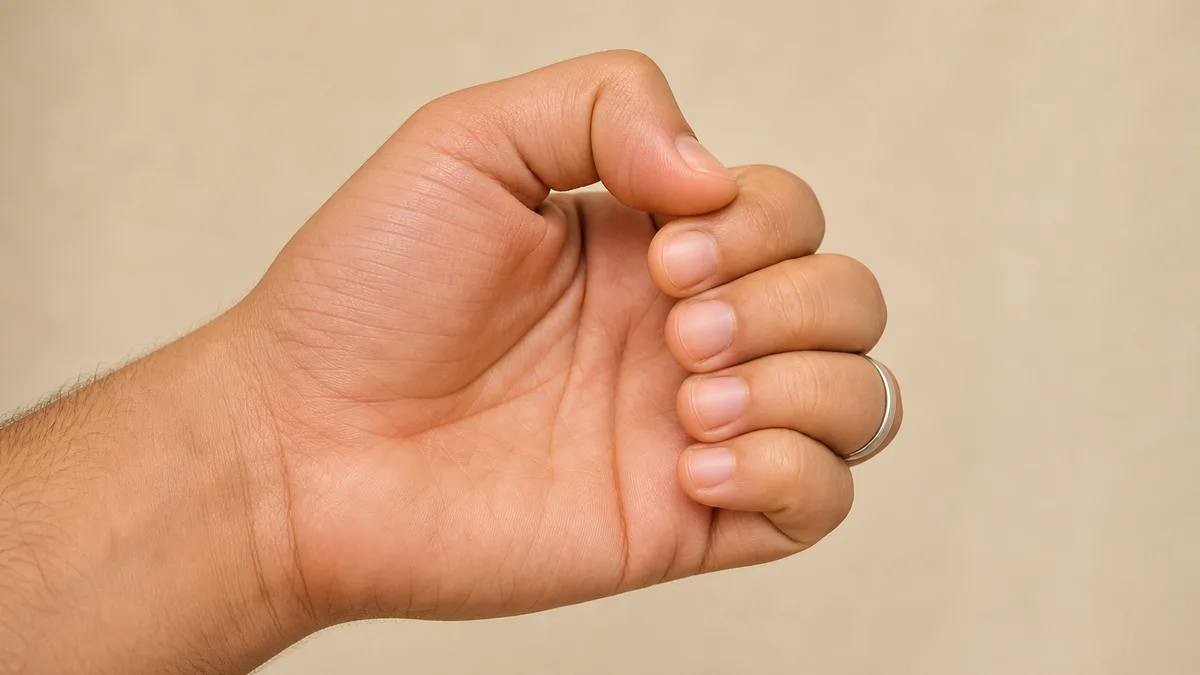
During the formal prayer, the settled practice is to count any tasbih on the fingers, just as the Prophet did. He counted the glorification of Allah on his fingers, in a report graded sahih by al-Albani¹. That’s why most scholars prefer the fingers over a ring or beads inside salah, and warn that repeated, deliberate hand movement can pull against the prayer’s stillness.
Which hand? Scholars lean toward the right, though they root it in preference, not a hard-and-fast text. Jordan’s General Iftaa’ Department puts it this way: “It is permissible for a Muslim to count Tasbih on both hands, the right alone, the left alone or in any other way,” while the right is preferable because the Prophet “used to like to start with the right whenever he could.”⁶
None of this makes the ring forbidden. IslamQA holds both truths at once: “The Sunnah is for the Muslim to count his tasbih and tahleel on his fingers,” and yet “there is nothing wrong” with counting “by any permissible means, such as … the tasbih ring.”⁵ So the fingers are better inside salah; the ring simply isn’t the place for it.
SeekersGuidance (Shaykh Faraz Rabbani) is just as plain about the prayer itself: “it is disliked to count tasbih using prayer beads, or even by folding one’s fingers. Both constitute extra actions, and the basis of prayer is stillness (sukun) and reverence (khushu).”⁷ He adds, “One can, however, press down on one’s fingers to keep track.” Whether a small tap crosses that line is its own question, one we reach shortly. The same reasoning extends to the digital form; can you use digital tasbih during prayer takes that case on directly.
The Best Use: Dhikr After Salah (the Adhkar)
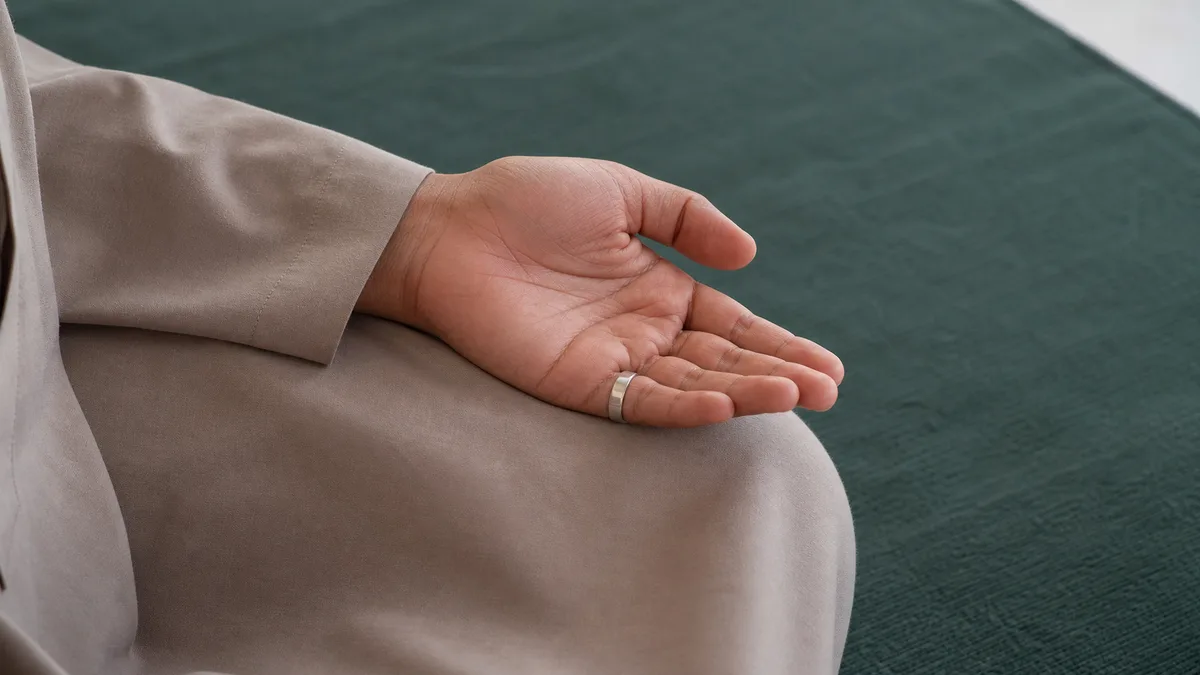
A zikr ring is at its best once the prayer ends, for the adhkar after each obligatory salah: 33 SubhanAllah, 33 Alhamdulillah, and 34 Allahu Akbar, a hundred in all. The thirty-four-takbir pattern is recorded in Sahih Muslim⁴, while Sahih al-Bukhari records thirty-three of each³. With the prayer’s formal movements behind you, the ring keeps that count exact, so your focus stays with the dhikr, not the number.
Here’s how the two halves fit together. Inside the prayer, your fingers stay free so the salah stays still. After it, the ring frees your fingers and your mind, so the count no longer competes with your presence. The Sunnah of the fingers and the ring’s after-salah role aren’t rivals; they hand off to each other, one for the prayer, one for the remembrance that follows.
The moment | Best way to count | Why | The ring’s role |
|---|---|---|---|
During salah | The fingers (Sunnah) | The prayer’s basis is stillness and khushu, so extra hand motion is discouraged (SeekersGuidance) | Just worn, not worked |
After salah (the adhkar) | The zikr ring | You’re free to move, and an exact tally keeps you in the words (IslamQA 198080) | Its home, the post-salah adhkar |
This is where a zikr ring feels most at home. Our classic iTasbih-Faith was made for exactly this moment: a quiet companion for the adhkar after each prayer, holding the tally so your attention rests on the remembrance, not the count. It’s the everyday Smart Tasbih most people settle into. When the ring is meant as a gift, the iTasbih-Relation carries a little more occasion, a Ramadan, Eid, or wedding present chosen with someone in mind. And across the whole iTasbih family, each piece is really the same idea worn a different way: every dhikr matters. For the ruling framed around daily use, see ruling on using tasbih ring.
Does Tapping a Ring Count as ‘Excessive Movement’?
Minor, incidental movement doesn’t invalidate your salah; only continuous, excessive movement unrelated to the prayer, what jurists call ‘amal kathir, does. A single light tap isn’t the same as counting tap after tap. Scholars differ on where small counting actions fall, and that gray area is exactly why the fingers stay the safe, agreed-upon choice inside the prayer.
Think of the two ends of the range. Scratching an itch or adjusting your clothing is incidental; nobody says it breaks the prayer. A steady, repeated motion with nothing to do with the salah sits at the other end. A deliberate press to count one dhikr is small on its own. Repeat it thirty-three times, though, and it becomes a running action laid over the prayer, tied to counting rather than to the salah’s own movements. That’s the concern.
It’s also why reaching for the fingers sidesteps the whole debate. They’re part of you, they add no separate object to handle, and pressing lightly on them is exactly what the scholars pointed to. When in doubt, the quiet, still option is the one already built into your hand. If your question is really about the ring’s own standing rather than the prayer, ruling on tasbih ring takes that up.
Madhhab Notes: Hanafi, Shafi’i and the Common View
Do the schools actually disagree here? On wearing the ring, not at all; on counting during the prayer, only by degree. The Hanafi school leans toward disliking a deliberate count inside salah, while the broader view rests on the hadith of counting on the fingers. Each still arrives at the same practical door.
The Hanafi read is the most cautious. As quoted above, SeekersGuidance (Shaykh Faraz Rabbani) treats counting with beads, or even folding the fingers, as a disliked extra action against the prayer’s stillness, yet still allows a light press on the fingers to keep track⁷. So even the strictest school leaves you a quiet, motionless way to count while you pray.
The Shafi’i and majority framing leans on that same hadith of the fingers as a recommended Sunnah, without extending the dislike to a discreet count; IslamQA settles the fingers as the Sunnah while still permitting any lawful aid⁵. Jordan’s General Iftaa’ Department adds the small preference for the right hand, counted better because the Prophet liked to begin on the right⁶.
This is where the apparent conflict, Hanafi caution about folding fingers versus the “Sunnah of the fingers,” turns out narrower than it looks. The dislike targets the pronounced motion of working beads or folding the hand, not a light press, and the finger-count shines most in dhikr at large and in the adhkar after salah. Read together, the schools converge rather than collide: hold the prayer still, count lightly on the fingers if you must, and let the ring wait until after the taslim.
Wearing the Ring Through Wudu and All Day
Does wearing the ring through wudu or all day cause any problem? No. A worn ring doesn’t invalidate your wudu, and nothing stops you keeping it on from morning to night. The one gentle habit scholars mention: if the ring sits snugly, turn or slide it a little during wudu so the water reaches the skin beneath.
For most rings this takes care of itself. A ring that sits loosely lets the water pass as you wash, so there’s nothing to do. Only a tight band needs a small nudge, the way you’d move a watch strap or a bangle, so the wash reaches every part of the hand. Think of it as a light courtesy to the wudu, not a rule to fret over.
As for wearing it all day, that’s really the point of a ring rather than a problem with it. It stays with you from the first remembrance of the morning to the adhkar after each prayer, holding the count in the background whenever you turn to dhikr. A well-made ring feels like part of your everyday dress, so it asks nothing of your day except to be there when you remember.
Zikr Ring vs. Prayer Beads In and Around Salah
Which serves you better in and around the prayer, a zikr ring or a string of prayer beads (misbaha)? Inside salah, neither takes the lead; the fingers do, since a ring and beads are both extra objects to handle. After the taslim, both carry the count faithfully. With the ring, the small edge is simply that it already rides on your hand.
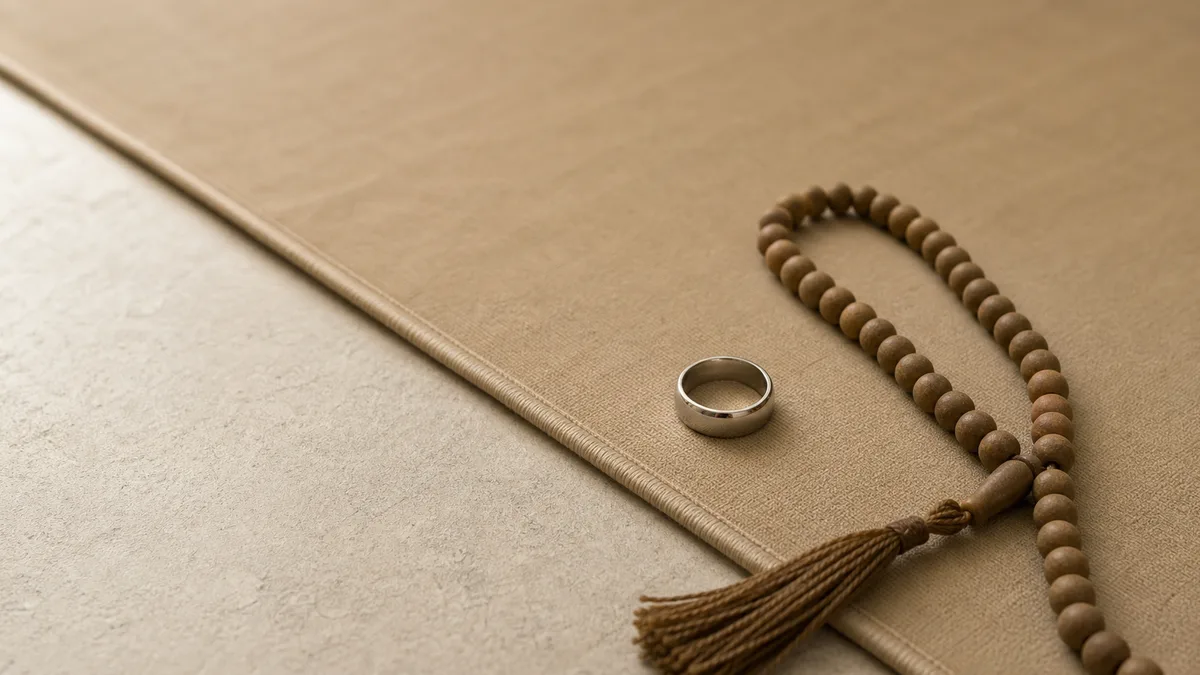
During the prayer, the same reasoning that keeps the ring passive applies to the beads. SeekersGuidance treats counting with prayer beads inside salah as disliked, an extra action laid over the stillness, so neither belongs in your working hand while you pray⁷. The fingers stay the agreed choice, and both objects simply wait.
After the prayer, the choice opens up. Prayer beads are traditional and tactile, a familiar weight between the fingers. A zikr ring keeps the same count without a separate object to carry or set down, and it stays with you when the beads are left at home. Beads and a ring hold the same numbers; the choice is really about what feels natural to your hand.
In and around salah | Prayer beads (misbaha) | Zikr ring |
|---|---|---|
During the prayer | Set aside; the fingers are the Sunnah | Worn, not worked; the fingers are the Sunnah |
After salah (the adhkar) | A traditional, tactile count | An exact count, already on your hand |
Carrying it | A separate object to bring along | Nothing extra; it travels on your finger |
Everyday feel | Held when you sit to remember | Rests like ordinary faith jewelry |
Neither replaces the fingers inside the prayer, and neither is more “religious” than the other after it. A zikr ring is simply the same quiet habit worn instead of held, which is why it settles so easily into the dhikr that follows each salah.
So, Can You Use a Zikr Ring in Salah? A Simple Rule to Follow
So, can you use a zikr ring in salah? Yes, and one plain rule settles almost every case: wear it during the prayer, and count on it once you’ve finished. Inside salah, let your fingers keep any count, as the Sunnah teaches. After the taslim, the ring comes into its own for the adhkar. In our experience, that one line clears up most of the worry.
If a quieter doubt is whether the ring itself is some kind of innovation, it isn’t. Counting dhikr is a means, not a new act of worship, and is digital tasbih allowed in Islam walks through that question in full.
As for which ring, that’s a matter of fit, not fiqh. The entry-level iTasbih-Salam is an easy first step into Smart Tasbih Jewelry, or a light Ramadan gift for someone new to the habit. For anyone minding both faith and health, the iTasbih-FIT folds the two into a single ring, one that skips the buzzing motor. Whichever you choose, the ring changes only where the count sits, never the dhikr itself.
Frequently Asked Questions
Does wearing a ring break my wudu or invalidate my salah?
No on both counts. A ring you wear doesn’t affect your wudu, and it doesn’t touch the validity of your prayer; the Prophet himself wore a silver ring². The only point scholars raise is about actively counting on it during the prayer, not about wearing it, as the sections above explain.
Can I count on the ring during a sunnah or nafl prayer, not just the fard?
The rule doesn’t change with the type of prayer. Fard or a voluntary nafl, the concern is the same: stillness and light movement while you pray. So keep any counting on the fingers, the Sunnah covered above, until you’ve made the taslim, then let the ring hold your adhkar. It’s the safe, simple habit for every prayer.
What if I lose count during the post-salah adhkar?
That’s exactly the moment a ring earns its keep. The adhkar run to a hundred after each prayer, and a ring holds the running total, so a stray thought doesn’t send you back to zero. Your remembrance stays unbroken while the number takes care of itself, which is the whole reason the ring belongs after the prayer.
Is it better to use my fingers even for the dhikr after salah?
Both are fine, and the fingers do carry a Sunnah virtue a ring can’t replace. IslamQA rests its ruling on one principle: the means take the ruling of their ends, so the count you keep doesn’t change the worth of the dhikr⁵. Reach for your fingers when you like; let the ring help on the days you’d rather not lose your place.
This guide is general information, not a religious ruling. WESLAMIC does not issue fatwa; for questions specific to your situation, please consult a qualified scholar. Reviewed by the WESLAMIC Editorial team.
Sources
² Sahih al-Bukhari 5870 (the Prophet’s silver ring), retrieved 2026-07-24
⁴ Sahih Muslim 596, the thirty-four-takbir pattern, via IslamQA answer 228520, retrieved 2026-07-24
⁵ IslamQA, “Ruling on using a tasbih ring” (answer 198080), retrieved 2026-07-24
WESLAMIC in-house editorial review across the current iTasbih line (brand input), 2026