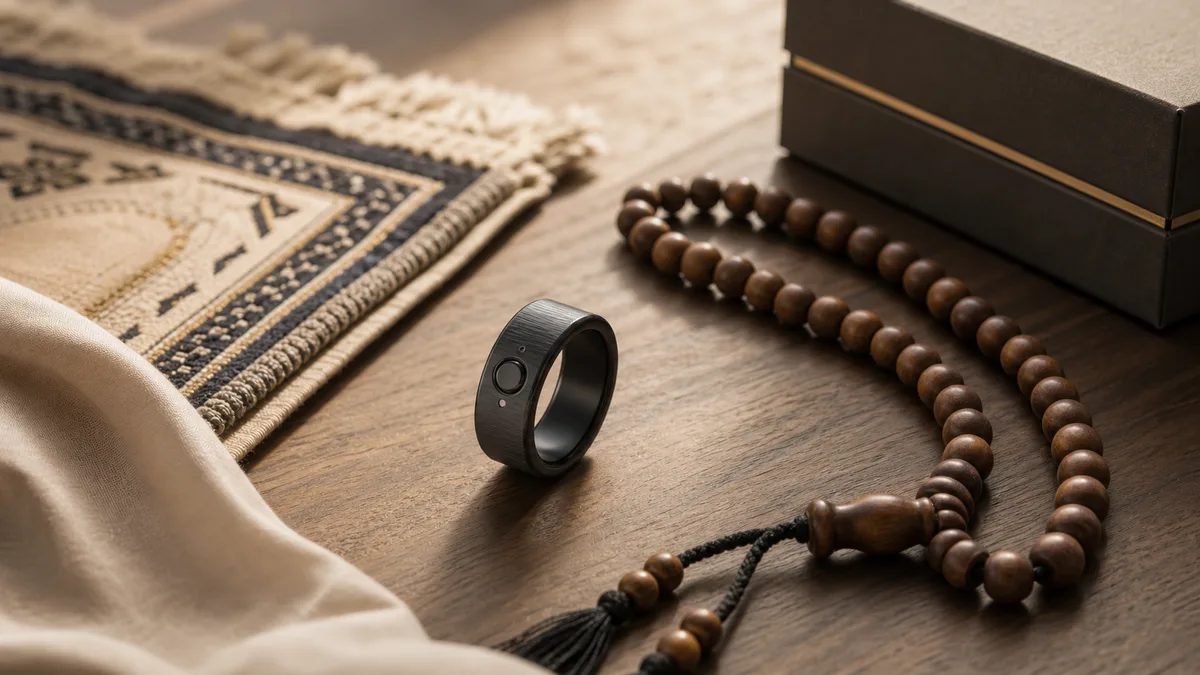
The zikr ring price you see online can swing wildly. One listing shows $10, the next shows $149, and neither explains the gap. Here’s the honest answer: a quality smart tasbih ring usually costs between $40 and $120. Unbranded models start near $10, and premium pieces across the wider market reach about $149. Our own WESLAMIC range sits between $39.99 and $117.¹ Price follows real hardware: the build material, a charging case, prayer-time vibration, NFC, and health sensors. Warranty and app support then shape the longer-run cost. So the cheapest ring is rarely the smartest buy. This guide maps every tier, decodes what each price jump pays for, and reveals the two-year cost a sticker quietly hides.
Key Takeaways
Quality zikr rings run $40 to $120; unbranded ones start near $10.
Our WESLAMIC range spans $39.99 to $117 (WESLAMIC official store).
Each price jump buys one concrete upgrade, not vague “quality.”
Over two years, a $10 to $25 ring often costs about as much as a $40 branded one.
How Much Does a Zikr Ring Cost? Price Ranges Explained
A quality zikr ring costs $40 to $120, with unbranded clicker rings from about $10 and premium pieces reaching roughly $149 across the wider market. As of mid-2026, our own WESLAMIC store lists a range from $39.99 to $117 across its Zikr Ring collection.¹ Four clear tiers sort the whole market.
Most of the confusion comes from mixing four very different things under one name. At the bottom sit unbranded clicker rings, basic counting rings sold in generic multi-packs. In the middle sit real branded rings that feel like a gift. At the top sit premium pieces with sensors, metal plating, or a gift box. Here’s the map.
Tier | Typical price | What you’re actually getting |
|---|---|---|
Unbranded baseline | $10 to $25 | Basic clicker-style counting rings, often generic multi-packs |
Branded entry | around $40 | A real branded Smart Tasbih (our iTasbih-Salam, $39.99) |
Branded core | around $48 to $69 | Everyday rings with prayer-time cues (iTasbih-Faith $47.90, iTasbih-Peace 1 $69) |
Premium | around $90 to $117 | Sensors or a metal-plated gift set (iTasbih-FIT $90, iTasbih-Relation $117) |
A note on the numbers: these are current 2026 store prices, and a few models carry seasonal markdowns, so their regular price can sit higher. The deals section below shows how to tell a real markdown from an inflated one.
Those $10 clicker rings aren’t a scam. They count your dhikr, and that’s all they promise. But the most basic ones rarely feel like something you’d gift, and often carry no prayer-time reminders, no app, and no warranty worth the name. That’s the trade you make at the very bottom.
One caution on that $149 ceiling: it comes from other makers’ flagship pieces, not from us. Our own catalog stops at $117. So if you ever see $117 to $149 tied to our name, it isn’t ours. These four tiers have held steady, and heading into 2027 they’re unlikely to shift much.
Where does your money sit best? For most people, the branded entry and core tiers are the sweet spot. They read as faith jewelry, not throwaway counting rings, yet they don’t charge you for sensors you may never open. Still weighing whether a ring fits your practice at all? That’s a fair first question; see are zikr rings halal before you compare prices.
So why does one ring cost five times another? The answer isn’t mystery or markup. It’s parts. Each step up the ladder adds something real, and that’s exactly what the next section decodes.
What Drives the Price of a Smart Tasbih Ring
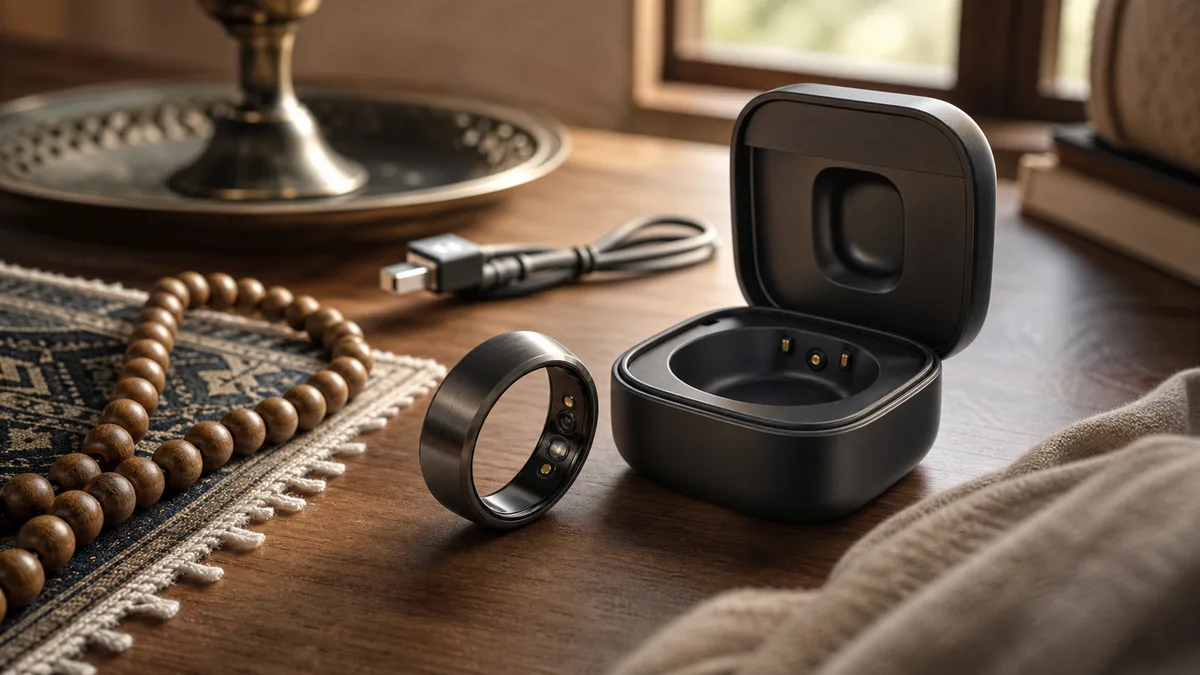
Price climbs with concrete upgrades, not vague quality. On our own ladder, each step from $39.99 up to $117 buys exactly one thing more: metal plating, a charging case, prayer-time vibration, NFC sharing, or health sensors.
So what makes a smart tasbih ring expensive? Think of the price as a stack of parts, each with its own cost. The cheapest rings carry the fewest. Every feature you add multiplies the bill. Here’s the decoder, so you can judge each jump yourself.
The upgrade you pay for | What that extra dollar buys |
|---|---|
Plastic to metal plating | A tougher, jewelry-grade finish that resists wear |
Charging cable to a charging case | Multi-day power, no dangling cable |
Counting-only to prayer-time vibration | A gentle wrist cue at salah times |
No NFC to NFC card-sharing | Share your details or a profile with one tap |
No sensors to health tracking | Heart rate, SpO2, sleep, and steps |
Pouch to a gift box | A ready-to-give, luxe presentation |
On our own catalog, you can watch this map in action. Our iTasbih-Salam opens the ladder at $39.99 with a comfortable build and cable charging.¹ Step up to the full-ring iTasbih-Peace 1 at $69, and that roughly $29 buys the breakthrough all-day ring shape plus a built-in vibration motor for gentle prayer-time cues.
The iTasbih-FIT at $90 adds real health sensors: heart rate, SpO2, sleep, and steps. One honest note: the FIT trades away the vibration motor, so it skips the on-ring prayer-time buzz. Want both wellness data and gentle reminders? Then the sensor jump isn’t automatically your jump. Curious how these cues feel day to day? See how to use zikr ring.
Why do sensors cost the most? In 2026, Renesas’s Wearable Smart Ring for Health and Connectivity reference design lists what a health ring needs: a Bluetooth LE chip, a heart-rate sensor and pulse oximeter, motion and temperature sensors, a security block, and generous memory.² That’s far more silicon than a simple counting ring carries. More parts, higher price.
For a mainstream comparison, step outside faith jewelry for a moment. As of 2026, full health smart rings still command a steep premium. As Android Police reports in its Samsung Galaxy Ring specs, that ring launched at $399.99 with about a week of battery and a charging case.³ Our metal-plated iTasbih-Relation gift set at $117 adds plating, a 300mAh charging case, and up to 33 days of battery, yet stays a fraction of that. That longer runtime partly reflects a lighter load: the Relation runs no always-on health sensors, so the fair comparison here is price, not battery days.
Cheap vs Worth It: Reading Value, Not Just the Sticker Price
Is a cheap zikr ring worth it? Rarely. Over two years, a $10 to $25 unbranded ring often ends up costing about $40, roughly the same as a branded entry ring, while giving you less. As of 2026, both cheap and branded rings use a sealed battery that fades after about 18 to 24 months. Independent teardowns (iFixit, reported by TechSpot) find that limit across smart rings⁴, and RingConn’s battery guide echoes it.⁵
Here’s the reframe that matters. The sticker isn’t the price; it’s the deposit. What you truly pay reveals itself over two years, once warranties lapse, chargers go missing, apps fall silent, and finishes wear thin.
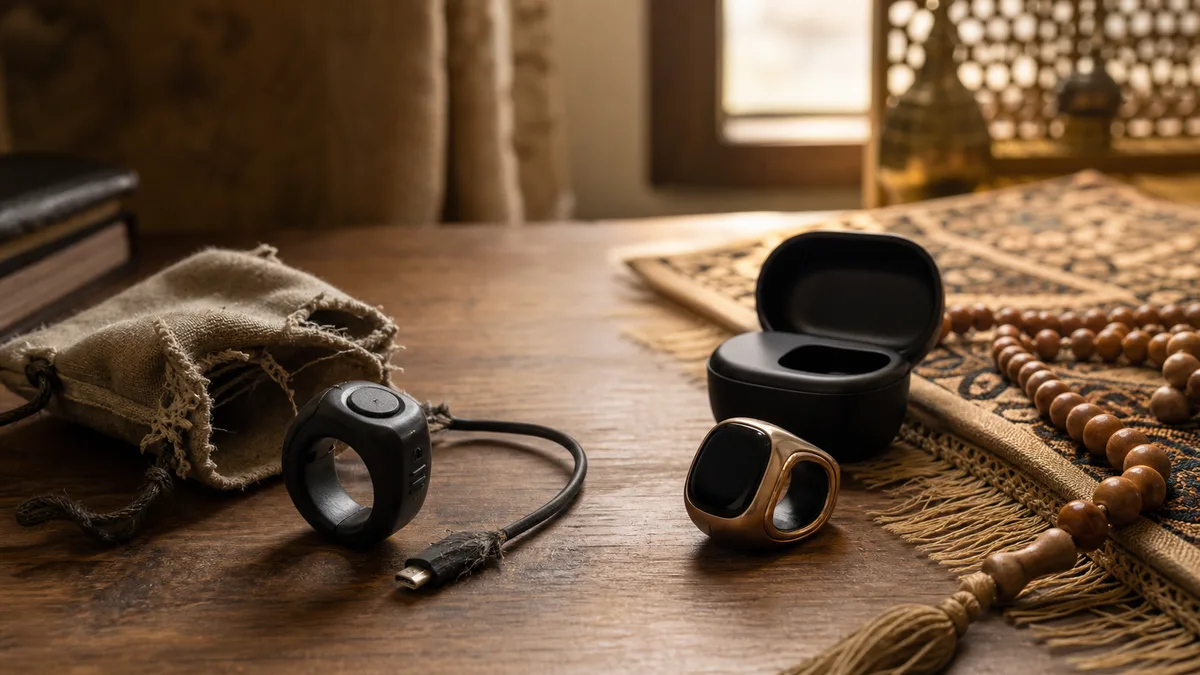
One myth to clear first: the branded advantage is not a replaceable battery. Both cheap and branded rings seal the cell inside; the battery isn’t user-replaceable. After roughly 18 to 24 months, that battery fades on either ring, and most people simply refresh the whole piece. So the sealed battery is shared ground, not the branded edge.
The real edge sits in four columns: warranty length, charger re-buys, app longevity, and finish durability. Here’s how two years actually add up.
Ring type | Sticker | Warranty | Charger re-buys (2 yr) | App longevity | Finish durability | 2-year effective cost |
|---|---|---|---|---|---|---|
Unbranded baseline | $10 to $25 | ~6 months or none | ~$10 to $15 | often no updates | wears faster | about $38 to $45 |
Branded entry (iTasbih-Salam) | $39.99 | 12 months | included, rarely re-bought | ongoing updates | holds up | about $40 to $45 |
Branded core (iTasbih-Faith / Peace 1) | $47.90 to $69 | 12 months | included | ongoing updates | holds up | about $48 to $70 |
Premium (iTasbih-FIT / Relation) | $90 to $117 | 12 months | included case | ongoing updates | metal-plated, toughest | about $90 to $117 |
Unbranded row assumes one ~$12 charger replacement over two years and no active warranty; branded rows include the in-box charger and a 12-month warranty.
App longevity matters more than it sounds. A branded ring keeps its app updated, so it survives new phones and new operating systems. A white-label app often goes quiet within a year, and a silent app can leave your ring half working. That gap shows on no price sheet.
Read the table’s top row against its last column and the pattern is plain: a cheap ring’s true cost creeps toward branded-entry territory, only without the warranty, the living app, or the finish that lasts. In our experience, the calmest buy is the branded entry, like our iTasbih-Salam, which starts near that same two-year figure yet arrives with a 12-month warranty and an app that keeps living.
Zikr Ring Deals, Discounts & Sales: Paying Less Without Buying Worse
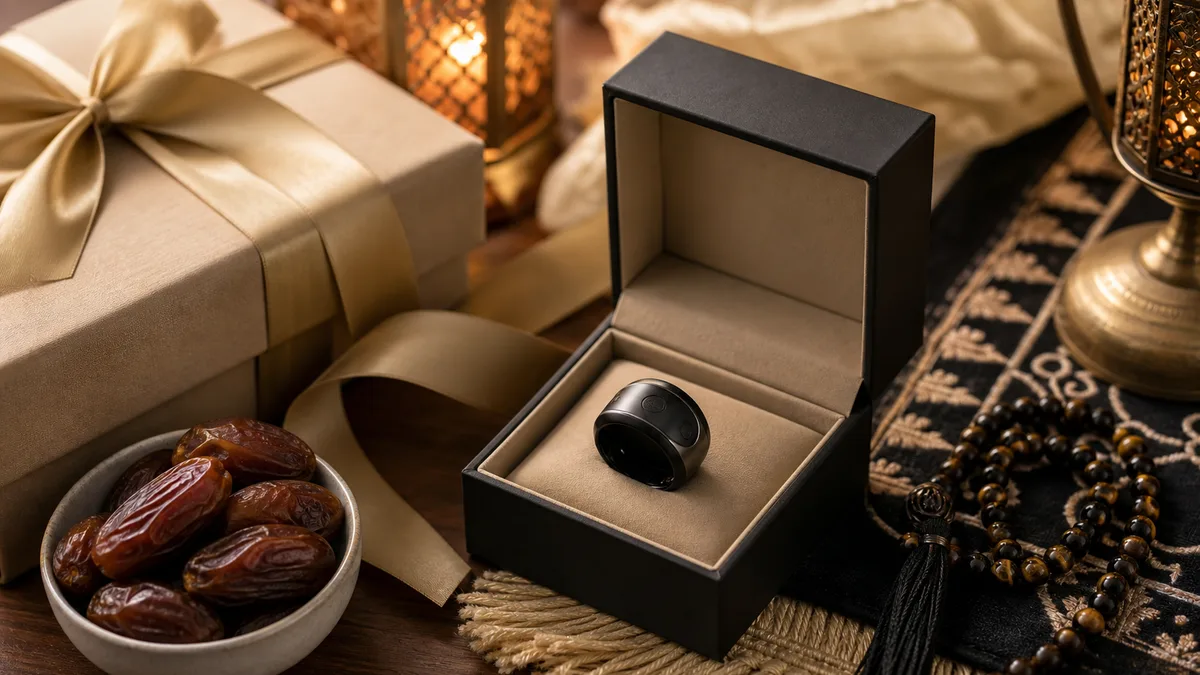
A real deal compares the “now” price to the usual street price, not a crossed-out MSRP. As of mid-2026, our iTasbih-Peace 1 sells at $69 from a $109 regular price, a genuine drop you can check against its everyday listing. The honest test takes about 30 seconds.
Big “was” prices are easy to inflate. A ring can wear a $149 “was” tag it never truly sold at, so the “now” looks heroic. We’ve learned to treat that crossed-out number as decoration, not evidence.
Here’s a 30-second gut-check before you buy:
Find the typical selling price first, not the MSRP. What has it actually sold for lately?
Compare the “now” price to that street price, not to the anchor.
Be wary of a “was” number that sits far above every other listing.
Check the timing. Real drops often cluster around Ramadan and Eid, not a year-round “sale.”
Confirm what’s included: a case, a gift box, a 12-month warranty. A slightly higher price with real coverage beats a rock-bottom one with none.
On our own ladder, the “now” prices hold up to that test. The iTasbih-Salam sits at $39.99 from $42.90, and the iTasbih-Faith at $47.90 from a $69 regular price. These aren’t invented anchors; they’re real everyday prices, marked down for the season. Buying for a father or husband, and wondering if a ring even suits him? You might first read can men wear rings in Islam.
One gentle reminder: a discount is only a saving if you wanted the ring at its real price. A beautiful piece at $47.90 you’ll wear daily beats a $12 one you abandon in a drawer. Let the value guide you, not the size of the red number.
Zikr Ring Amazon
Amazon is where many buyers start, but its listings raise their own questions: which sellers to trust, and what the cheapest rings quietly leave out. We keep that rundown on its own page, so this guide stays focused on price: see zikr ring amazon.
Where To Buy Zikr Ring
Beyond the marketplace, a few sellers are safer bets, and a couple of checks at checkout save regret later. For the full guide to trusted places to buy and what to confirm before you pay, see where to buy zikr ring.
Zikr Ring Price: Frequently Asked Questions
How much does a zikr ring cost?
Expect four tiers. Unbranded clicker rings start near $10, a branded entry like our iTasbih-Salam runs $39.99, the core sits around $47.90 to $69, and premium pieces reach $90 to $117. Across the wider market, flagships from other makers climb to about $149. Most quality picks land in the middle.
Is a cheap zikr ring worth it?
Rarely. A $10 to $25 unbranded ring often carries a shorter warranty, no app updates, and a finish that tires early. Over two years, its real cost climbs toward $40, about what a branded entry ring costs new (see above). You get less ring for roughly the same money.
What’s the most affordable WESLAMIC zikr ring?
Our iTasbih-Salam is the honest floor at $39.99, down from $42.90. It’s the accessible way to begin a Smart Tasbih habit, and it still arrives feeling like a real gift, not a bare-bones buy. For many first-time gifters during Ramadan, it’s the natural starting point.
Do I really need to pay for health sensors?
Only if you want them. Our iTasbih-FIT at $90 adds heart rate, SpO2, sleep, and steps, but it drops the vibration motor, so it skips the on-ring prayer-time buzz. Many readers prefer the gentle salah reminder over wellness data. Match the ring to what you’ll actually use daily.
Are Ramadan and Eid discounts worth waiting for?
Often, yes, if the “now” price beats the usual street price. Our iTasbih-Peace 1 drops to $69 from $109 around the season, a real $40 saving. Just check the anchor isn’t inflated (see above). A genuine seasonal drop is worth timing your gift around.
The Bottom Line on Zikr Ring Price
So where does this leave you? Three things worth carrying:
Price range: quality zikr rings run $40 to $120; ours sit at $39.99 to $117, with unbranded pieces from about $10.
Value over time: the cheapest ring often costs about $40 across two years anyway, so a branded entry is usually the calmer choice.
Spotting a real deal: judge it by what’s included and whether the timing is genuine (Ramadan or Eid), not by the size of the crossed-out number (see above).
Whatever you choose, let it feel like a companion, not a purchase. A zikr ring is here to make remembrance a little easier and a little more present in your day, never to nag or keep score. When you’re ready, See all smart tasbih ring and find the one that feels like yours.
This guide shares product and price information, not religious rulings. For questions of practice, please consult a qualified scholar. Reviewed by the WESLAMIC Editorial team; see our editorial standards and contact.
Sources
¹ WESLAMIC official store, Zikr Ring collection, retrieved 2026-07-01
² Renesas, Wearable Smart Ring for Health and Connectivity (reference design), retrieved 2026-07-01
³ Android Police, Samsung Galaxy Ring specs and pricing, retrieved 2026-07-01
⁵ RingConn, How Long Does a Ring Battery Last? Tips for Smart Rings, retrieved 2026-07-01