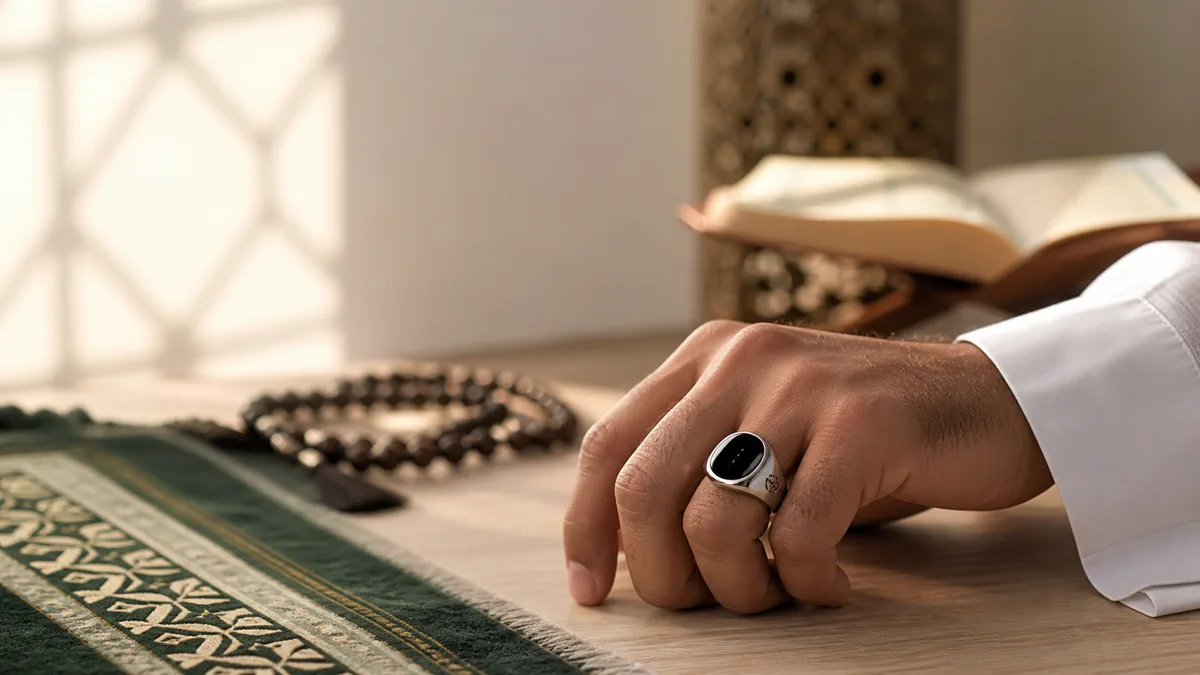
If you’ve ended up here, a small worry probably came with you: can men wear rings in Islam, and did I get the metal wrong? Take a breath. The answer is calmer than the long fatwa pages make it look, and it has been settled for a long time.
This hub gives you the ruling in one line, walks the metals one by one, and then carries that same classical ruling into the modern, silver-toned smart tasbih ring many Muslims now wear. It’s written for Muslims everywhere, so we stick to the agreed core and flag the places where sincere scholars differ. New to that last idea? Here’s the explainer: what is zikr ring. Everything that follows points you to the exact answer you came for.
Key Takeaways
Yes, men may wear rings; only the metal is restricted, so a silver, platinum, or steel wedding band stays clear of any issue.
Silver is the Prophet’s own example: his silver signet ring passed to Abu Bakr, Umar, then Uthman before it was lost in the well of Aris.⁵ Gold rings are forbidden for men.
All four Sunni schools agree on this ruling; see the sourced evidence below.
Platinum, stainless steel, titanium, and tungsten are all gold-free, so they’re generally fine for men.
For a silver-toned option you can wear daily, see the tasbih guides below.
Can Men Wear Rings in Islam? The Ruling at a Glance
Yes, a Muslim man may wear a ring, and the metal is the deciding factor. The Encyclopedia of Fiqh (dorar.net) records that all four Sunni schools, Hanafi, Maliki, Shafi’i, and Hanbali, permit a silver ring for men and forbid a gold one.¹ That agreement is the whole headline, so let’s keep this part short and clear.
Read as a quick glance, the metals sort into three simple groups. Silver is permitted, and more than tolerated: it’s the practice of the Prophet (the hadith are just below). Gold is forbidden for men, a point Islamweb (Dar al-Ifta) reports as scholarly consensus, citing Imam al-Nawawi.² Platinum, steel, and other non-gold metals fall on the permitted side by default, since the clear prohibition names gold, not metal in general.
And gold’s case isn’t a soft preference; the texts treat it as a firm prohibition for men, which is why you’ll rarely find a scholar who waffles on it.
Notice what this glance does not do. It doesn’t rank the schools against each other, because on the ring they don’t disagree. We save the sourced, school-by-school detail for the evidence section, and we keep necklaces, bracelets, and earrings for their own discussion, since those are where the real differences live. Came only for the verdict? You have it. Want the reasoning? Keep reading.
Silver, Gold, Platinum & Steel: Which Ring Metals Men Can Wear
When it comes to metal, only one is genuinely off-limits for a man: gold. Everything else starts from “generally fine,” beginning with silver. Classical fiqh sources even record that all four schools agree men wear the ring on the little finger, citing Ibn al-Qattan and Ibn Hazm, so there’s settled guidance on how to wear it, not only whether.
Here is the working table most men actually want.
Metal | Ruling for men | Why |
|---|---|---|
Silver | Permitted, and sunnah | The Prophet’s own practice; the safe everyday pick |
Gold | Forbidden (haram) | The one metal singled out for men, by agreement |
White gold | Forbidden (haram) | Still gold — the pale color comes from alloying, so it takes the same ruling as gold |
Platinum | Generally permitted | Not gold, so it takes the default ruling |
Stainless steel, titanium, tungsten | Generally permitted | Modern non-gold metals, no clear prohibition |
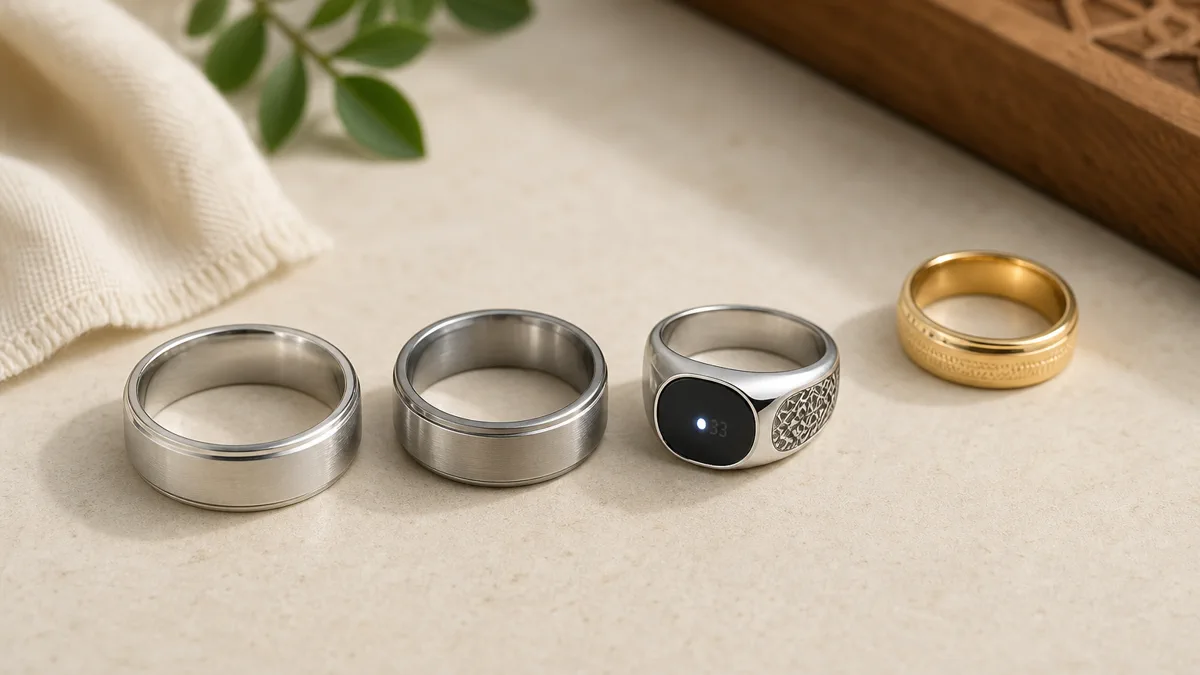
For a lot of men, this only becomes a live question at marriage, when wedding bands are often sold in gold by default. The fix is small: pick a silver, platinum, or steel band instead, and the ruling takes care of itself.
A couple of honest edges are worth naming. Gold-plated or part-gold rings sit in a grayer area, so when you’re unsure, a clearly gold-free metal keeps your conscience easy. White gold is the usual trap here: because it is still a gold alloy — its pale color comes from mixing in metals like palladium, not from being a different metal — most scholars place it under the men’s gold prohibition. Platinum, by contrast, is a separate metal, so it stays on the permitted side. A gemstone or diamond set into a permitted band does not change the ruling either; what counts is the metal of the band. And “permitted” isn’t “required”: a man who wears no ring at all has missed nothing. What does the silver preference really protect? Simplicity. One modest band, no second-guessing, and a look that has stayed steady for centuries.
Beyond Rings: What Jewelry Is Halal for Muslim Men
Beyond the ring, a man’s options narrow, and the agreement loosens. Gold stays forbidden on any item, not only rings: classical scholars read the prohibition as covering men’s adornment in general, with Ibn Abd al-Barr noting the prohibition addresses men, not women.¹ But three pieces men ask about most, chains, bracelets, and earrings, draw real scholarly disagreement rather than a clean yes.
Silver Chains and Necklaces
Silver chains and necklaces are the easiest case. Since silver is permitted for men, many scholars allow a simple silver chain, while some still discourage it where it reads as women’s adornment in a given culture. The guiding worry isn’t the silver; it’s resemblance and intention.
Bracelets
Bracelets are more contested. A plain silver bracelet has its defenders, yet a larger share of scholars lean against men wearing bracelets, mainly on the principle of avoiding tashabbuh, imitating styles associated with women. Here the schools and contemporary muftis genuinely differ, so a blanket ruling would overstate the case.
Earrings, Watches, and Cufflinks
Earrings sit at the cautious end. The majority view discourages or forbids men from wearing earrings, again resting on the imitation principle rather than the metal itself. The same logic reaches accessories men often overlook: a gold watch case, gold cufflinks, or a gold chain fall under the men’s gold prohibition for most scholars, while their silver or steel versions don’t.
Across all three ring-adjacent items, two threads hold: gold is out for men, and intention plus resemblance carry real weight. Because this is exactly where sincere scholars part ways, treat the above as orientation, not a verdict, and bring your specific case to someone qualified.
The Evidence: Why Silver Is Sunnah and Gold Is Forbidden for Men
The men’s-ring ruling rests on authentic, widely reported hadith, not one stray narration. Silver sits in the two most rigorous collections, and the gold prohibition reaches us through many Companions at once. Here, in plain order, is the evidence behind silver yes, gold no, for men.
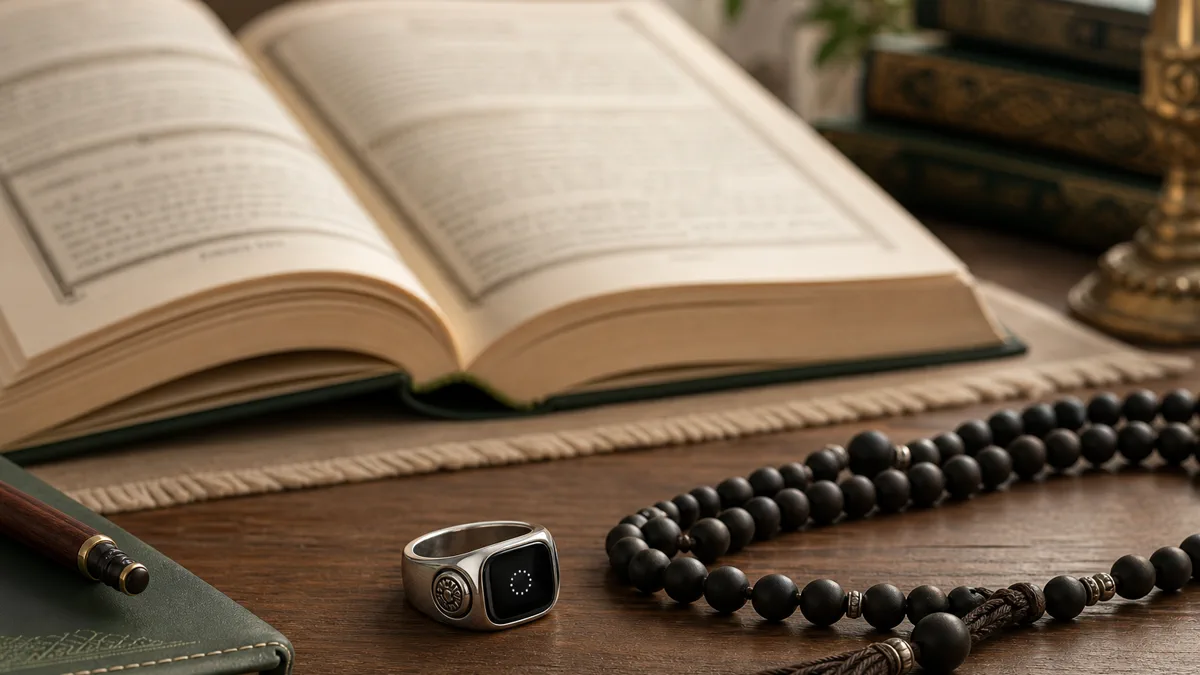
Silver: The Sunnah of the Prophet’s Ring
Start with silver. In Sahih al-Bukhari 5870, Anas reported that the ring of the Prophet (peace be upon him) was of silver, and its stone was of silver too.⁴ Two further reports from Ibn Umar fill in the rest. In Sahih al-Bukhari 5867, the Prophet wore a gold ring, then threw it aside with a vow never to wear it again, and the people discarded their gold rings too.³ In Sahih al-Bukhari 5873, the silver ring he took instead stayed in use after him, worn by Abu Bakr, then Umar, then Uthman, until it fell into the well of Aris.⁵
That the silver ring passed publicly to the first caliphs tells you something: this wasn’t a private habit, it was the community’s settled norm. Silver, then, is no grudging allowance. It’s the practice the Prophet kept and the Companions carried forward.
Gold: Forbidden for Men
Now gold. In Jami at-Tirmidhi 1720, Abu Musa al-Ash’ari reported the Prophet said that wearing silk and gold was made unlawful for the males of his Ummah and lawful for its females; al-Tirmidhi graded it hasan sahih and listed corroboration from fourteen other Companions, which makes the ruling effectively mass-transmitted.⁶
Sunan an-Nasa’i 5144 carries it through a different Companion, Ali ibn Abi Talib, who watched the Prophet hold silk in one hand and gold in the other and call both forbidden for the males of his Ummah; it is also recorded in Sunan Abi Dawud.⁷
The sharpest scene is Sahih Muslim 2090: seeing a man in a gold signet ring, the Prophet removed it, set it down, and warned that one of you is reaching for a coal of Fire to wear on his hand. The man did not take the ring back.⁸
How the Four Schools Rule
On the schools, the Encyclopedia of Fiqh (dorar.net) gathers each position with its classical reference. The silver ring is permitted in the Hanafi (Mukhtasar al-Quduri), Maliki (Manh al-Jalil), Shafi’i (al-Nawawi), and Hanbali (al-Buhuti) books alike, while gold is forbidden for men by the agreement of all four, with al-Nawawi reporting consensus.¹ Islamweb (Dar al-Ifta) states the same, calling the gold prohibition for men a matter scholars settled by agreement.²
One honest caveat: this is a careful map of where the scholarship sits, not a fatwa, and we don’t issue one. Hadith wording and grading are a scholar’s domain, so for anything touching your own circumstances, a trusted local scholar is the right address.
Is a Silver Tasbih Ring Halal for Men?
Yes. A tasbih ring is judged by the same rule as any ring: a silver-toned, gold-free tasbih ring is permitted for men, while a gold one is not. Adding dhikr to a ring does not change the metal ruling, so for men silver stays fine and gold stays off-limits. A silver-toned tasbih ring also reads as ordinary modern jewelry, so it sits naturally on a man’s hand at the desk, the gym, or the prayer mat.
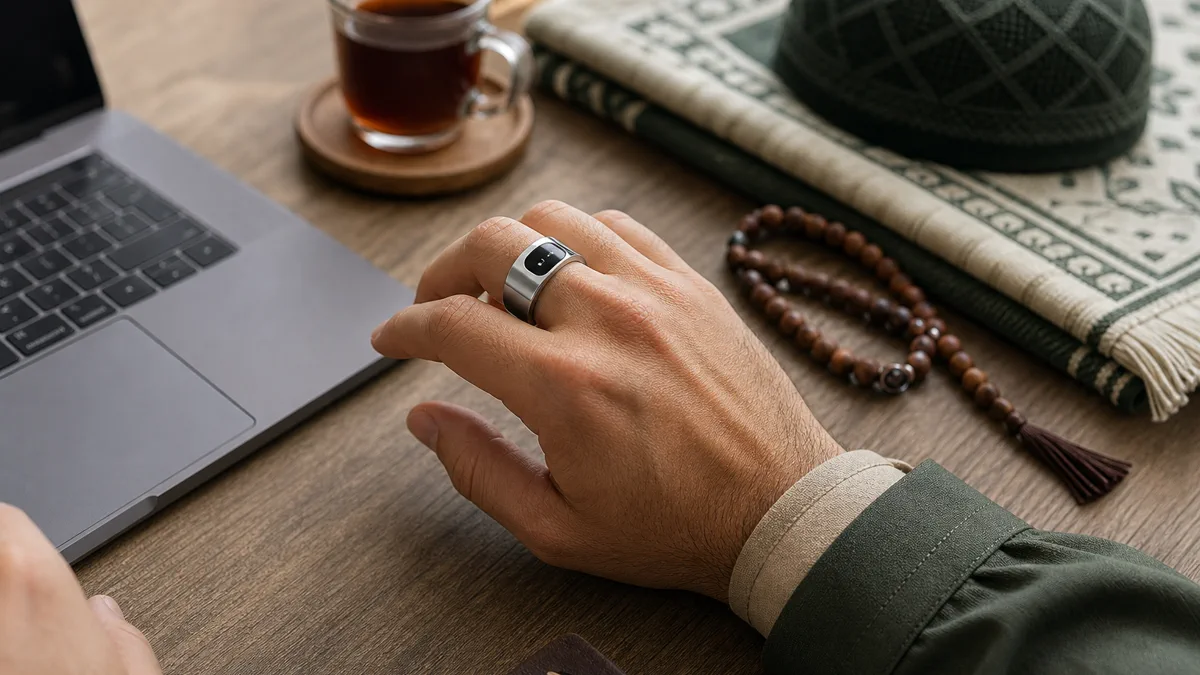
Whether keeping count on a ring is permissible at all is a separate, settled question: most contemporary scholars treat it as a permissible aid to dhikr. We cover that in full in are zikr rings halal.
Silver Yes, Gold No: Your Takeaway and a Modern Option
So, can men wear rings in Islam? Yes. The whole answer fits one line: silver is the Prophet’s example, gold is the metal to avoid, and the non-gold metals in between are fine. Keep these three when you choose:
Choosing a band? Silver keeps you on the Prophet’s example, and it’s the safe pick.
Avoid gold for men; that’s the one firm line, not a preference.
Platinum, steel, and titanium are fine when you want a different look.
If knowing the ruling makes you want to wear it, our smart tasbih family is silver-toned and free of gold by design, so it sits easily within everything above. The everyday iTasbih-Faith is the gentle all-rounder; the iTasbih-Salam is the easiest way in, or a warm gift for a new Muslim; the iTasbih-Relation brings a light-luxury, boxed feel for a wedding or Eid; and the full-ring iTasbih-Peace1 wears like a simple modern ring you’d happily keep on all day.
None of this asks anything of you. Explore faith jewelry, See all smart tasbih ring, or learn how to use zikr ring whenever you’re ready.
Frequently Asked Questions
Is it actually recommended for a man to wear a ring, or just allowed? Wearing a ring is optional, not an act of worship on its own. Most scholars class it as mubah, simply permitted, so no man falls short by going without one. What carries the Prophet’s example is the metal: when you do wear a ring, silver is the one to favor and gold the one to avoid (the evidence is in the section above).
Is there a limit to how much silver a man can wear? There’s no precise weight in the core ruling, but the spirit is moderation. The example of the Prophet was a single, modest silver ring, not a handful, so most scholars advise keeping it simple and skipping anything worn to be noticed. One well-chosen silver band sits comfortably within the Sunnah; piling several on does not.
Why can Muslim women wear gold when men can’t? The difference is stated in the sources, not invented later. In Jami at-Tirmidhi 1720, the Prophet said silk and gold were made unlawful for the males of his Ummah and lawful for its females.⁶ So one and the same gold is a permitted adornment for women and a forbidden one for men, by an explicit text.
If gold is off the table, what can a man wear instead? Plenty. Silver is the standout, both permitted and sunnah. Past that, at least four common modern metals, platinum, stainless steel, titanium, and tungsten, carry no gold and raise no issue. If you’d like the silver look in something you’ll actually keep on, a silver-toned smart tasbih ring is an easy modern fit.
Does any of this change for a tasbih ring specifically? Not for the metal. A tasbih ring is judged on the same silver-yes, gold-no basis as any ring. Whether keeping count on one is permissible at all is a separate question, and a settled one: most contemporary scholars treat it as a permissible aid to dhikr. We cover that in full in are zikr rings halal.
Related reading: tasbih ring for men halal and the ruling on tasbih ring.
Sources
3. Sahih al-Bukhari 5867, Book of Dress (sunnah.com), retrieved 2026-06-30
4. Sahih al-Bukhari 5870, Book of Dress (sunnah.com), retrieved 2026-06-30
5. Sahih al-Bukhari 5873, Book of Dress (sunnah.com), retrieved 2026-06-30
6. Jami at-Tirmidhi 1720, Book on Clothing (sunnah.com), retrieved 2026-06-30
7. Sunan an-Nasa’i 5144, Book of Adornment (sunnah.com), retrieved 2026-06-30
8. Sahih Muslim 2090, Book of Clothes and Adornment (sunnah.com), retrieved 2026-06-30
Reviewed by the WESLAMIC Editorial team, the in-house writers and editors who maintain WESLAMIC’s faith-and-product guidance; see our About page for editorial standards and contact. This guide explains widely held scholarly positions for general understanding, it does not issue a fatwa. For a ruling on your exact situation, please consult a qualified scholar you trust.