
Ask most people searching “zikr ring tap sensitivity” what they really want to know, and it comes down to two questions: what is it, and why does my ring sometimes skip a tap or count one twice? The honest answer starts at the sensor: when its read of your tap slips, you get exactly the skips and doubles that sent you searching.
Key Takeaways
You tap once per dhikr and the ring logs it; it never counts on its own, so tap technique matters more than any spec.
Miscounts split into three fixable types, missed, double, and ghost, each a distinct cause, not a broken ring.
Water and dry skin both disturb capacitive touch sensors, so a firm, dry tap fixes most errors.
What Zikr Ring Tap Sensitivity Actually Means
Tap sensitivity is how reliably a zikr ring’s touch sensor turns each thumb tap into one dhikr count, no misses, no doubles. Across all five WESLAMIC models, that’s the whole job: one deliberate tap, one count. That’s what we mean by zikr ring tap sensitivity.
The sensor sits on the face of the ring, the little pad your thumb naturally reaches. Press it once and the count climbs by one. That single, quiet action is how a piece of faith jewelry keeps your dhikr, and it’s why we care so much about getting each tap right.
What surprises new users is this: sensitivity matters more than any figure on a spec sheet. A ring can boast a bright screen and long battery, yet if it drops one tap in twenty, you’ll keep glancing down to check. A ring you trust to catch every tap lets you close your eyes and keep your attention on the remembrance.
You tap once per dhikr, and the sensor logs it. If you’re just starting out, our accessible iTasbih-Salam is built around that one-tap-one-count promise, with three swappable sizes so it sits right where the thumb reaches. To compare the full lineup before you pick, See all smart tasbih ring and see how each model handles the same simple tap.
How Tap Counting Works: Capacitive Touch vs Button vs Rotation
Most zikr rings count with a capacitive touch sensor, which reads the tiny electrical change when your thumb meets the ring face. A few use a physical button or a rotation-based bead instead. That electrical method is fast and silent, which is exactly why it became the mainstream choice in 2026.
Capacitive sensing works because your body conducts electricity. When your thumb touches the face, as Wikipedia’s capacitive sensing entry explains, a capacitor forms and the sensor reads that change as a tap¹. Nothing needs a hard press. A light, confident touch is enough, which is why capacitive tapping feels effortless once you find the rhythm.
There’s a catch worth knowing early. Some sensors use self-capacitance, which gives a strong signal but, as the same entry notes, can’t cleanly resolve more than one contact, so a stray touch can “ghost”¹. That’s a small preview of why miscounts happen. The next section maps every symptom and its fix.
A physical button counts differently. You feel a real click, so there’s no guessing whether it registered. Buttons shrug off moisture and cold better than capacitive pads, handy in the rain or with slightly damp hands. The trade-off is a firmer, louder press that some find less discreet during quiet dhikr.
The third method is rotation-based counting, where you turn a bead or ring segment one notch per remembrance. It’s mechanical and deliberate, closer to a classic tasbih, with no electronics to mistune. It’s also slower, and moving parts can wear over time. Each method trades speed for a different kind of certainty.
Our full-ring iTasbih-Peace1 shows why capacitive won out. Its smooth band sets the sensing face flush against your finger, so a thumb tap lands on one continuous surface, no button to hunt for, and the electronics stay out of sight. You get the quiet speed of capacitive counting on something that simply reads as a modern ring.
Why Your Zikr Ring Miscounts: Missed Taps, Double Counts & Ghost Counts
Miscounts fall into three fixable types. Missed taps happen when the sensor reads too lightly or the tap comes too fast. Double counts happen when one tap lingers or the sensitivity sits too high. Ghost counts come from moisture, a loose fit, or an accidental brush. Each has a distinct, correctable cause, not a defective ring.
Symptom | Most likely cause | Quick fix |
|---|---|---|
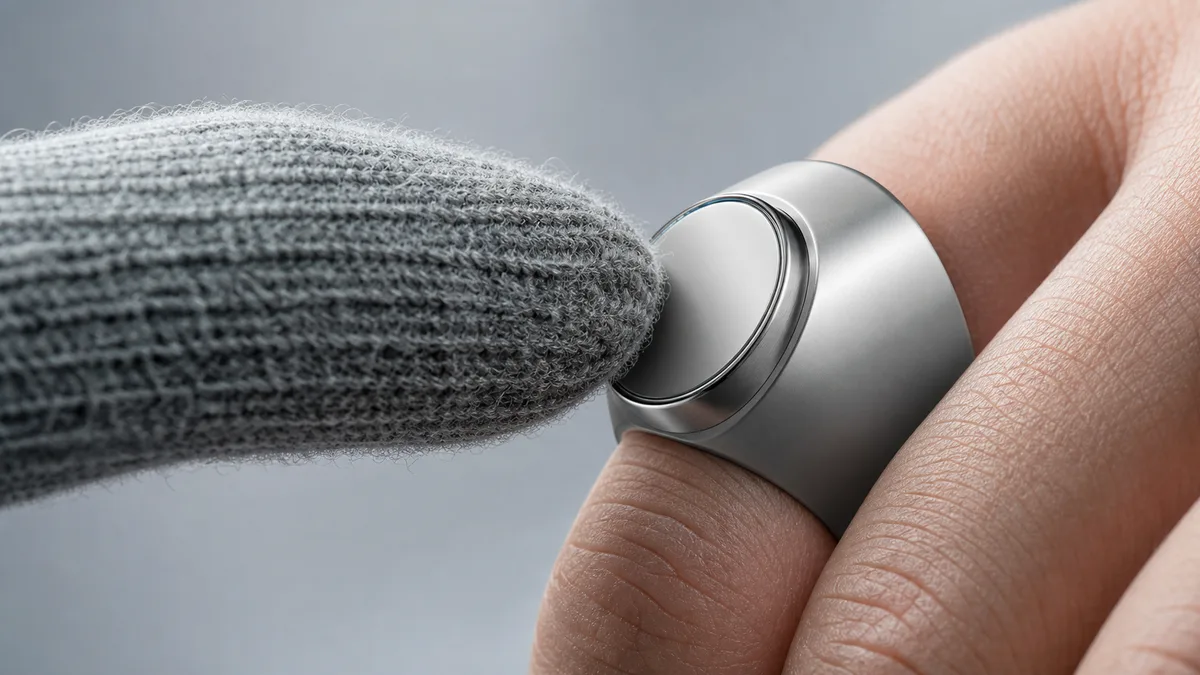
Missed taps | Tap too light or too fast; dry, callused, or gloved fingertip conducts poorly | Tap firmly with the thumb pad; bare the finger; warm or lightly moisten very dry skin |
Double counts | Thumb lingers on the face, or app sensitivity set too high | Lift the thumb cleanly after each tap; lower the sensitivity level |
Ghost counts | Moisture on the finger or face, or a stray brush | Dry both surfaces; keep the face clear between taps |
Miscount right after wudu | Wet skin bridges the sensor’s field | Dry the fingertip and ring face for a moment first (see below) |
Greasy or smudged sensor | Oils and dirt disturb the electrical field | Wipe the sensor clean and dry |
Erratic counts, dim screen | A low battery weakens sensing | Charge the ring, then retry |
Random extra counts | A loose fit lets the ring shift and brush your finger | Size down or adjust the fit |
Notice the pattern. Almost every miscount traces to moisture, contact quality, or a setting, not a broken sensor. Gloved or very dry fingers may not register, and even a little water can confuse the reading. In 2026, across the rings we’ve tested, that same short list of causes shows up again and again.
So before you fear the ring has failed, it’s worth walking the fixes. If a tap goes missing, the culprit is usually your finger or the surface, not the hardware. The reset step for the count lives one section down, and the wudu case gets its own section because it’s the most common of all.
How to Fix and Adjust Tap Sensitivity, Step by Step
Fix most tap problems in this order: clean and dry the sensor, tap firmly with the pad of your thumb, recalibrate or reset the count, adjust the sensitivity level in the companion app where available, then update the firmware. If misses continue after all five steps, contact support before assuming the hardware has failed.
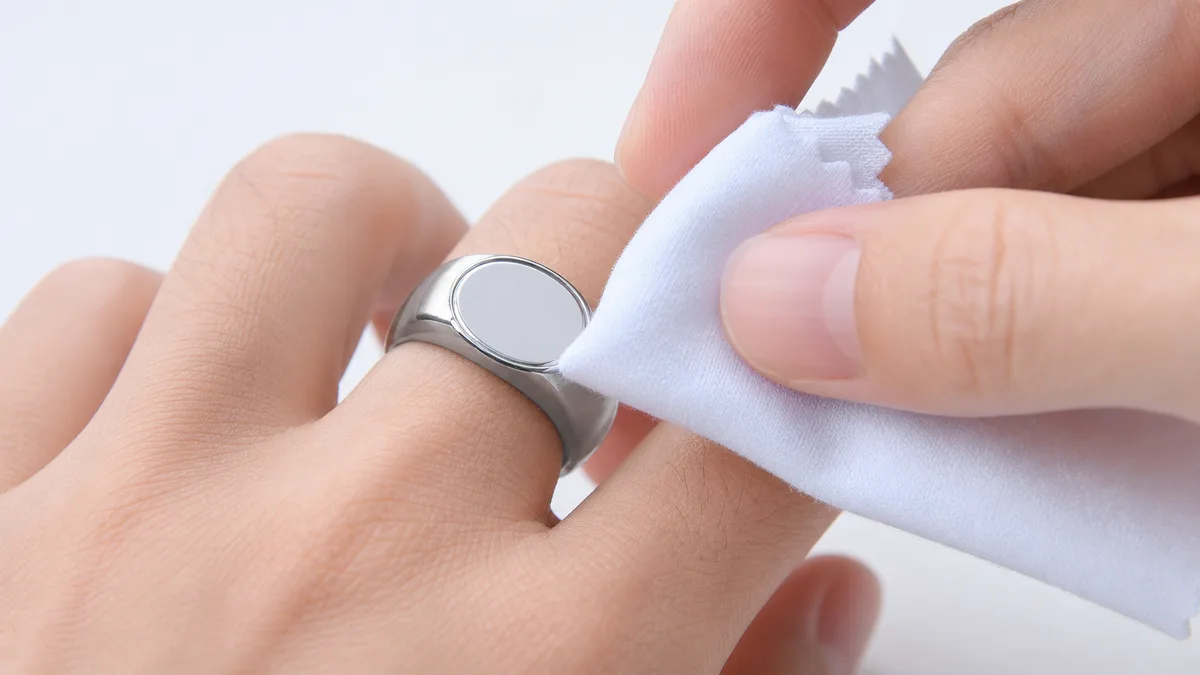
Clean and dry first. Wipe the sensor face with a dry cloth, and make sure your fingertip is dry too. This one move clears most sudden miscounts, since oils and moisture are the usual culprits.
Tap with the thumb pad, firmly. Use the flat pad of your thumb, not the tip or the nail, and let it rest for a beat before lifting. A firm, unhurried tap gives the sensor a clean signal. Rushed, glancing taps are the top cause of missed counts.
Recalibrate or reset the count. If the number still drifts, reset the count and let the ring settle. The exact button-hold varies by model, so how to use zikr ring has the step for daily counting and resets.
Adjust sensitivity in the app. On models that pair with a companion app, like our iTasbih-Faith, open the app and nudge the tap sensitivity level. Raise it if you’re missing taps, lower it if one tap logs as two. Change one level at a time, then test twenty taps.
Update the firmware. Sometimes the fix ships in software. Check the app for a firmware update, which can sharpen how the sensor reads taps. Install it, then re-test.
Here’s the honest part. If you’ve cleaned, tapped firmly, recalibrated, tuned the app, and updated, and it still drops taps, that’s when it may be hardware. At that point, reach out to support rather than second-guessing your technique. In our experience, though, most tap complaints clear inside the first two steps.
How Accurate Is Zikr Ring Tap Counting, Really?
Well-calibrated capacitive counting is accurate for the large majority of deliberate taps, and errors climb sharply once taps get rushed, feather-light, or made with wet fingers. In our own repeated tapping tests across WESLAMIC’s five 2026 models, technique and sensitivity tuning mattered far more than a ring’s price or brand.
We check it like this, and you can too. Tap a set number of times at a steady pace, say one hundred, then compare the ring’s count. Repeat with a dry finger, then a damp one. Repeat again slow, then fast. The gaps between those runs tell you where accuracy actually lives.
Our finding: With a dry finger and a firm, steady tap, our rings caught nearly every deliberate tap in testing. The errors clustered in two places: taps rushed faster than the sensor could reset, and taps made with wet fingers straight after wudu.
Notice what almost no product page will tell you. The category loves to argue over specs, yet nobody publishes real tap-accuracy figures. That silence is the point. Accuracy isn’t a fixed number stamped on the box; it’s something your tap technique and a quick sensitivity tune largely decide.
This holds even on our health-focused iTasbih-FIT, which tracks heart rate, sleep, and your Fajr habit. It still logs dhikr by the very same deliberate tap, so the same clean-and-firm technique keeps its counts honest, whatever else it happens to be measuring.
Tap Sensitivity During and After Wudu (Wet Fingers)
Water and wet skin change how a capacitive sensor reads contact, so tapping straight after wudu is the single most common source of double and ghost counts. Per Wikipedia’s capacitive sensing entry, even a small amount of water can throw off a touch reading¹. Texas Instruments’ liquid-tolerant capacitive touch reference design was built for exactly this, since liquid on the sensing surface is a recognized trigger for false touches². Dry your fingertip and the ring face for a moment first, and one-tap-one-count returns.
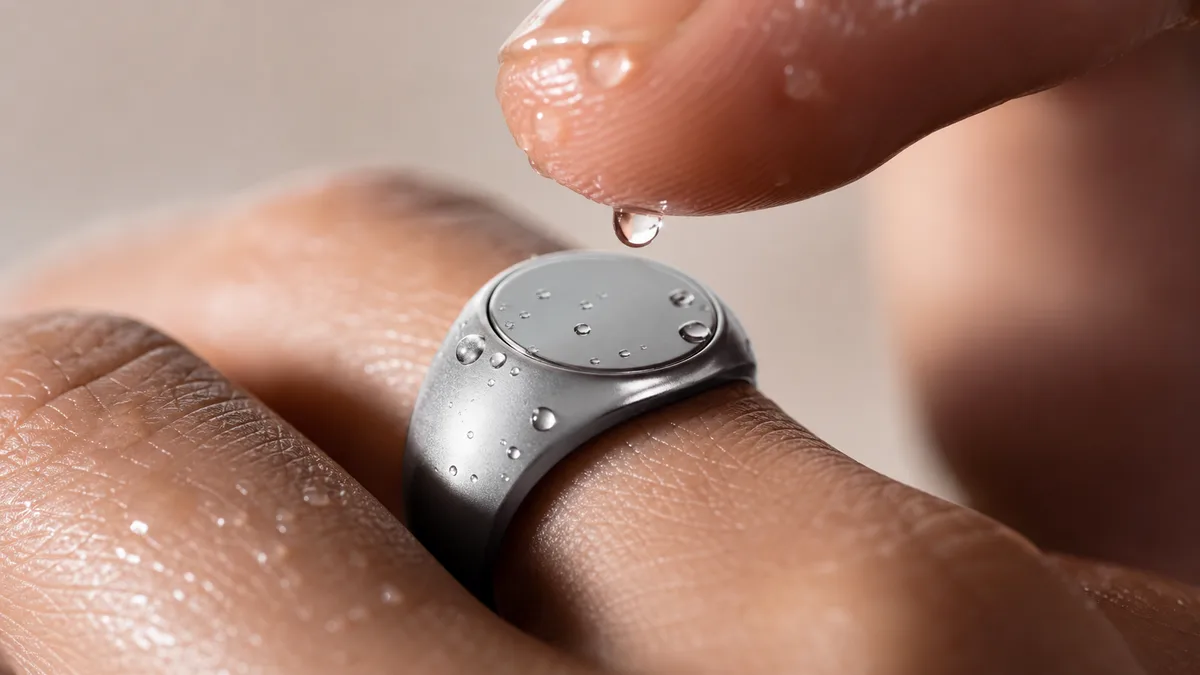
Why does wudu trip up the count? Water conducts electricity, much like your skin does. A wet fingertip or a damp ring face can bridge the sensor’s field, so it reads contact that isn’t a real tap, or smears one tap into two. It’s physics, not a flaw in your ring.
The habit that fixes it is simple. After wudu, give your thumb and the ring face a quick pat with a towel or your sleeve. Two seconds of drying restores a clean surface. Then tap as usual. Many of us keep a small cloth by the prayer mat for exactly this.
One point clears up a common mix-up. A high water-resistance rating protects the ring from damage; it doesn’t stop a wet finger from confusing the count. Those are two different things. A ring can survive wudu splashes fully and still miscount if you tap while your skin is dripping. Dry first, tap second, and a post-wudu miscount simply stops happening.
Reliable Taps, Not More Counts: Sensitivity and Staying Present
Good tap sensitivity isn’t about counting more; it’s about counting without doubt, so your attention stays on the remembrance, not on the number. Every one of WESLAMIC’s five 2026 models is built around that single idea: one tap you can trust. When you’re not second-guessing the tally, the tasbih does what it’s meant to do.
This isn’t a new idea. Classical scholars, among them al-Suyuti, defended the prayer beads, in part because a counting aid frees the mind to stay present rather than track a running total. The tasbih holds the number so your heart doesn’t have to. A tap you can trust simply carries that old wisdom onto your finger.
Think about what a missed tap actually costs. It isn’t the number; it’s the flicker of doubt that pulls you out of the dhikr to check. Reliable sensitivity removes that flicker. That’s the real work here, and it’s why we treat every tap as worth getting right. Every dhikr matters.
That thinking also shapes our most giftable piece, the iTasbih-Relation, with its premium metal finish and long-lasting charge. It’s made to be handed to someone you love as a keepsake they’ll actually wear, one whose quiet, dependable tap says their remembrance was worth this much care.
If a deeper question is holding you back, whether these rings sit right with your faith, are zikr rings halal walks through the ruling, and the brothers asking about wearing one will find can men wear rings in Islam useful. Year after year, our aim holds steady: a tap you never doubt, and a heart that stays present.
Frequently Asked Questions
Is my zikr ring broken if it keeps miscounting?
Almost never. As the table above shows, all three miscount types, missed, double, and ghost, trace to a fixable cause like moisture, technique, or a sensitivity setting, not hardware. Work the five fix steps first. Only if misses persist after cleaning, recalibrating, and updating is it likely a hardware issue worth reporting to support.
Can I just turn tap sensitivity all the way up so I never miss a tap?
Better not to. Set it too high and you’ll trade missed taps for double counts, since the sensor starts reading lingering contact and stray brushes as extra taps. Aim for the level where one firm, deliberate tap logs one count. In our testing, that middle setting beat maximum sensitivity on almost every run.
Do dry winter skin or calluses cause missed taps?
They can. Capacitive sensing needs your skin’s conductivity, and very dry or gloved fingers may not register at all. If winter air leaves your hands parched, warm them, add a little moisture, or nudge the app sensitivity up a level. A firm thumb-pad tap also helps the signal land.
Do I need the app to fix tap problems, or can I do it on the ring alone?
Mostly on the ring. Four of the five fix steps, cleaning, tapping firmly, recalibrating, and updating firmware, don’t need the app at all. Only the sensitivity-level adjustment lives in the companion app, and only some models offer it. So even an app-free ring can be tuned to tap cleanly.
Which WESLAMIC ring taps most reliably for a first-time user or gift?
All five 2026 models share the same one-tap-one-count design, so reliability comes down to fit and habit, not price. For a newcomer, the accessible iTasbih-Salam is an easy start; as an everyday gift, the app-connected iTasbih-Faith with its prayer-time buzz suits almost anyone. Match the size, and taps land cleanly.
About This Guide
Reviewed by the WESLAMIC Editorial team. This piece is educational, meant as background rather than a fatwa or a substitute for scholarly guidance on your own situation. For rulings specific to your circumstances, please consult a qualified scholar.
Sources
WESLAMIC first-party product specifications (iTasbih product matrix and companion app), internal reference, 2026-07-16