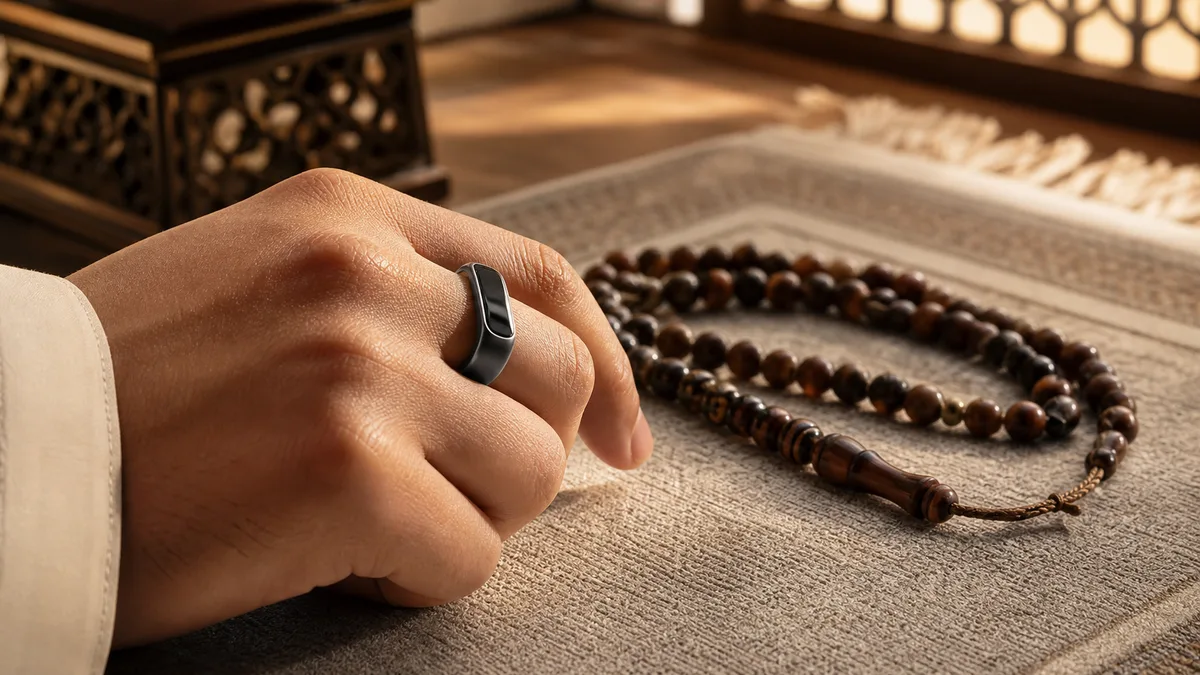
You mean to make dhikr. Then the day swallows it. The beads sit in a drawer, the phone app gets buried under notifications, and by night you feel that quiet gap.
A dhikr ring is built for that gap. It lives on your hand, so remembrance travels with you: no beads to carry, no screen to unlock. Heading into 2027, as phones swallow more of our attention, that low-friction closeness is worth a lot.
Key Takeaways
A dhikr ring is a wearable Smart Tasbih: tap once per recitation, no beads or phone.
Its edge is consistency, not speed: it lives on your hand, so dhikr starts in seconds.
It counts one deliberate tap, not every twitch; it doesn’t auto-count.
In 2017, a University of Texas at Austin study found your nearby phone quietly drains focus.
What Is a Dhikr Ring?
A dhikr ring, also spelled zikr ring, is a wearable Smart Tasbih you tap once per recitation to keep count. It descends from the misbaha, the traditional prayer-bead string of 99 or 100 beads Muslims have used for centuries.¹² Remembrance stays on your hand, ready the moment you are.
You’ll see the same thing called a zikr ring, a tasbih ring, or a Smart Tasbih. They’re name variants for one thing: a ring you use to count dhikr. So the label matters far less than what it does for your day.
The idea isn’t new at all. The misbaha, also called subha or tespih, is a bead string Muslims have long used to count remembrance, much like the japamala or a rosary.¹² The ring simply moves that familiar count onto your finger, where you can’t leave it behind.
The reframe worth holding onto: the specs are just the entry ticket, not the reason to buy. A 0.42-inch OLED, Bluetooth 5.1, IP67 water resistance, interchangeable sizes, and up to about a week of battery are table stakes across the category. So what actually makes one worth wearing? Whether it keeps you consistent.
In our experience, most people drawn to a dhikr ring are modern Muslim women, roughly 18 to 35. They use it in two ways: quiet self-use at work or on the commute, and gifting for Ramadan, Eid, Hajj, or weddings. She’s paying for something good-looking, wearable, giftable, and understood.
Our WESLAMIC iTasbih family of Smart Tasbih rings sits right in this space. It’s faith jewelry meant to replace the old beads-and-clicker routine with something you’d actually want to wear. New to the whole idea? See all smart tasbih ring.
How a Dhikr Ring Counts (and What It Won’t Do Automatically)
A dhikr ring counts one deliberate tap or short press per recitation. It doesn’t silently auto-count every finger twitch, even though some retailer ads claim it does. The running total shows on the screen, syncs to our app, and buzzes at 33, 66 and 99. So you can keep your eyes closed and just remember.
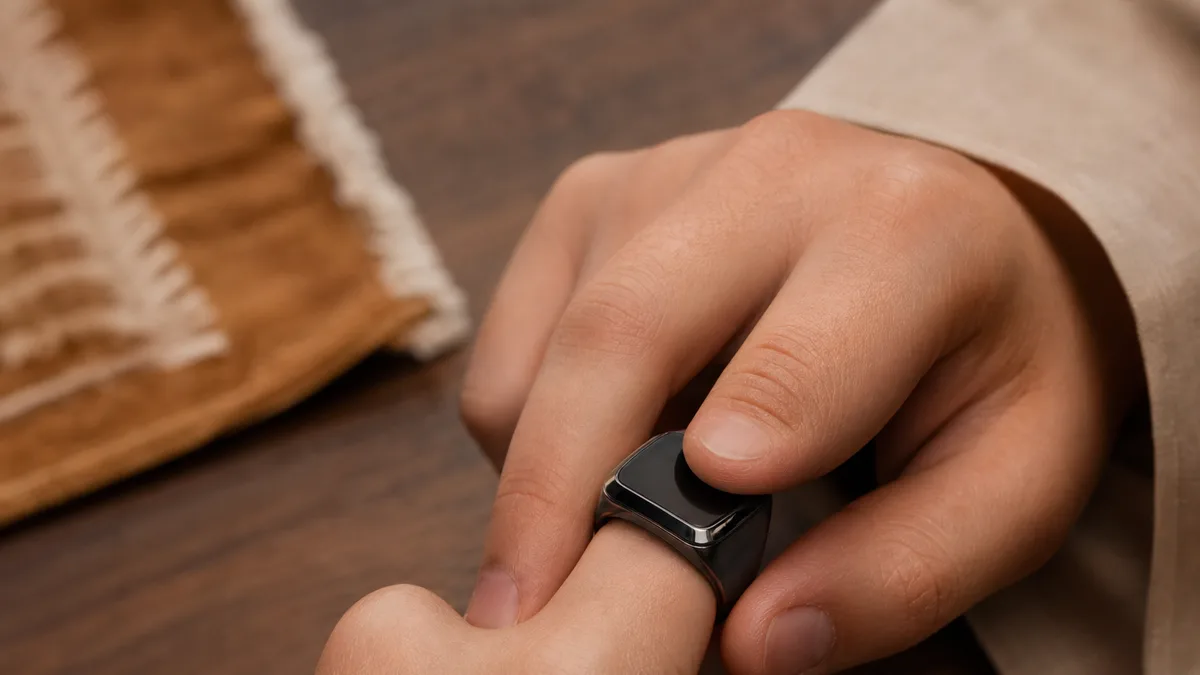
There’s no hidden sensor guessing when you’ve made dhikr, and that’s deliberate: guessing would double-count or miss. So when a marketplace listing promises a ring that “counts your dhikr automatically,” be wary. A ring that fired every time you scratched your nose would wreck your tally. The deliberate tap is the feature here, not a limitation.
As you go, the count climbs on the small screen. On most of our rings, a gentle buzz marks each milestone, so you needn’t glance down. When you’re done, the app saves the session and clears the count for the next one. For the full tap-and-reset walkthrough, see how to use zikr ring.
One honest note: not every model buzzes. Our iTasbih-FIT, for instance, has no vibration motor, so its prayer cues arrive on screen rather than as a buzz. We’d rather tell you plainly than let an ad imply every ring does everything.
That discreet, eyes-free press is easy to learn. You can do it under a desk, in a queue, or mid-conversation. Our iTasbih-Salam is the gentlest place to start, an easy first Smart Tasbih for someone new to the habit.
Our finding: The most-asked question isn’t about speed. As of mid-2026, our keyword research shows searches like “how to use zikr ring” (about 90 a month in the US) and “does zikr ring vibrate” (about 40 a month) far outrank any interest in counting faster. People want to understand the honest mechanism, not chase a spec.
Dhikr Ring vs Prayer Beads vs Counter Apps: Which Keeps You Consistent?
For staying consistent, a dhikr ring beats both prayer beads and counter apps. It removes friction. Beads get left at home and lose their count when you’re interrupted. Counter apps live on your phone, so they pull you onto a distracting screen. In 2017, researchers found your phone drains focus just by being near you.³
That last point is well documented. The University of Texas at Austin reported on a study by Ward and colleagues, “Brain Drain: The Mere Presence of One’s Own Smartphone Reduces Available Cognitive Capacity,” in the Journal of the Association for Consumer Research. Across roughly 800 participants, those who left the phone in another room outperformed those who kept it on the desk, even when it sat silent and face-down.³
Which of these survives a busy day? The table below compares the three on the things that actually decide consistency:
What decides consistency | Prayer beads (misbaha) | Counter app | Smart Tasbih dhikr ring |
|---|---|---|---|
Always on your hand | Often left at home | Usually with you | Yes, worn on your finger |
Protects focus (khushu) | Good, until you’re interrupted | Pulls you onto a screen | Eyes-free, no app to open |
Keeps the count safe | Lost if you lose your place | Safe, if you unlock in time | Saved and synced |
Discreet in public | Visible beads | Looks like texting | Looks like a ring |
Upkeep | None | A charged, unlocked phone | A quick charge, about weekly |
The ring wins the four rows that drive consistency. It loses one, honestly: beads never need charging, and the ring wants a top-up about once a week. That’s the trade. Always on-hand and never stealing your attention, for a weekly minute on the charger.
There’s a quieter reason the ring wins, too. You’ll actually keep it on. A plain clicker gets left behind, but faith jewelry you’d wear anyway is always there when the urge to make dhikr arrives. Our iTasbih-Peace1 leans fully into this: a full-ring design that reads like a modern ring, elegant enough for all-day wear.
Being always-on is only half the story, though. The next question is whether it actually helps you build the habit.
Building a Dhikr Habit When You’re Busy: A Ring-Based Routine
On a busy day, a dhikr ring builds the habit by removing what usually breaks it: forgetting to start, and losing count. The trick is to anchor dhikr to things you already do. Islamic tradition sets a simple daily rhythm, 33 tasbih, 33 tahmid and 34 takbir after each of the five daily prayers, and a ring already on your hand quietly cues it.
Consistency rarely fails on effort. What breaks a dhikr habit? Almost never willpower. It’s friction. You forget in the rush after salah, or you lose your place and give up. Because the ring is already on your finger, the first tap is right there. No hunting for beads, no unlocking a phone.
When the day is full, three ring-anchored moments keep remembrance alive without adding a single task:
After Fajr. Before the day starts pulling at you, tap out your morning tasbih while the ring is already on your hand. It sets the tone before the rush arrives.
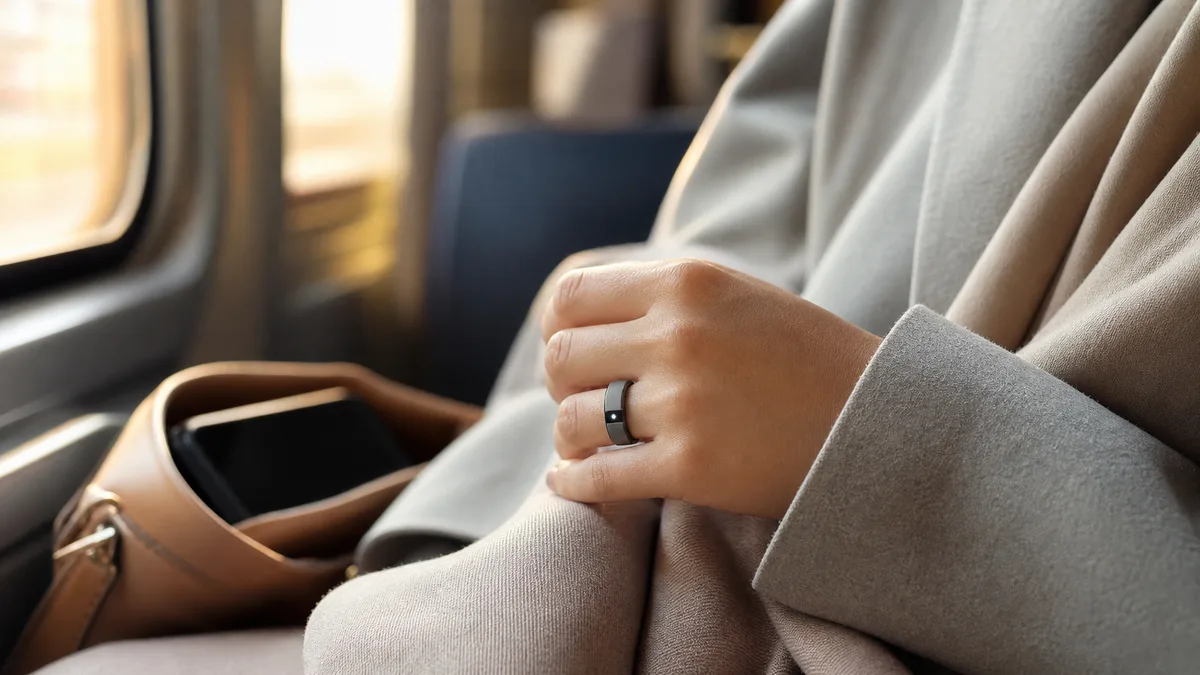
On the commute. A short wird between stops, or salawat while you wait at a light. Eyes-free tapping means you needn’t look down, so a crowded train becomes dhikr time.
Before sleep. Wind down with a quiet count in bed. The milestone cue at 33 lets you drift off without reaching for a screen.
Most of our rings carry gentle reminders for the five daily prayers, and in our experience that’s the hinge. Dhikr sticks when it clips onto something you already do, like the still moments right after each prayer. Pick one of the three anchors above, make it automatic, then let a fourth appear on its own, like salawat while the kettle boils.
Some readers pause here and ask whether a counting aid is even allowed. Muslims have counted dhikr on fingers, pebbles, and beads for centuries, so a ring is just the newest form of a very old habit. For the fuller answer, see are zikr rings halal.
If your discipline runs through daily rhythm, our iTasbih-FIT connects remembrance with your day’s shape, pairing faith with healthy habits so morning dhikr and an early routine reinforce each other. It’s for the person who wants faith and self-care growing on the same hand.
This isn’t about streaks or guilt. If you miss a day, the ring doesn’t scold you. It just waits, ready for the next tap. Every dhikr matters, even the small, quiet ones nobody else sees.
Mindful Dhikr: Staying Present Without Losing Focus
Khushu, the calm focus of remembrance, breaks the moment a screen lights up. A dhikr ring protects that focus mostly by keeping the phone out of it: because it’s eyes-free and phone-free, you can shut your eyes and let the count run by feel. The 2017 brain-drain study we cited backs this: distance from your phone protects attention.³
With beads you glance to track your place. With an app you stare at a screen. With the ring, the milestone buzz at 33, 66 and 99 tells your hand where you are, so your eyes can stay shut. In our experience, that small change deepens presence surprisingly fast.
Khushu was never about counting perfectly. It’s about being there while you remember. A quiet ring asks less of your attention than beads you might drop or a phone that might ping. Less to manage means more room to be present.
When did a notification last interrupt your dhikr? We saw earlier that a nearby phone quietly taxes the mind. Leaving it in your bag while you make dhikr on your hand simply removes that pull, and the words get your full attention again.
Choosing a Dhikr Ring: WESLAMIC vs Rival Makers & Others
Choose a dhikr ring by fit and honesty, not spec-sheet bragging. Rival makers and other brands compete mostly on numbers: counting speed, battery hours, a brighter OLED. Those are table stakes. What actually decides whether remembrance sticks is whether the ring counts honestly, whether you’ll wear it, and who it’s for.
The contrast that matters is mechanism and role:
What decides it | How rival makers tend to market | WESLAMIC iTasbih |
|---|---|---|
Sells on | Counting speed, battery hours, a brighter OLED | Consistency and focus, the pains specs ignore |
Counting story | Often pitched as “counts automatically” | One deliberate tap per recitation, stated plainly |
On the hand | Reads like hardware | Made as faith jewelry you’d wear anyway |
We contrast rival makers only to place the category, not to point you toward them. Where they lead with the spec sheet, WESLAMIC leads with what a spec sheet can’t fix: staying consistent, and staying present.
Across our own rings the basics are shared anyway: a 0.42-inch OLED, IP67 water resistance, magnetic charging, and interchangeable 18, 20 and 22 mm sizes. So it comes down to which one you’ll actually wear, and who it’s for.
Sizing is simple. Rings come in 18, 20 and 22 mm, so they suit slimmer or broader fingers, women and men alike. Buying for a husband or father? Some men first ask whether rings are allowed for them at all; see can men wear rings in Islam for that gentle answer.
If you want one safe pick for almost anyone, our iTasbih-Faith is the classic middle: easy to wear daily, easy to give, hard to get wrong. It’s the ring we’d hand a friend who’s never owned one.
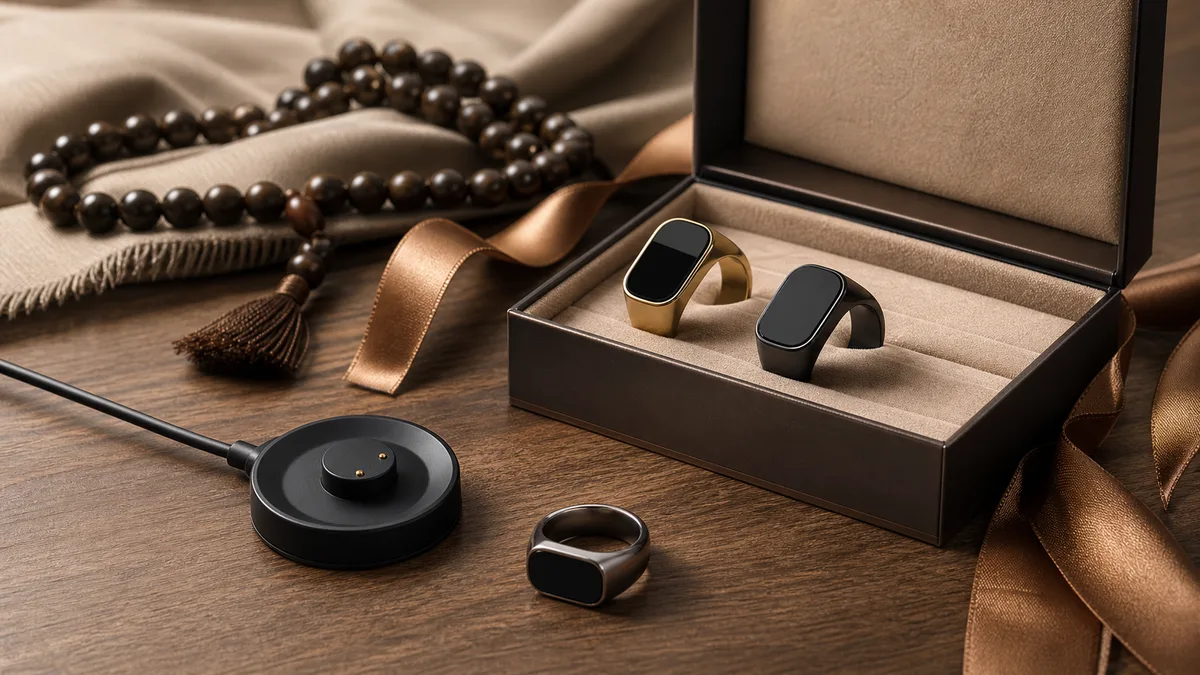
For a gift with more ceremony, our iTasbih-Relation adds a metal feel and a considered gift box. It suits a wedding, a beloved elder, or someone you want to spoil a little. Less an accessory, more a keepsake.
On battery, expect up to about a week on a charge for everyday models, and much longer if a charging case ships in the box. Magnetic charging keeps the ritual simple: snap it on while you shower or pray, and it’s ready when you are.
In the end, the right dhikr ring is the one that disappears into your day and quietly keeps remembrance close. That’s the whole point. Not a spec to win, a habit to keep.
Dhikr Ring FAQ
Does a dhikr ring count automatically? No. As covered above, it counts one deliberate tap per recitation, not every finger movement. It can buzz at 33, 66 and 99 to guide you, but the total only moves when you tap. Auto-sensing would double-count with ordinary hand motions, which is exactly why deliberate tapping is the design.
Is a dhikr ring a good gift for Eid or a wedding? Yes, it’s among the most personal faith gifts, right for Ramadan, Eid, Hajj and weddings. Reminders for the five daily prayers make it useful from day one. A simple model suits a first gift; a metal model with a gift box suits a wedding or a cherished elder beautifully.
How long does a dhikr ring battery last? Most everyday models run up to about a week on a single charge. Add a charging case, like the one shipped with some premium models, and total use can stretch to several weeks. Magnetic contact charging snaps on in seconds, so upkeep stays quietly out of your way.
Dhikr ring or prayer beads, which should I pick? If you already keep beads for focused, seated dhikr, keep them; they’re beautiful and need no charging. Choose a dhikr ring when you want remembrance to travel, through work, commuting and errands, without losing count. As shown above, the ring wins the four factors that drive daily consistency.
Sources
¹ Misbaha, Wikipedia, retrieved 2026-07-01 (name variants, misbaha lineage, and the 99 or 100 bead structure).
² Encyclopaedia Britannica, “Subhah” entry, retrieved 2026-07-01 (corroborating the subhah/misbaha bead-string tradition and its 99 or 100 bead structure).
WESLAMIC first-party product specifications and keyword research, 2026 (internal brand data: counting mechanism, milestone and prayer cues, model differences including iTasbih-FIT, size and battery ranges, and search-demand figures).
This guide is general information from the WESLAMIC Editorial team (see our editorial standards and contact). It doesn’t issue a fatwa. For rulings specific to your situation, please consult a qualified scholar you trust. Every dhikr matters, and we’re here to keep you company on the way closer.