Yusra is at her cousin’s wedding, the henna barely dry, when an aunt notices the slim ring on her finger and asks what it’s for. She explains that it keeps count of her dhikr. The aunt’s face shifts a little. “Isn’t that an innovation?”
The question is asked kindly, and it stays. If someone has put it to you, or you’ve quietly put it to yourself, this page takes the electronic dhikr counter bid’ah question on its own terms, apart from the broader halal one.
Key Takeaways
Bid’ah means adding to worship. Adopting an aid that simply keeps the count is not the same thing at all.
Jordan’s General Iftaa’ Department, in fatwa 337, rules counting beads a permissible means rather than an innovation.
Prayer beads faced the identical objection centuries ago.
Inside the formal prayer the aid is best set aside for the sake of stillness, while outside it you can use one as freely as you like.
Is an Electronic Dhikr Counter Bid’ah? The Short Answer
No, an electronic dhikr counter is not bid’ah. Bid’ah concerns invented acts of worship, and keeping a tally invents nothing. Checking the published rulings in July 2026, we found none from a madhhab-based authority that treats such an aid as innovation. Why the two categories stay apart is worked out two sections below.
Two things carry that answer, and both are older than any screen. One is a rule of legal method: a means is judged by the end it serves, so the tally is judged by the remembrance it records. The other is precedent, since the same objection was aimed at prayer beads long before electronics existed, and it was answered then.
One honest note belongs here too: every permissive source we read still prefers the fingers, and Islamweb, in fatwa 84295 on prayer beads, says plainly that “making the Tasbeeh by hand is more desirable.”¹
Inside the formal prayer, working an aid is discouraged for the sake of stillness, which is a question of attention rather than innovation. A wider look at permission, with fatwa answers set beside one another, belongs to is digital tasbih allowed in Islam.
What Bid’ah Means, and Why Tools Fall Outside It
Bid’ah, in its blameworthy sense, means adding something to the religion as though Allah had prescribed it. The test is whether a thing is being offered as worship, and the classical definitions all draw the line in that same place.
Shaykh Muhammad ibn Adam al-Kawthari, writing for Daruliftaa, defines bid’ah as introducing into the religion something not done in the Prophet’s time or by the early generations, with the intention of gaining more reward². Notice where the weight falls: on the intention, and on the words “in the religion.”
He then applies that definition to modern life. New practices belonging to worldly affairs, he writes, “can not be considered as Bid’a, for the fact that they are not introduced with the intention of worship and gaining more reward.”² Islamweb’s fatwa 17613 reaches the same boundary by another route, quoting the Maliki jurist al-Shatibi, who describes innovation as a way invented in religion³.
Three familiar aids show how wide that boundary sits. The printed mushaf changed how the text travels, not a letter of the text itself. The Saudi Permanent Committee for Scholarly Research and Ifta’, in fatwa 7721, went further still: even the dots and diacritical marks added to the Qur’anic script are not bid’ah, it ruled, though nobody used them in the Prophet’s lifetime⁴.
The mosque loudspeaker carries the adhan farther down the street, and the words of the call are untouched. A prayer timetable on the wall, or a clock beside it, sharpens the hour without adding a prayer or shifting a window. A counting aid belongs in the same family.
Counting Aid vs. Act of Worship: The Distinction That Settles It
In usul al-fiqh, a means takes the ruling of the end it serves, and jurists name the two categories wasa’il and ibadah. The dhikr is the end; keeping count is the means. So the question is never whether the means is old or new, but whether anything has been added to the remembrance itself, and nothing has.
Egypt’s Dar al-Ifta states the maxim and applies it in a single line: “since means take the same ruling as their desired goals, it is recommended to use the subha as it aids in making tasbih.”⁵⁶ It concedes the aid is new, then gives that newness no weight at all.
The same distinction gets put to two rather different jobs. Most pages reach for it to settle a broader question, whether a counting aid is halal at all. Here it does something narrower. It decides whether the aid could ever be bid’ah in the first place, which is, we’ve found, the more useful question of the two.
Most contemporary scholars treat counting aids as permissible⁷, a broader question whose authorities are gathered under See all are zikr rings halal. Permission and innovation are separate questions, and running the two together is what leaves people uneasy.
Named rulings reach the electronic form directly. Mufti Ismaeel Bassa, answering on TheMufti.com, holds that using a tasbih to aid dhikr is permissible, observes that stones and beads once served the purpose while digital ones do so now, and concludes: “if one uses a Tasbih for this purpose it will not be Bid’ah.”⁸ He attaches one fair condition: don’t regard the aid as compulsory in the religion, or as a Sunnah in itself.
IslamQA’s answer 128914, on a program that keeps tasbih electronically, reasons the same way: if beads are permissible, so is the program, and several objections raised against visible beads don’t arise here at all⁹.
That principle is how scholars reason, not a ruling written for your situation. How it applies in your own practice is worth asking of someone qualified who knows you, sitting across from you rather than answering a stranger’s search.
Fingers, Pebbles, Prayer Beads, Digital: One Unbroken Lineage
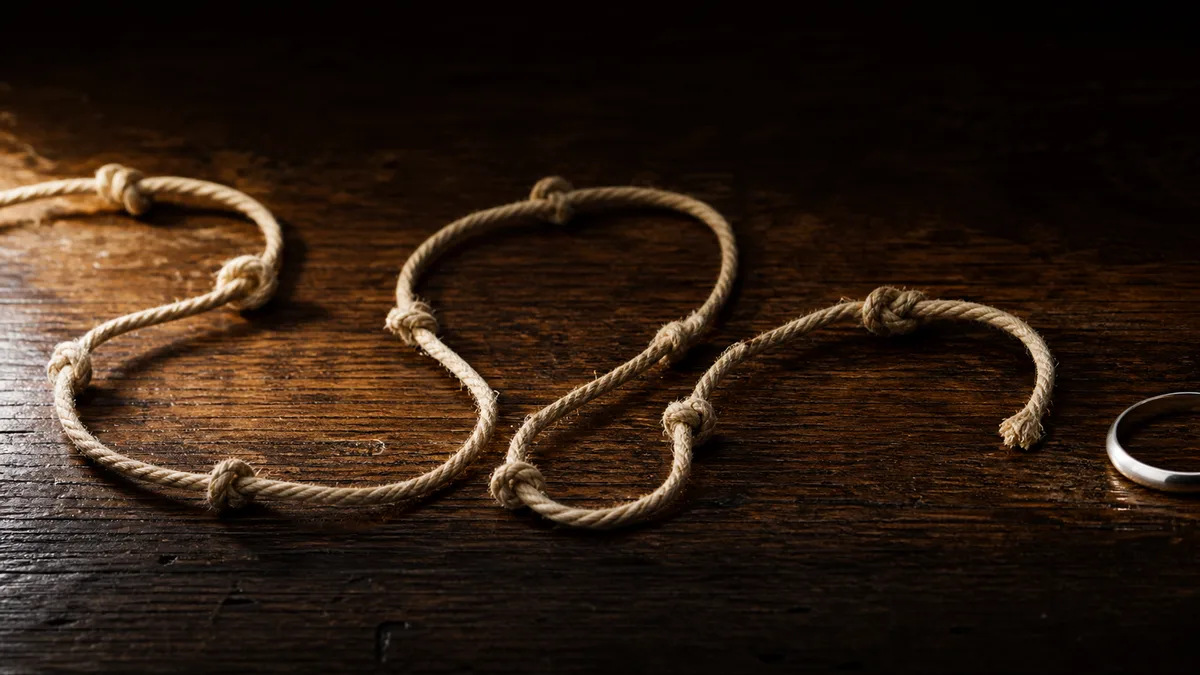
Muslims have kept count of remembrance since the first generation: on the fingers¹⁰, then on pebbles and date stones⁵, later on knotted cords and strung beads¹¹, and now on digital tallies¹²¹³. Every one of them was new when it appeared. Not one turned the remembrance itself into an innovation.
Era | How the count was kept | Earliest citable record | What that source records | What was new about it |
|---|---|---|---|---|
The Prophet’s lifetime | On the fingers | Sunan Abi Dawud 1502, in the chapter on counting with pebbles | Narrated from Abdullah ibn Amr ibn al-‘As; graded sahih by al-Albani | The baseline, with nothing outside the body involved |
The Companions’ generation | Date stones, pebbles, a knotted cord | Reports gathered in Dar al-Ifta’s fatwa 7783 | Abu Darda’ kept date stones in a bag; Abu Hurayrah used a string of a thousand knots; Sa’d ibn Abi Waqqas counted with stones | The count moves off the hand onto an object kept for it |
Later centuries | The strung subha, or misbaha | None we could verify | Wikipedia’s Misbaha entry records only that the early era counted on fingers or pebbles, and that the practice most likely began among Sufis and the poor | Beads are strung, the number preset, the whole set portable |
The twentieth century | Mechanical, then digital hand counters | Fieldwork by Damla Tonuk and Figen Isik, Middle East Technical University | Their study traces counters sold at religious sites, then digital versions in casings borrowed from consumer electronics | A mechanism carries the count and holds a readout |
The present | Worn forms, including rings | Tonuk and Isik describe one worn on the finger; the Textile Research Centre in Leiden holds object TRC 2025.1531 | The Leiden piece was bought near the Al-Azhar mosque in Cairo, its package reading ‘khatim al-tasbih’ | The count is kept automatically and carried across sessions, and the aid is worn rather than held |
Two details sit behind that table rather than in it. Writing in Technology and Culture in 2021, Leor Halevi of Vanderbilt University traced patents inspired by Islamic practice from a handful of inventions in the 1970s to an exponential rise across three decades, work the Society for the History of Technology recognized with its 2023 Usher Prize¹⁴.
Tonuk and Isik add the second detail. In the phone application they study, counting works by moving the thumb as if rolling the beads of a tasbih, so the gesture itself carried over even as the object changed. Of the worn counters they say something plainer: smaller, barely visible, easy to carry along, and silent¹². Continuity, in other words, rather than rupture.
The chain reaches the present without a break, and our iTasbih family sits at the near end of it: the same count, worn as faith jewelry rather than carried. The pieces sit together in the zikr ring collection.
Beads drew an objection of their own when they first appeared, and that is where the next section picks up.
The Same Objection Was Raised Against Prayer Beads
The innovation charge isn’t new either. Centuries before electronics existed it was aimed at the subha, and it was answered in writing. Jalal al-Din al-Suyuti, who died in 1505, devoted a short treatise to defending prayer beads, preserved inside his fatwa collection al-Hawi lil-Fatawi.
His conclusion survives in Egypt’s Dar al-Ifta fatwa 7783, quoted directly: “It has not been reported that any one from the pious ancestors or later scholars prohibited the use of the subha for counting the number of tasbih made.”⁵ That was a fifteenth-century reading of the record. It was not a claim about every century that followed.
Later centuries did produce a dissent, and it deserves stating rather than tidying away. Shaykh Muhammad Nasir al-Din al-Albani wrote in As-Silsilah Ad-Da’ifah that “the Subhah [Masbahah] is Bid’ah and was not known at the time of the Prophet.”¹⁵
From the same broad orientation, Shaykh Ibn Uthaymeen answered otherwise in al-Liqa al-Maftooh. Doing tasbih with the masbahah, he held, is neither forbidden nor bid’ah, though he thought it better left, since the one who uses it has passed over something better. Both positions sit on a single page, IslamQA answer 3009¹⁵, which is why we send you to them together.
Recognize the shape of it? The premise is always that the aid did not exist then. Five centuries apart, it lands on a string of beads and then on a digital tally, and it proves rather more than its user intends. If newness alone made a counting aid an innovation, the beads in the objector’s own hand would have failed the very same test long ago.
What the Four Sunni Schools Say About Digital Dhikr Counters
No Sunni school places a digital counting aid among forbidden innovations. Disagreement at the level of individual scholars is real, and this page has quoted it¹⁵; prohibition at the level of a school is the thing we could not find, and that second claim is the only one this section makes. The by-school evidence, including which three of the four carry documentation and why the Maliki record stays unfound, is set out under the ruling on tasbih ring.
Two cautions recur across the sources, and they’re worth carrying: don’t make the aid conspicuous, and don’t let the hand count while the heart wanders. What weighs is the intention behind the remembrance, never the object holding the number.
Using It in Salah vs. Everyday Dhikr: The One Real Caveat
One real caveat exists, and it concerns attention rather than innovation: scholars discourage working an aid of any kind, beads included, inside the formal prayer, which Dar al-Ifta puts plainly in fatwa 7783, calling use of the subha during prayers “a reprehensible act as it is not from the actions of prayer.”⁵ Outside the prayer that concern falls away, so what stands here is an etiquette of attention rather than a ruling about innovation, and mistaking one for the other is where much of the worry begins.
Two pages carry the prayer question properly. For the worn form, can you use a zikr ring in salah sets out where the fingers take over. For the handheld and digital forms, the timing of it is handled by can you use digital tasbih during prayer.
One quiet thing we’ve noticed: some of the unease eases once the aid stops looking like equipment. Our iTasbih-Peace1 was drawn as a plain full ring with no visible screen, so the count stays under the thumb and out of view, in your everyday dhikr rather than your prayer.
Frequently Asked Questions: Dhikr Counters and Bid’ah
In short, an electronic dhikr counter is permissible and not bid’ah: a counting aid, not a new act of worship. The questions below take the angles the sections above leave open, from how to reply to a relative through to whether your reward changes, with the final word left to a qualified scholar.
Someone told me my zikr ring is bid’ah. How do I answer them?
Answer with the category, not the object. Bid’ah is about invented worship, while a counting aid records worship already prescribed. Jordan’s General Iftaa’ Department, in fatwa 337 dated 2009, ruled beads permissible as a means of counting tasbih, dhikr and istighfar¹⁶. Treat this as background rather than a verdict on your own case.
Does using a counting aid reduce the reward of my dhikr?
No. Reward attaches to the remembrance, not to whatever holds the number. Every permissive source we checked in July 2026 still calls the fingers preferable, Islamweb’s fatwa 84295 among them¹, and preferring one method has never diminished the other. Use the fingers whenever that suits you, and let the number take care of itself when your attention is needed elsewhere.
If it didn’t exist in the Prophet’s time, how can it be permissible?
Newness is the wrong test, as the lineage above shows: pebbles, date stones, knotted cords and strung beads each arrived after the fingers, and none was ruled an innovation for arriving late. The scribal marks on the mushaf in your hands came later too, and fatwa 7721 above declines to call those bid’ah either⁴.
Do I need a special intention to use one?
No special intention is needed; your intention for the dhikr itself is enough. One condition does recur in the rulings, and Mufti Ismaeel Bassa states it in answer 152751: don’t regard the aid as compulsory in the religion or as a Sunnah in itself⁸. Keep it optional in your own mind and nothing changes.
Does it matter whether the aid is worn or held?
Not for the innovation question. Form changes convenience, not category, and a handheld tally and a worn ring both stay on the means side of the line. IslamQA’s answer 128914 observes that the digital form even avoids some of what scholars cautioned about with visible beads⁹. The by-school detail sits above.
Whatever you settle on, the aid was never the point of any of this. If a piece helps the remembrance happen more often, that’s its whole job: the iTasbih-Salam is the lightest way into the habit and an easy gift for someone starting out, while the iTasbih-Faith stays on through an ordinary day and lets a prayer time arrive as a gentle buzz rather than an alarm.
Reviewed by the WESLAMIC Editorial team. This guide explains widely held scholarly positions for general understanding; it does not issue a fatwa. For a ruling on your exact situation, please consult a qualified scholar you trust.
Sources
¹ Islamweb (Fatwa Centre, Qatar), “Using Prayer Beads” (fatwa 84295), retrieved 2026-07-30
⁷ IslamQA, “Ruling on using a tasbeeh ring” (answer 198080), retrieved 2026-07-30
¹⁵ IslamQA, “Are Prayer Beads Allowed in Islam?” (answer 3009), retrieved 2026-07-30
¹⁶ General Iftaa’ Department of Jordan, “Ruling on using Beads” (fatwa 337), retrieved 2026-07-30
WESLAMIC product data (brand first-hand), iTasbih range specifications, retrieved 2026-07-30