Search the word makrooh alongside prayer beads and something unexpected turns up. The word really does sit in the classical record. Where it sits most plainly, though, it’s doing the opposite job from the one people assume: a Hanbali jurist writing seven centuries ago reached for it in order to rule the objection out, not in. That single sentence decides more of this question than any list of dos and don’ts.
No major school of Sunni jurisprudence, in the positions we could document, classifies using a tasbih ring (also called a zikr ring) as makrooh, or disliked, in itself. Most scholars rule it mubah, permissible and neutral, the standing they give prayer beads. It edges toward makrooh only through misuse: wearing it to be seen, chasing the count instead of the meaning, or using it inside the formal prayer. Intention, not the aid, decides the ruling. For a binding answer on your own case, ask a scholar who knows you.
Key Takeaways
Of the five rulings in Islamic law, set out in IslamQA answer 180341, the tasbih ring sits at mubah, not makrooh.
Ibn Taymiyah’s ruling in Majmu’ al-Fatawa 22/506 uses the word makrooh to clear a well-intended counting aid, not to restrict it.
Three uses can tip it: display, chasing a number, and counting on it inside the fard prayer.
Quick Answer: Is a Tasbih Ring Makrooh?
A tasbih ring is not makrooh in itself. Across the rulings we checked in July 2026, IslamQA answer 198080 among them¹, none puts the aid itself in the disliked tier; where a tier gets named, it is mubah.
So the halal question is already behind you. Counting aids as a category are treated as a permitted means toward worship that was prescribed long before them. The authorities behind that verdict sit one level up: See all are zikr rings halal.
What this page adds is the tier. Islamic law grades actions on five levels, and the arguments you meet online tend to use only the two at the ends. The middle is where the real question lives. Where does a counting ring land, why did anyone reach for makrooh at all, and what would tip your own use into that tier? Three things can do it, and every one is about the wearer.
What ‘Makrooh’ Means: The Five Rulings Explained
Makrooh is one of five rulings in Islamic law, the ahkam al-khamsa. IslamQA’s answer 180341, “Categories of Actions in Islam,” lists them as wajib, mandub, mubah, makrooh and haram². Makrooh sits one step above haram and means disliked, not sinful. Avoiding it earns reward; doing it carries no blame.
Ruling | What it means | What it earns |
|---|---|---|
Wajib (obligatory) | Required of you | Reward for doing it, blame for leaving it |
Mandub (recommended) | Encouraged, never required | Reward for doing it, no blame for leaving it |
Mubah (permissible) | Neutral, neither encouraged nor discouraged | Neither reward nor blame in itself |
Makrooh (disliked) | Better left alone, yet not sinful | Reward for avoiding it, no blame for doing it |
Haram (forbidden) | Prohibited outright | Blame for doing it, reward for avoiding it |
Islamweb sets out the same five tiers in fatwa 88905 on Islamic legal terminology³, so this isn’t one institution’s private scheme. It’s the grammar every fatwa on your screen is written in.
Which feature of that grammar decides everything below? This one: the five rulings attach to human acts, not to things. Usul teaching defines the sharia ruling as addressing the conduct of the legally responsible person, and a teaching note on the elements of the sharia ruling from Al-Mustaqbal University states it that way⁴. A ring carries no ruling of its own, and neither does a string of beads or a handful of date stones.
So the question “is this ring makrooh” is, underneath, always a question about what somebody does with it. Keep that in view and the rest of this page reads as one argument rather than a pile of separate rulings.
Where the Tasbih Ring Sits: Mubah, Not Makrooh
On that five-fold scale the tasbih ring lands at mubah, the neutral tier, not at makrooh. The reasoning is old and plain: the means take the ruling of their ends. IslamQA rests answer 198080, “Ruling on using a tasbeeh ring,” on exactly that principle¹. Dhikr is already prescribed worship, and an aid that only keeps the tally adds no new act to it.
Some answers name the tier in so many words. Darul Iftaa Trinidad, writing on whether a tasbih is bid’ah, rules that using one for zikr “will not be Bid’ah, but permissible (Mubaah).”⁵ Mufti Ismaeel Bassa, answering in 152751 on counting aids of that kind, lands in the same place⁶.
What does mubah actually promise? Less than people hope, and a good deal more than they fear. A mubah act carries neither reward nor blame in itself, so nobody earns anything by owning a ring, and nobody loses anything by reaching for one. The reward stays exactly where it always was, on the remembrance.
And what does mubah not promise? That this is the best option open to you. Mubah is the middle of the scale, not the top of it. That gap, between permitted and preferred, is the crack the disliked reputation grew out of.
The Four Sunni Schools on the Tasbih Ring
In the documented positions of the four Sunni schools, none places the tasbih ring itself in the disliked tier. Reading those positions in July 2026 we found no school-level ruling against counting aids at all, and the full school-by-school comparison, each position with its own source, is the job of ruling on tasbih ring.
One passage earns a close read here, because it is the single place in that record where the word makrooh actually attaches to a counting aid, and it usually gets flattened to that one word. Ibn Taymiyah records in Majmu’ al-Fatawa 22/506 that people had differed over counting with strung beads, some calling it disliked and others not. Then he settles it: “If the intention behind it is good, then it is good and is not makrooh.” IslamQA reproduces the passage in answer 198080¹. The vocabulary to restrict the aid was right there in his hand, and he used it to clear the aid instead.
Why Some Consider Counting Aids ‘Disliked’
Three historical roots feed the disliked view. Counting on the fingers is the confirmed Sunnah. Visible counting was thought to invite riya’, the display of piety. And early scholars asked whether a habit that appeared after the Prophet’s time belonged in worship at all. Each objection targets a misuse or a missed virtue, never the aid itself.
Start with the fingers, the strongest of the three. The Prophet counted the glorification of Allah on his fingers, in a report narrated from Abdullah ibn Amr ibn al-‘As and graded sahih by al-Albani⁷. IslamQA opens answer 198080 on that point¹, quoting the instruction to count “on their fingers, for they (the fingers) will be questioned and made to speak,” a report from Yusayrah graded hasan by al-Albani⁸.
Reach for anything else and that virtue goes unclaimed. Unclaimed isn’t the same as wrong, and blurring those two is how the disliked label spread.
The second root is riya’. What exactly did the classical scholars object to? In the same passage that clears the beads, Ibn Taymiyah draws a hard line at display. Showing beads to people, hung around the neck or worn like a bracelet, is either “showing off to people” or falls under “suspicion that one is showing off.”¹
Ibn al-Hajj al-‘Abdari, the Maliki jurist, is blunter still in al-Madkhal, quoted in IslamQA answer 128914⁹. He describes people who “hold the masbahah in their hands, so that people can see it” while they are “talking and gossiping.” His censure lands on the manner.
The third root is newness. Strung prayer beads were themselves a later arrival, and Egypt’s Dar al-Ifta records the classical defense of the subha in fatwa 6312¹⁰. Whether newness alone can make an aid bid’ah is a separate test, and is digital tasbih allowed in Islam applies its criteria in detail.
Line the three up and the pattern shows: a virtue you might miss, a heart you might lose, a category question settled long ago.
When Use Could Tip Into Makrooh
A tasbih ring drifts toward makrooh in three situations. It’s worn to be seen praying. The count becomes a target to clear rather than words to mean. Or it’s used inside the fard prayer. IslamQA’s answer 198080 names the first of these outright¹. Remove all three and the permissible standing holds.
Wearing it to be seen
Riya’ is the objection that survives every century, because it never depended on the beads. The classical censure is aimed at an aid held up where others can read it, and a ring is no different in principle. If the point of wearing it is that somebody notices, the wearing has taken on a ruling the counting never had.
There’s a plain test, and it costs nothing. Would you still wear the ring if nobody around you knew what it was for? If yes, this trigger isn’t yours.
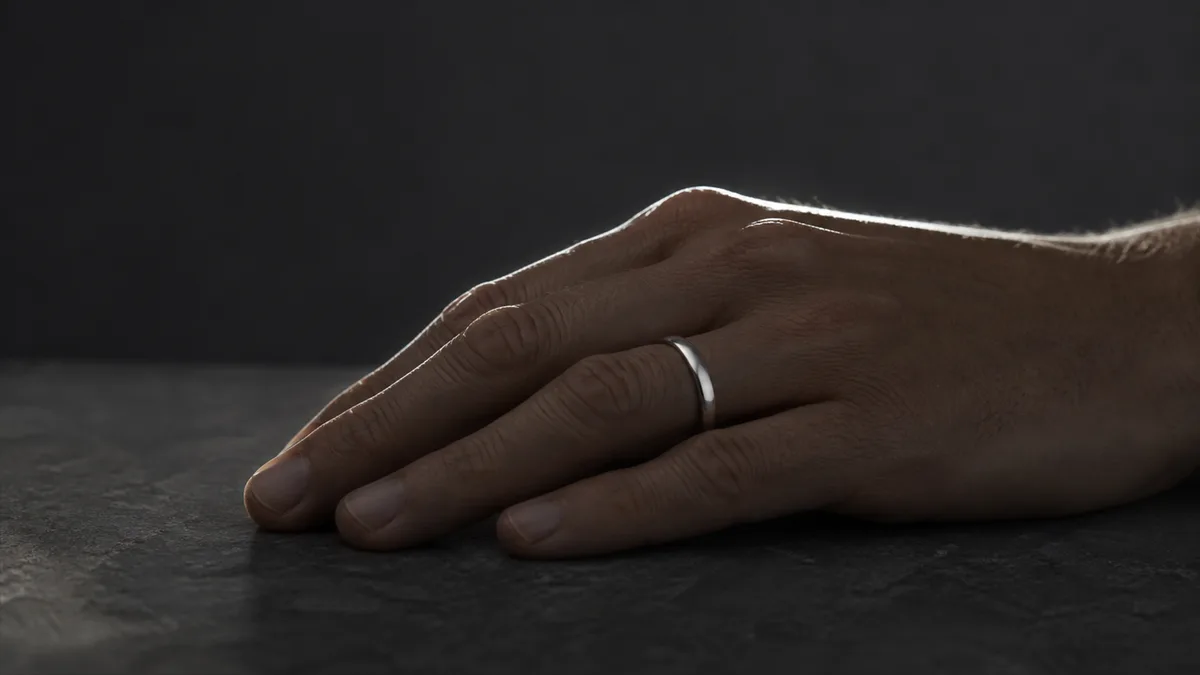
That worry shaped how we drew the 3.0 iTasbih-Peace1. Across a room it reads as a ring and nothing else, so the only person keeping track of your dhikr is you. Every dhikr matters, and not one of them needs an audience.
Chasing the number
Here the evidence runs in an unexpected direction. Egypt’s Dar al-Ifta, in fatwa 6312, allows that beads can be better than counting on the fingers. The allowance carries a condition, though: only “if one is safer from making mistakes this way allowing the heart to concentrate.”¹⁰ Read that condition closely and you have the trigger. Concentration is why the aid was ever called better than the fingers, so once the tally starts costing you concentration, that advantage has quietly gone.
You’ll know the feeling when it arrives. The number climbs, the words thin out, and the session ends with a total instead of a state. Nothing about that is sinful. It’s the point where an aid stops helping, and the answer is to slow down rather than to put the ring away.
Counting on it inside the fard prayer
This one carries a clear ruling. Dar al-Ifta, in that same fatwa 6312, holds that using the subha during the prayer “is considered a reprehensible act as it is not from the actions of the prayer.”¹⁰ Inside salah, the fingers take over. Each form of the question has its own treatment. For the worn ring, read can you use a zikr ring in salah; for the handheld and app kinds, can you use digital tasbih during prayer.
One qualification. These three are what come up in ordinary life, not an exhaustive tally; the Ibn Taymiyah passage quoted earlier also frowns on taking up an aid where no need for one exists. If your ring earns its place in your day, that case doesn’t reach you.
Does a ‘Smart’ / Electronic Ring Change the Ruling?
No. Being electronic changes nothing, because scholars rule on what an aid does, which is keep count of dhikr, not on what it’s made of. IslamQA’s answer 128914, on the electronic masbahah, argues from the opposite side of the worry: some of the objections that attach to beads don’t arise here at all⁹.
The fatwa keeps its own wording careful, and so should we: “if it is said that the masbahah is permissible, then by the same token this program may also be permissible.”⁹ That’s a parity argument rather than a fresh verdict. Parity is exactly the question worth asking when a familiar aid changes shape. As of July 2026, none of the rulings we’ve read treats the electronics as a matter of their own.
Then comes the part most people don’t expect. The objection the answer singles out is “showing off to people by using the masbahah, or counting tasbih on the hand when the heart and tongue are distracted by worldly matters or talking to people.” A count nobody else can see is less exposed to that, not more. On the riya’ axis, the quieter form is the safer one.
Counting aids have changed shape more than once across the centuries while the remembrance stayed put, and the bid’ah question that follows from that has a page of its own, linked earlier on this page.
What about the extra capabilities some rings carry? They sit beside the remembrance rather than inside it, and that is the whole of their significance for the ruling. Our 3.5 iTasbih-FIT is the clearest case of it: whatever else it keeps an eye on through your day, none of that reaches the dhikr, and none of it asks anything new of the fiqh.
Frequently Asked Questions
These are the questions that usually sit just behind the makrooh one: innovation, men, materials, and intention. Each answer opens with the verdict and stays inside the five-fold scale set out above. Anything that has to bind your own practice belongs with a scholar you trust, not with a search result.
Is a tasbih ring bid’ah rather than makrooh?
Neither, and the two labels answer different questions. Bid’ah isn’t one of the five tiers at all; it asks whether an act of worship was invented, while makrooh asks how an existing act rates. Darul Iftaa Trinidad rules that using a tasbih for zikr “will not be Bid’ah, but permissible (Mubaah).”⁵ The digital form of the same question is answered on the page linked earlier.
Is a tasbih ring makrooh for men in particular?
No, and the tier doesn’t shift with gender. Darul Iftaa New York, answering on the zikr ring, reasons that a counting ring isn’t an ornamental ring, so the limits set for decorative rings don’t reach it¹¹. Where the four schools each land, with sources, sits on the ruling page linked above.
Does the material a ring is made from change the ruling?
Not the counting ruling. All five tiers attach to acts rather than to objects, so steel, resin or silver make no difference to how the dhikr itself rates. One separate rule does apply to men, on gold jewelry, and that’s a question about ornament rather than counting. The Prophet’s own ring was silver¹².
Does intention really change the ruling, or is that a loophole?
It changes it, and it isn’t a loophole. It cuts both ways, though: the same intention that clears an aid, as the Hanbali passage above shows, can also pull a neutral act toward blame when being seen is the point.
Someone told me my ring is makrooh. Should I stop wearing it?
Not on that sentence alone. Ask which of the five tiers they mean and whose ruling they’re following, since the disliked label attaches to the three uses above rather than to the ring. If your own situation is genuinely unusual, that’s a conversation for a scholar in your community.
Where That Leaves You
The honest answer is smaller than the worry that brings people here. The tier is mubah. Run the three checks above against an ordinary week, and inside salah let your fingers carry the prayer.
If any of this bears on choosing a ring, it bears in one narrow way: a piece you’d wear without thinking about it is harder to turn into display, which is the one route by which use tips toward makrooh. Our iTasbih-Salam and iTasbih-Faith are the plainest on the hand for that reason; the iTasbih-Relation is the one made to be handed to someone, which is a different job again.
None of that decides the ruling. Nothing on the five-fold scale grades a ring, makrooh included. What it grades is you, on an ordinary afternoon, remembering Allah with whatever keeps your count.
Reviewed by the WESLAMIC Editorial team. This guide explains widely held scholarly positions for general understanding; it does not issue a fatwa. For a ruling on your exact situation, please consult a qualified scholar you trust.
Sources
³ Islamweb, “Meanings of Islamic Legal Terminology” (fatwa 88905), retrieved 2026-07-30
⁶ TheMufti (Mufti Ismaeel Bassa), answer 152751 on tasbeeh counting aids, retrieved 2026-06-28
⁸ Sunan Abi Dawud 1501, reported from Yusayrah, graded hasan by al-Albani, retrieved 2026-07-30
¹¹ Darul Iftaa New York (Mufti Muajul I. Chowdhury), “Zikr Ring”, retrieved 2026-07-24
¹² Sahih al-Bukhari 5870 (the Prophet’s silver ring), retrieved 2026-06-30
WESLAMIC in-house editorial review across the current iTasbih line (brand input), 2026