
You’re a dozen dhikr into your tasbih after Isha, lips still moving, when you glance down to check the number. Just like that, you’ve lost your place. So can a zikr ring count to 99 vibrate, and keep your eyes on your dhikr the whole time? Yes, it can. Here’s exactly how, and which WESLAMIC rings do it.
Key Takeaways
A Zikr Ring logs each dhikr by touch and buzzes at set milestones, so you finish eyes-free.
The 33/66/99 buzz follows the post-prayer tasbih in Sahih al-Bukhari 843: 33 SubhanAllah, 33 Alhamdulillah, 33 Allahu Akbar.
As of 2026, three of WESLAMIC’s five rings vibrate: Faith, Relation, Peace1. Salam and FIT don’t.
Counting is manual: one tap per dhikr, never automatic.
Does a Zikr Ring Count to 99 and Vibrate? Short Answer
Yes. A zikr ring can count to 99 and vibrate at that milestone: it registers each dhikr and buzzes once your total reaches the number you set, usually 33, 66, or 99, so a full tasbih finishes with no glance at a screen. That buzz needs a haptic motor, and as of 2026 WESLAMIC builds one into several rings, Peace1 and Faith among them, while the entry Salam and health-focused FIT leave it out.
Four questions sit under that yes: why the count stops at 99, how the buzz actually works, whether you set it yourself, and which rings carry the motor. We answer each below, in order. To weigh which ring buzzes best for you, start at See all smart tasbih ring.
Why 99? The 33-33-33 Tasbih Structure Behind the Count
Ninety-nine has two roots. First, the names of Allah, traditionally enumerated as ninety-nine. Second, the post-prayer sunnah tasbih: 33 SubhanAllah, 33 Alhamdulillah, and 33 (or 34) Allahu Akbar. Together they reach ninety-nine, completed to a hundred. A ring that buzzes at 33, 66, and 99 lands on exactly those transitions.
So why ninety-nine, and not a round hundred?
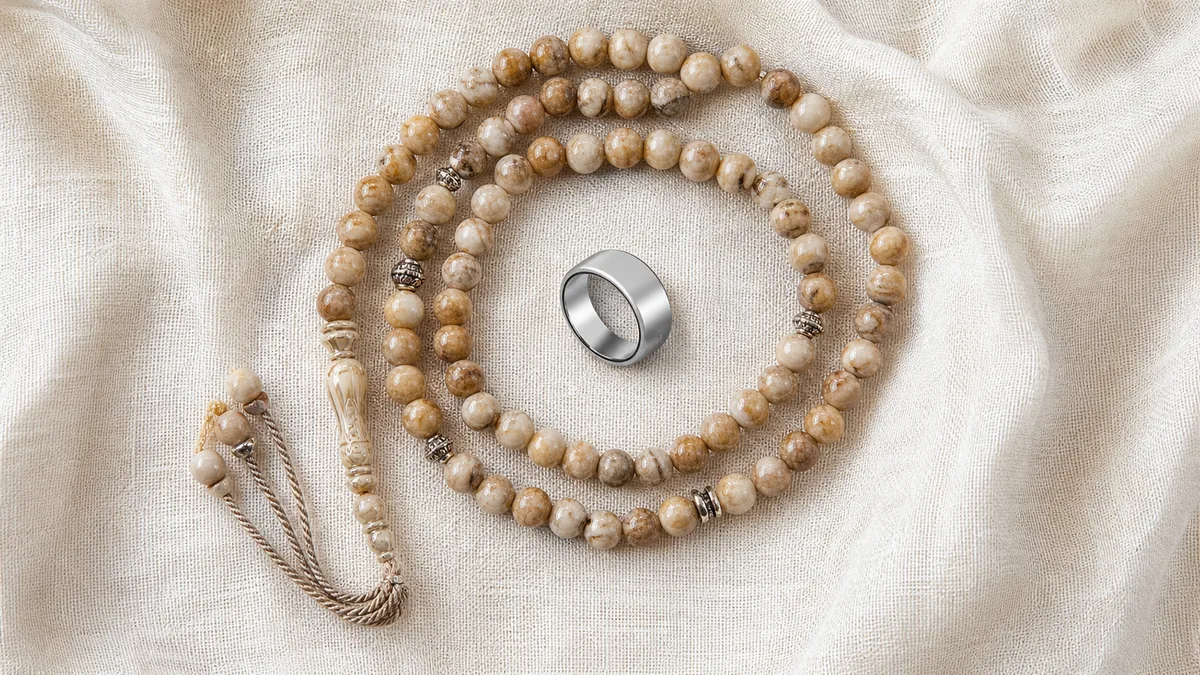
The first root is well known across Muslim communities. In a sound hadith narrated by Abu Hurayrah, recorded in Sahih al-Bukhari 7392 and Sahih Muslim 2677, the Prophet said: “Verily, Allah has ninety-nine names, one hundred minus one. Whoever memorizes them all will enter Paradise.”¹² Reference works describe these names as traditionally enumerated at ninety-nine³. Classical scholars have long treated that number as the customary count, not an exhaustive census, so we won’t lay out a fixed list here.
The second root is a daily habit. After each obligatory prayer, a widely practiced sunnah is to say SubhanAllah, Alhamdulillah, and Allahu Akbar thirty-three times each. Sahih al-Bukhari records it as “thirty three times each” (hadith 843)⁴. Three sets of thirty-three make ninety-nine. One narration completes the hundredth with the tahlil (Sahih Muslim 597)⁵; another counts the takbir thirty-four times (Sahih Muslim 596)⁶. Either way, the round closes at a hundred.
Here’s the part generic spec sheets skip. The numbers 33, 66, and 99 aren’t arbitrary settings a factory picked. They’re the seams of that tasbih. A buzz at each one marks the exact moment one phrase ends and the next begins.
How Milestone Vibration Works (33 / 66 / 99): Eyes-Free Dhikr
Milestone vibration is a short haptic pulse the instant your count reaches a number you’ve set: 33, 66, or 99, the three seams of the sunnah tasbih. You feel a set finish instead of watching for it. Set the pulse at every 33 to mark each phrase change, or only at 99 to close one full round.
The mechanism is simple. Your count climbs as you tap. The moment it reaches your chosen marker, the ring pulses once against your finger. No sound, no screen, nothing that interrupts the person praying beside you.
Ever lost count somewhere in the twenties and had to start over? That small buzz changes what you notice. Rather than tracking a number in your head, you let your attention settle on the words themselves, and trust the pulse to signal when a set is done. Counting stops feeling like a task. It turns into something closer to presence.
Worn this way, the ring reads as faith jewelry you keep on all day, a quiet expression rather than something you switch on and check.
If a single fixed pulse doesn’t suit how you pray, our Peace1 lets you personalize the vibration pattern in the app, so the buzz follows your rhythm instead of a default. Small touch, but it makes the ring feel like a companion rather than a setting.
Tap or Automatic? How a Zikr Ring Actually Counts
A WESLAMIC Zikr Ring counts by a deliberate tap or press, not by automatically sensing your finger move. That’s the single most common assumption buyers bring, and it’s worth clearing up early. On our rings, each press adds exactly one to your total. Manual counting keeps every dhikr intentional, and the milestone buzz is what lets you trust the count without checking after each one.
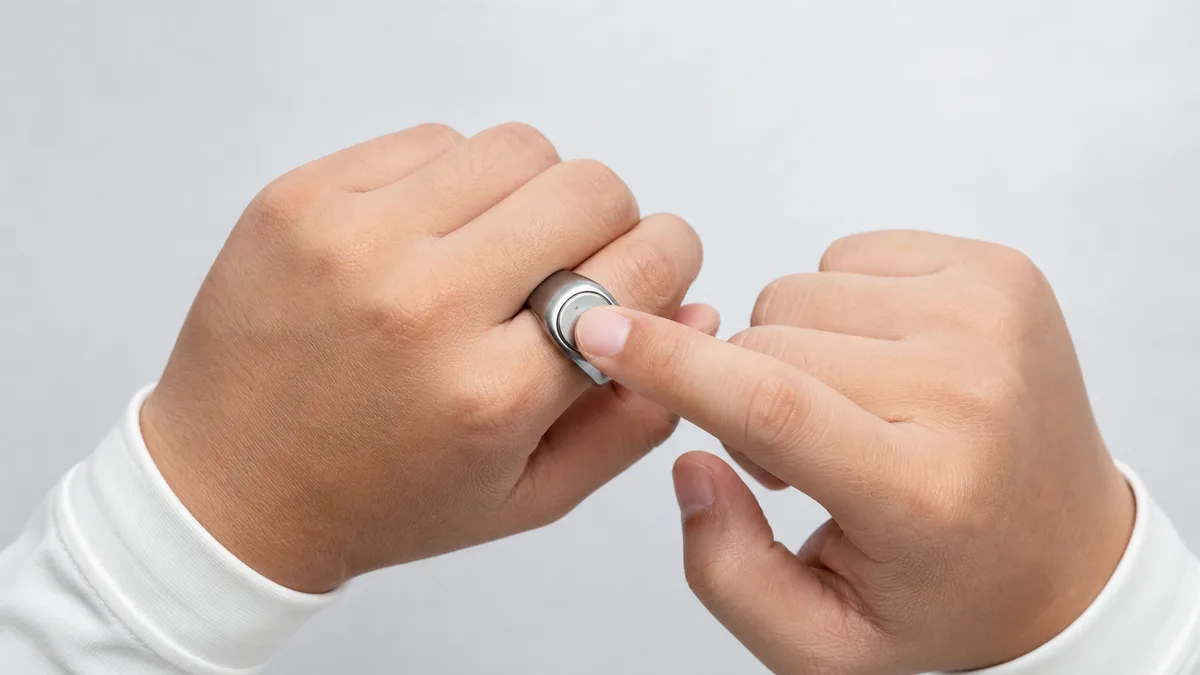
So does it count on its own? No, and that’s by design. Nothing tries to guess whether a small movement was a dhikr or you reaching for your tea. You decide what counts, quite literally.
Some readers expect auto-counting and feel a little let down at first. In our experience, that flips once the ring is on. The deliberate press becomes part of the dhikr itself, a tiny physical anchor for each SubhanAllah. Automatic sensing would blur that intention. A tap keeps it yours.
This is also why the buzz matters so much for a manual count. Without a screen to watch, you need one reliable signal that a set of thirty-three is done, and a single pulse gives it without breaking your focus.
For the full walk-through, from your first count to saving a session, see how to use zikr ring. We keep the deeper mechanics there.
Which WESLAMIC Rings Vibrate (and Which Don’t)
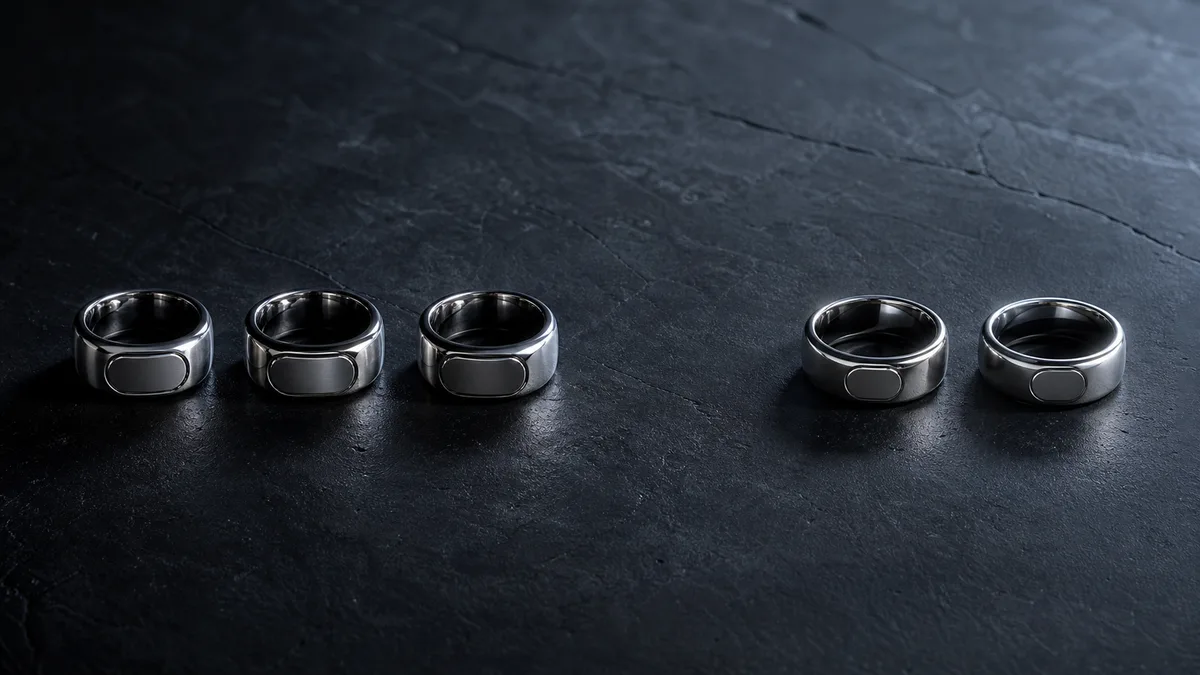
As of 2026, an on-ring haptic motor lives in three of the five WESLAMIC rings: Faith, Relation, and Peace1. Each can send a gentle vibration alert, and Peace1 lets you customize the pattern. The entry-level Salam has no motor. The current FIT, built around health tracking, skips the on-ring vibration cue.
WESLAMIC ring | On-ring vibration | Note |
|---|---|---|
iTasbih-Faith | Yes | Gentle vibration alerts; the everyday classic |
iTasbih-Relation | Yes | Gentle vibration alerts; higher-end gift set |
iTasbih-Peace1 | Yes | Customizable vibration patterns you set in the app |
iTasbih-Salam | No | Entry model; no haptic motor |
iTasbih-FIT | No | Skips the on-ring vibration cue; adds health tracking |
So the buzz isn’t one flagship’s trick. It runs across the lineup, from our everyday Faith to the metal-finish Relation gift set to the full-ring Peace1. If you want the milestone pulse, any of those three delivers it. If a low entry price or health metrics matters more to you, Salam and FIT trade the motor for other strengths. Whichever ring fits your life, the aim stays simple: every dhikr matters, and the buzz is just there to help you keep count.
How to Set Vibration at 99 in the App
Setting the milestone takes about a minute on any vibration-capable ring: Faith, Relation, or Peace1. You pair the ring, open its dhikr view in the WESLAMIC app, point the milestone at 99, and switch the vibration alert on. From then on the ring gives one quiet pulse the moment your count reaches ninety-nine, and you never reopen the app to feel it.
Charge the ring and connect it to the WESLAMIC app over Bluetooth.
Open the dhikr settings for that ring.
Set the milestone to 99, the close of one full tasbih. If you also want a pulse at each phrase change, add 33 and 66.
Turn the vibration alert on. On Peace1 you can pick the pulse pattern too, so the buzz matches how you pray.
Save, so the setting lives on the ring itself, then put your phone away and count eyes-free.
App versions and ring models label these screens a little differently, so if a menu name doesn’t match word for word, go by what it does: the number you’re counting to, and the toggle that makes it buzz. Once saved, the milestone stays on the ring, so a dropped connection later won’t wipe your 99.
Zikr Ring Not Vibrating? Troubleshooting
If the milestone buzz never arrives, the reason is almost always one of a few simple things, not a broken ring:
It’s a model without a motor. Salam and the current FIT skip the haptic motor (see the table above), so they can’t pulse at a milestone. That’s the design, not a fault, and no setting will change it.
The ring is out of charge. A drained ring counts nothing and buzzes nothing. Charge it, then reconnect.
The milestone is switched off. If every milestone alert is set to off, your count still climbs but nothing pulses. Turn at least the 99 alert back on.
A custom pattern faded out. On Peace1, a pattern set very short or soft is easy to miss on the finger. Re-check it and make the pulse a touch stronger.
The ring lost its connection. Re-pair over Bluetooth so your milestone setting syncs back onto the ring.
If the buzz still won’t fire after those checks, the deeper counting-and-sync mechanics live on how to use zikr ring.
Frequently Asked Questions
Do I have to use all three milestones, 33, 66, and 99?
No. You choose. Many set a single pulse at 99 to close one full round of the post-prayer tasbih, the 33 + 33 + 33 covered above, while others prefer a buzz every 33 to mark each phrase change. Some switch milestones off and simply watch the total climb. It’s your rhythm, not a rule.
Is using a Zikr Ring to count dhikr permissible?
Counting dhikr has deep precedent: the Prophet counted the glorification of Allah on his fingers (Sunan Abi Dawud 1502, graded sahih by al-Albani)⁷, and most contemporary scholars treat a modern counting ring like prayer beads, a permissible aid rather than worship in itself. We cover the full reasoning on are zikr rings halal. This page doesn’t issue a fatwa; ask a qualified scholar for your own case.
Can men wear a Zikr Ring, or is it only for women?
Both can. For men, the real question is ring material, not the counting function, and the classical rulings focus on gold and silk rather than a modern silver-toned ring. The material question has its own evidence rundown on can men wear rings in Islam. WESLAMIC rings are unisex in fit; Faith alone ships with five interchangeable sizes, 16 to 24mm.
What if I lose count, or the ring miscounts?
Because counting is manual, one tap per dhikr, the total only moves when you press. No auto-sensor over-counts a stray movement. And if you do lose your place, a milestone buzz at 33 or 99 gives you a fixed checkpoint to restart from, without staring at a screen.
Reviewed by the WESLAMIC Editorial team. This article is for general information and does not issue a fatwa; for a ruling that fits your own situation, please consult a qualified scholar.
Sources
⁵ Sahih Muslim 597 (completing the hundredth with the tahlil), via sunnah.com, retrieved 2026-07-16
⁶ Sahih Muslim 596 (the thirty-four takbir pattern), via IslamQA answer 228520, retrieved 2026-07-16