
By WESLAMIC Editorial. Reviewed by the WESLAMIC Editorial team. Last updated July 3, 2026.
Three little buzzes. 33, then 66, then 99. On most spec sheets that’s a single line of fine print, and almost no one tells you those three numbers are the dhikr you already say after every prayer. So if you’ve searched “zikr ring vibration at 33, 66, 99” and come away with a bare spec instead of a meaning, this is the piece that connects the two. The buzz isn’t random. It’s the Sunnah count, turned into a gentle pulse.
Key Takeaways
A Zikr Ring buzzes at 33, 66 and 99 to close three rounds of post-prayer dhikr.
Each pulse cues the next phrase: SubhanAllah, then Alhamdulillah, then Allahu Akbar.
Sahih al-Bukhari 843 records each phrase thirty-three times after every prayer, ninety-nine in all.
Many complete a hundredth remembrance to reach one hundred, per Sahih Muslim.
You personalize the milestones in the WESLAMIC app.
What the 33, 66, and 99 Vibrations Mean
A Zikr Ring vibrates at 33, 66 and 99 to close the three rounds of dhikr you make after prayer: the buzz at 33 marks SubhanAllah done, 66 marks Alhamdulillah done, and 99 marks Allahu Akbar done. Each pulse simply cues the next phrase, so you never lose your place in the count.
Here’s the part rival manuals leave out. Other brands print “vibrates at 33/66/99” as a lone spec line and stop there, without tying the three buzzes to the remembrance they belong to. That mapping is the whole point, so we lay it out plainly below.
Buzz at | Phrase | What it means |
|---|---|---|
33 | SubhanAllah | Glory be to Allah |
66 | Alhamdulillah | Praise be to Allah |
99 | Allahu Akbar | Allah is the Greatest |
Read the table once and it sticks. Why thirty-three and not thirty, and why the totals climb the way they do? That’s the Sunnah behind the count, and the next section breaks it down. For now, the takeaway is simple: your ring turns a remembrance you already know into three quiet checkpoints. It’s one of the small touches that make a Smart Tasbih feel less technical and more personal, and you can See all smart tasbih ring styles to compare shapes and sizes.
Why 33, 66, 99? The Sunnah Structure Behind the Counts
The numbers follow the dhikr taught after every obligatory prayer: SubhanAllah thirty-three times, Alhamdulillah thirty-three times, and Allahu Akbar thirty-three times, ninety-nine in all, often completed with one more remembrance to reach a hundred. Your ring’s 33, 66 and 99 milestones simply mirror this Sunnah.

Sahih al-Bukhari 843¹ records the Prophet, peace be upon him, teaching his companions to say those three phrases thirty-three times each after every prayer. Because a ring tallies cumulatively, each completed set of thirty-three trips the next milestone: 33, then 66, then 99. That’s why the buzz lands where it does.
Sahih Muslim 597² adds a gentle finish: complete the hundredth with La ilaha illa Allah. Whoever does so, the hadith says, has their sins forgiven, even if they were like the foam of the sea. So a round of ninety-nine sits one breath short of a hundred by design.
There’s more than one sound way to reach that hundred. One traditional pattern counts thirty-three tasbih, thirty-three tahmid and thirty-four takbir instead (Sahih Muslim 596)³. Both are authentic variations, not competing rulings, which is why your ring lets you choose where the final milestone lands, covered next.
Counting aids like this are widely treated as permissible by contemporary scholars⁴, and the full ruling lives in are zikr rings halal.
How Milestone Vibrations Help You Keep Khushu

Milestone haptics let you make dhikr with your eyes closed and your phone set aside, because a gentle pulse, not a screen, tells you when each set of thirty-three is complete. That removes the constant glancing that breaks focus, so your attention stays on the words, not on the counting.
So what actually pulls you out of dhikr? It’s rarely the remembrance itself. It’s the small interruptions: checking a bead, glancing at a number, wondering if you’ve lost your place. A milestone buzz quietly answers all three. You feel the pulse, you move to the next phrase, and your eyes never open.
In our own wear-testing, the difference showed up fastest during the after-Fajr sitting, phone left in another room. With nothing to look at, the count stopped being a task and faded into the background. The honest finding is this: the value isn’t a faster count, it’s dhikr you can do with your eyes closed.
Every Dhikr Matters means exactly this: a remembrance you barely notice yourself making still counts, and a ring that stays out of the way lets more of them happen. Worn like this, it belongs with the rest of your faith jewelry, something you keep on for what it means, not for what it tracks.
If you want that all-day presence, the full-ring iTasbih-Peace1 sits on the finger unnoticed for the whole day, faith carried quietly rather than announced. That’s the direction our rings have grown in overall.
How to Turn On Vibration Milestones (App Setup)
To switch on the 33, 66 and 99 milestones, open the WESLAMIC app, pair your ring over Bluetooth, and enable the dhikr-count vibration in settings. On our Peace1 you can personalize the pattern, so the ring pulses exactly where your routine lands.
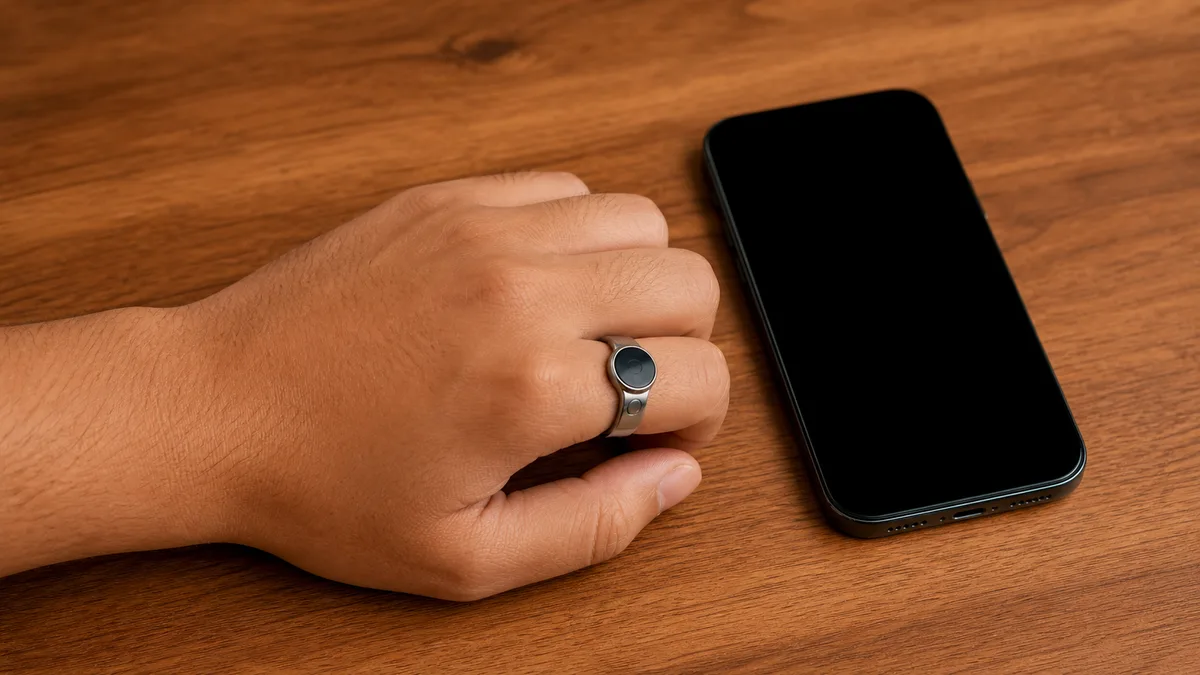
The flow is short. Pair once, choose your milestone counts, and the ring remembers them. If you’re brand new to the ring itself, the button presses and reset live in how to use zikr ring, so this section stays on the vibration settings.
Customizing the Count: 33/66/99, 33/100, or Your Own Goal
Yes, the count is yours to set. The ring’s default is 99: the three-phrase, thirty-three-each Sunnah covered above. From there you can keep 99, extend to a hundred, follow the authentic 33/33/34 total, or set a custom goal in the WESLAMIC app. Here’s how each option works.
Leave everything as-is and the ring closes at 99: SubhanAllah, Alhamdulillah and Allahu Akbar, thirty-three each, with buzzes at 33, 66 and 99. If ninety-nine is already your habit after salah, there’s nothing to change.
To finish on a round hundred, set the final milestone to 100 and add La ilaha illa Allah as the hundredth remembrance, the completion many keep after the ninety-nine. Your ring then holds its buzzes at 33 and 66 and moves the last one to 100.
Prefer the other authentic route to a hundred? The 33 tasbih, 33 tahmid, 34 takbir pattern (covered above) reaches the same total a different way. Pick whichever your teacher or habit follows; both are sound.
Counting beyond salah, like a wird of a hundred, istighfar to three hundred, or a personal target of your own? Set a custom goal in the app and the ring pulses at your chosen milestone instead of the default 99.
Which WESLAMIC Rings Buzz at Dhikr Milestones
All three rings here buzz at your dhikr milestones and can send a gentle prayer-time nudge; they differ in how much you can shape the pattern and how they’re packaged. The App-connected iTasbih-Faith suits almost anyone, the full-ring iTasbih-Peace1 gives the most control, and the premium iTasbih-Relation is built to be gifted. Here’s the quick comparison.
Ring | Vibration pattern | Prayer-time nudge | Best for |
|---|---|---|---|
iTasbih-Faith | Standard 33/66/99, five sizes | Yes, gentle prayer-time nudge | An App-connected everyday classic for almost anyone |
iTasbih-Peace1 (full-ring) | Most control: adjust the pattern and where the final milestone lands | Yes | An all-day ring you keep on from Fajr to Isha |
iTasbih-Relation (premium) | Standard 33/66/99, boxed gift set, long-life charging case | Yes | A premium gift for someone special |
Which ring you choose shapes the experience. The iTasbih-Faith is the App-connected classic, with five sizes and a gentle prayer-time nudge, an easy pick for almost anyone. The iTasbih-Peace1 lets you shape the vibration pattern itself, and it’s built like a ring you’d wear anyway from Fajr to Isha. And if this is a gift, the iTasbih-Relation is the premium, boxed piece with a long-lasting charging case, made for someone special.
Choosing one for a man in your life? Whether men wear rings at all is its own question, answered in can men wear rings in Islam.
Vibration Not Working? Quick Fixes
If the milestone buzz stops firing, the fix is usually quick: confirm the ring is charged, re-pair it with the WESLAMIC app over Bluetooth, and check that dhikr-count vibration is switched on in settings. Most silent-ring cases trace back to one of those three, not a fault.
Check the charge. A low battery is the most common cause. Seat the ring in its case until it powers back up, then try again.
Re-pair over Bluetooth. Remove the ring in your phone’s Bluetooth menu and in the WESLAMIC app, then pair again so the two reconnect cleanly.
Confirm the setting is on. In the app, make sure dhikr-count vibration is enabled. It’s easy to leave the prayer-time nudge on and the count vibration off, or the reverse.
Update the app and firmware. An out-of-date app or ring firmware can drop the haptic. Installing the latest version often brings it back.
Still silent? Contact support. If the buzz stays off after all of the above, reach out to WESLAMIC support so we can check the motor and your warranty.
Frequently Asked Questions
Can I set my ring to count to 100 instead of 99?
Yes, on rings that allow it. The Sunnah gives more than one authentic total: thirty-three plus thirty-three plus thirty-three reaches ninety-nine, and a hundredth remembrance brings it to a hundred, while Sahih Muslim 596 records a 33, 33, 34 pattern³. Set your final milestone to whichever you follow.
Does the ring vibrate during salah, or only for dhikr counts?
They’re separate. The 33, 66 and 99 pulses fire only while you’re counting dhikr, not during the prayer itself. Rings like our Faith, Relation and Peace1 can also send a gentle prayer-time nudge, but that’s a different alert you switch on on its own. The dhikr milestones stay quiet until you start counting.
Will a vibrating ring make my dhikr feel less sincere?
Not by itself. The pulse only marks where you are, the same job a knot on a misbaha or a fingertip has done for centuries. Scholars widely treat counting aids as permissible, as noted above⁴. What matters is presence, not the counter: ninety-nine mindful remembrances beat ninety-nine rushed ones.
What if I lose count when the buzz interrupts me?
That’s the opposite of how it’s built to work. Because a single pulse arrives only at 33, 66 and 99, there’s nothing to track in between, so there’s less to lose. Most wearers find the count fades into the background within a few sessions, leaving just the words.
A Gentle Note
Your remembrance was never really about the number. The count is scaffolding, a way to keep the rhythm while your heart does the real work. Every dhikr matters, whether it lands on 33 or somewhere in between. This guide shares general information, not a fatwa, so for your own situation, ask a qualified scholar you trust.
Sources
WESLAMIC product specifications, iTasbih-Faith, iTasbih-Peace1 and iTasbih-Relation (first-party), for milestone and prayer-time vibration behavior and app setup, retrieved 2026-07-03